The Night the Neighborhood Comes to You
The history behind Halloween and why Christians approach it differently.
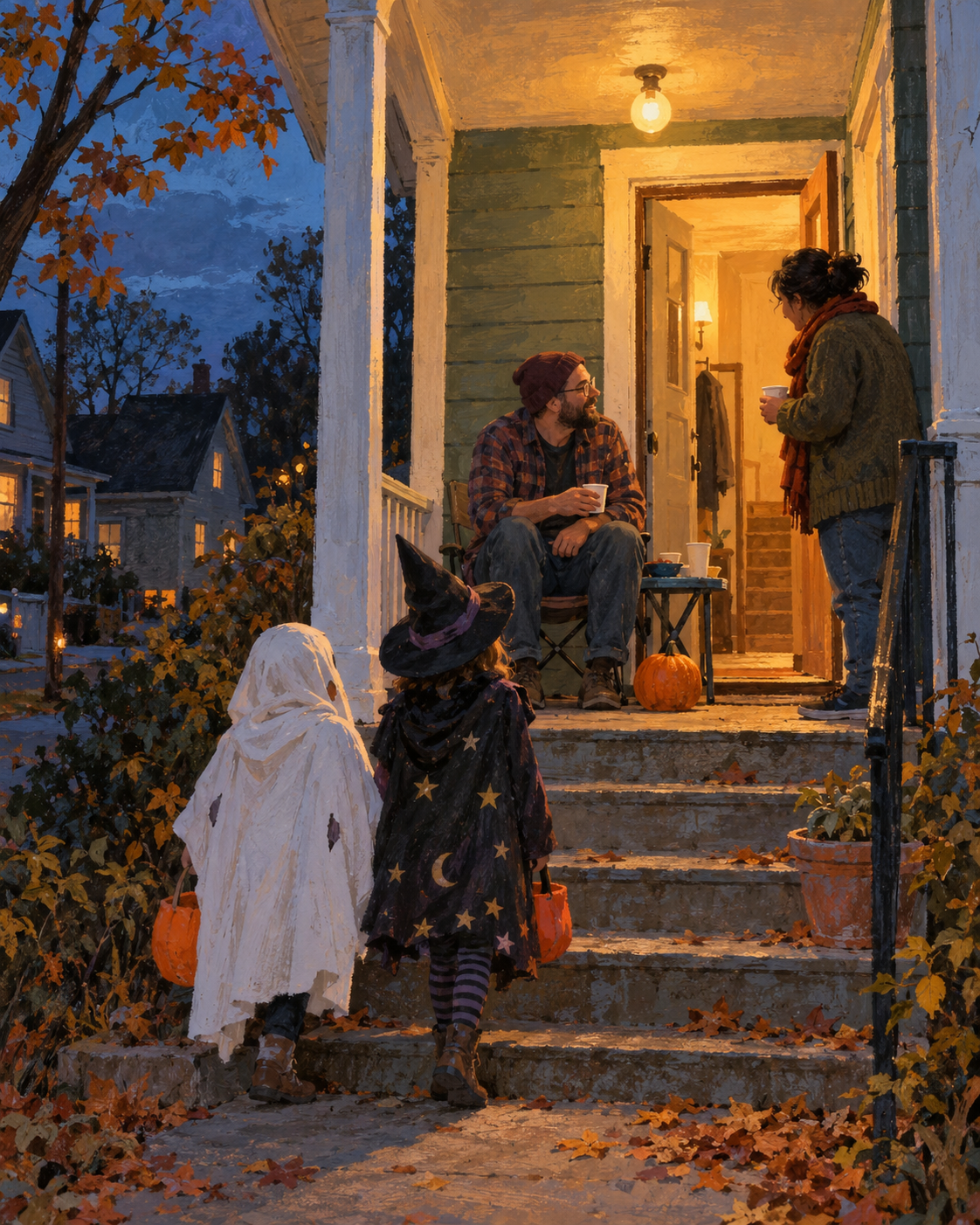
Halloween takes its name from All Hallows’ Eve, the evening before All Saints’ Day on November 1. “Hallow” is an older word for a saint or holy person. The name comes from the Christian calendar, although the holiday celebrated today draws on more than one tradition.
All Saints’ Day honors the saints. In the Catholic calendar, All Souls’ Day follows on November 2 and is devoted to prayer for the faithful departed. These observances are related, but they are not interchangeable. Halloween is the eve of All Saints, not another name for All Souls.
Modern Halloween developed from several traditions, including Christian observances and customs associated with Samhain. Later celebrations continued to change as people carried their customs to new places. Describing the holiday as entirely pagan or entirely Christian leaves out part of that history.
That mixed history helps explain why Christians disagree about the night, but it does not settle what anyone should do now. A church service, a costume party, trick-or-treating and an occult practice are different activities. Treating all of them as the same thing makes the discussion less useful.
A 2022 Lifeway Research survey of 1,000 Protestant pastors found that 58 percent encouraged people in their churches to build relationships with neighbors who came to their doors. Thirteen percent encouraged avoiding Halloween completely. The survey describes pastors’ advice, not a rule that every Christian household must follow.
Some households participate in trick-or-treating and avoid costumes or entertainment they find objectionable. Others choose a church event or do not participate. Those choices can reflect religious convictions, a child’s age, or practical circumstances. A family does not owe anyone a particular kind of Halloween celebration.
The useful questions concern what an activity involves, what children are being taught, and whether it conflicts with the household’s convictions. The history is worth understanding, but the name of the holiday alone cannot answer those questions.