Wrestle With Your Son
Throw a football. Shoot baskets. Get on the floor together. Physical play gives a father and son room for challenge, affection, and strength under control.

When is the last time you wrestled with your son? Try it.
Throw a football. Play a game of basketball. Give him something to work at, and get involved yourself. Let him try to beat you. Let yourself enjoy the contest and the boy you’re having it with.
If we’re raising sons to become men who use their strength well, we should give them time with a man practicing that. A father can offer a real challenge while being patient with the boy attempting it. He can compete and be affectionate. There is room for all of that in a game.
Give him a challenge#
Play defense. Move the passing target a little farther away when he’s ready. Let him try a shot he hasn’t made yet. Give him a reason to concentrate, with a fair chance of accomplishing what he’s trying to do.
And let him make the attempt. A missed catch doesn’t always need a correction before the next throw. Sometimes he needs another ball coming his way. If he asks for help, give it. If he wants to work it out, leave room for that too.
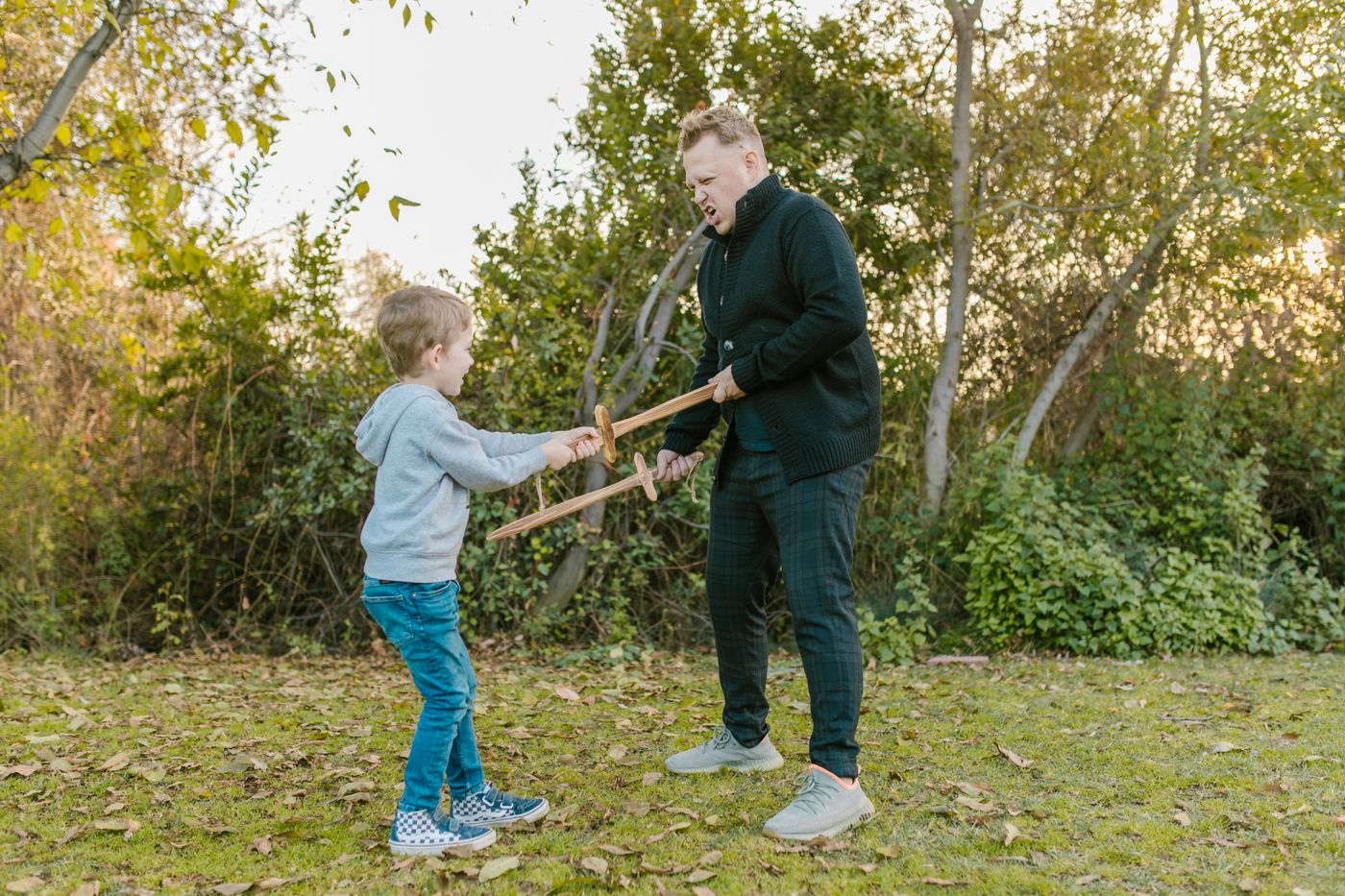 Photo: RDNE Stock project / Pexels
The American Academy of Pediatrics’ report on play describes rough-and-tumble play as an opportunity for children to practice negotiation and emotional balance within a relatively safe setting. That gives us something useful to aim for. Enjoy the excitement together while paying attention to each other and respecting the limits of the game.
Competition can be godly. Play honestly. Be pleased when he makes a good move, including one that gets past you. Take a loss without making excuses, and let him enjoy his win. Your conduct gives him something to follow the next time the score goes the other way.
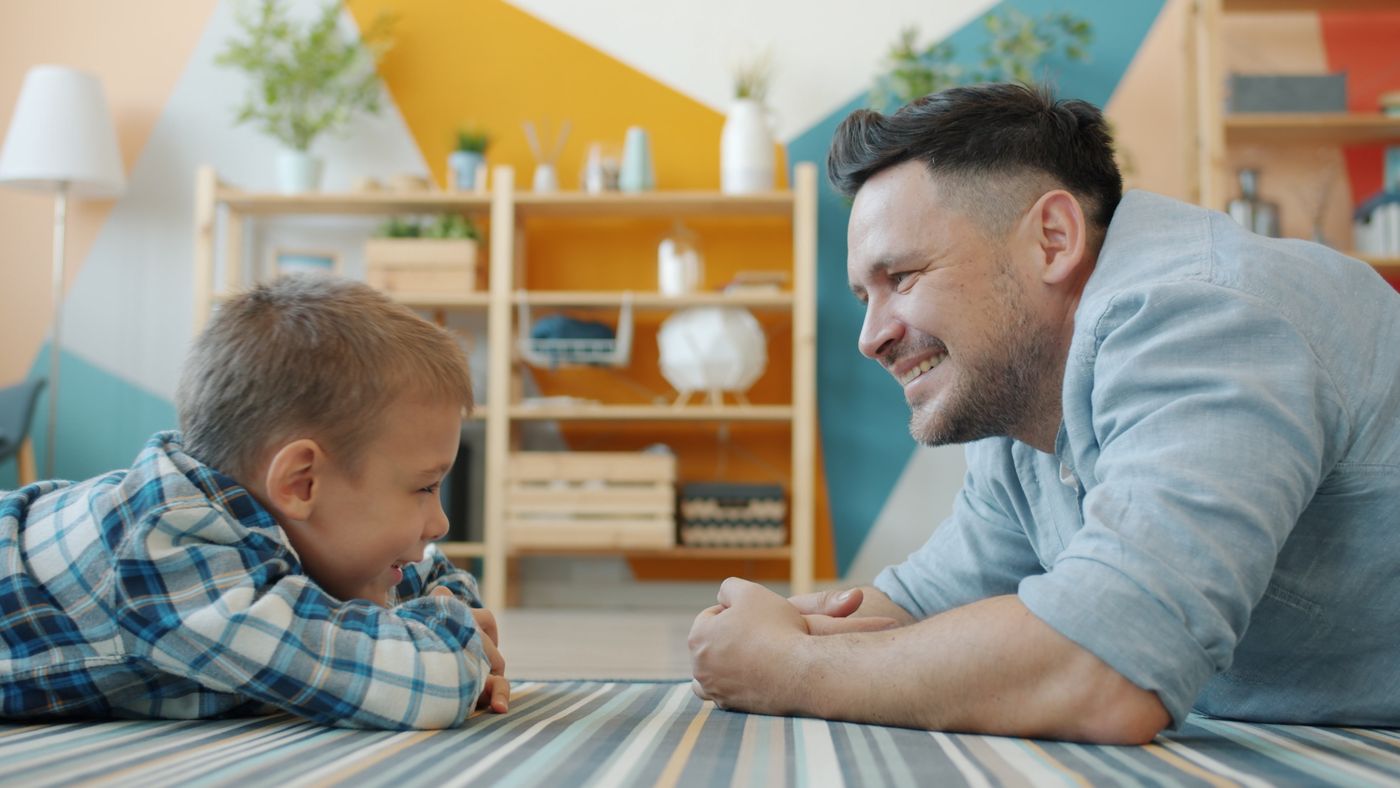 Photo: Vitaly Gariev / Pexels
You can also work toward the same goal. See how many passes you can catch together without dropping one. Take turns choosing a shot, then help each other make it. Both kinds of play give you something to do together that asks for effort.
Stay close#
Physical play is a way to enjoy being close to your son. Laugh with him. Give him a high five after a good catch. Let him see that you’re having a good time, including when the ball goes nowhere near where either of you intended.
Men can be close. A father can say he loves his son and spend time with him in ways that make that affection plain. Being interested in his game is one of those ways. So is being willing to look a little foolish while you play it.
 Photo: Niko Samik / Unsplash
The quality of that time deserves attention. In a study of 476 families, Jenifer Gregory and colleagues found that positive, sensitive father–child play in first grade was associated with fewer difficulties managing emotions in third grade, according to fathers’ reports.
Erika Bocknek and colleagues studied active play in 415 families. Moderate amounts of active play with fathers at age three were associated with better emotional regulation around kindergarten entry. More wasn’t consistently better. These studies followed families rather than assigning them to play programs, so they establish associations rather than proving that play caused the later outcomes. Their findings concern younger children.
The practical advice is to pay attention to the son you have. Notice whether he wants another try or a change of game. Let him suggest a rule. Ask him to show you the move he’s been practicing. You have a chance to learn what interests him while doing something he enjoys.
Use your strength well#
Galatians 5:22–23 names gentleness and self-control among the fruit of the Spirit. A father has opportunities to practice both when he plays with his son. You choose how much strength to use. You decide how hard to defend a shot. You watch his response and adjust.
Gentleness takes attention. You have to know the difference between a challenge he enjoys and one that overwhelms him. Give him enough resistance to make the game interesting, and remain willing to change it. As he grows more capable, let the challenge grow with him.
For wrestling, use a clear space at ground level. Keep pressure off his chest, head, and neck; avoid blows or throws. Stop means stop, including when he pulls away or looks frightened. Keep it voluntary, with room for either person to move away. The adult stays responsible for safety and the pace of play.
Choose an activity both of you want to do and can manage. Some boys love wrestling; others would rather shoot baskets. Seated catch is an option when running isn’t. With an older son, ask what he wants to play now. Your daughters can have the same invitation.
In Strong Enough to Matter, I wrote about a father’s physical capacity to serve his household. Use what you have to participate in your children’s lives. Let them enjoy it with you.
Make the time#
Don’t leave every invitation to your son. Bring out the ball yourself. Ask him to play before he has to ask you, and put the phone away when you do.
You can give him real time without giving him the whole evening. Tell him when you need to finish and give him some warning before the last round. If he asks for more, be glad he enjoyed it. You can still be done. Go inside together, get some water, and listen if he starts talking.
For fathers working on being more deliberate at home, take a look at SHPRD. The next step here can be simple enough to do today.
Prepare · Ask · Act#
Prepare: Choose a time and a safe place to play. Get the ball out before you sit down with your phone.
Ask: Find out what your son wants to play. Let him help choose the challenge.
Act: Go play with him. And if you promise another game tomorrow, be the one who brings out the ball.