Meet Your Muslim Neighbor
How many Muslims actually live in America, where their families came from, and why the country on a passport tells you less than you think. Part 1 of the Your Muslim Neighbor series.
Most Arab Americans are Christians. The Arab American Institute’s demographic polling puts the community at roughly 63 percent Christian and 24 percent Muslim, the legacy of Lebanese and Syrian Christian migration that began in the 1880s, generations before most American Muslim families arrived. That one statistic embarrasses both tribes. The American who hears an Arabic surname and pictures a prayer rug is wrong more often than right. And the American who waves off every question about Muslim immigration should know the flip side: recent Arab arrivals are considerably more Muslim than the settled community, so the old Christian majority describes who your Arab neighbor probably is, not who is arriving now. Both facts are true at once. Most public talk about Muslims in America quotes whichever one flatters the speaker’s politics, and this series exists to not do that.
This first article is a census of sorts. Before you can love your Muslim neighbor, or witness to him, it helps to know who he actually is: how many of him there are, where his family came from, and why so much of what you’ve heard is wrong in its details. My convictions come at the end, in the first person, labeled as mine.
Nobody is allowed to count#
The United States has no official count of Muslims, or of any other religion, and that is deliberate. Under Public Law 94-521, the Census Bureau is barred from requiring anyone to disclose religious belief or membership. The Bureau tested a voluntary religion question on about 40,000 households in 1957, and opposition killed it before the 1960 census, notably from religious minorities who had fled countries where government lists of believers were used against them. Immigration files record country of birth, not faith. The FBI’s only religion data covers hate-crime victims, which says nothing about population size.
So every figure you’ve ever heard about American Muslims is an estimate, produced one of four ways: ask a large random sample who they are, count mosques and ask their leaders how many people belong, impute religion from immigration records, or project forward from the first three. Each method has a known bias. Surveys conducted in English and Spanish miss some immigrants. Mosque leaders count generously. Country of birth misleads badly, as you’re about to see. The honest move is to run every method and check whether they land in the same place.
The corridor the evidence supports#
They land in the same place. Pew’s 2023-24 Religious Landscape Study interviewed 36,908 adults and found Muslims at about 1.2 percent of American adults, roughly 3.1 million people. PRRI’s Census of American Religion finds 1 percent. So does Gallup. Muslims are also much younger than the country as a whole, with more children per adult, so the all-ages total runs higher: Pew’s last full estimate was 3.45 million in 2017, on a growth path projected to reach 8.1 million by 2050. Walk that path forward and you land around 4.4 to 5 million today.
The method with the opposite bias agrees. The 2020 US Religion Census asked mosque leaders to count everyone associated with their congregations and reported about 4.5 million Muslim adherents, up from 2.6 million in 2010. The mosque count itself grew from 1,209 in 2000 to 2,769 in 2020. Conservative survey self-identification and generous leader estimates bracket the same corridor: roughly 3.5 to 5.5 million American Muslims, centered near 4.5 to 5 million. Call it one American in seventy.
What about the bigger numbers? CAIR’s long-running “6 to 8 million” has no published methodology, and the researcher who assembled an early version says he was fired for refusing to inflate his count. Ten million would require the Muslim share of adults to be roughly two and a half times what every probability survey finds, including the polls fielded for Muslim institutions themselves. No undercount argument anyone has quantified comes close to covering that gap.
Where the growth comes from#
Not from conversion. About one in four Americans raised Muslim leaves Islam, most of them to no religion at all, and the outflow is offset almost exactly by converts coming in; roughly 23 percent of Muslim American adults are converts, one of the highest accession rates Pew measures for any group. Net effect of all that switching on the total: approximately zero.
Picture a bathtub with the drain open. People convert out, people convert in, and the level still rises because two taps run faster than the drain: immigration and young families. Fifty-eight percent of Muslim American adults are foreign-born, and Pew’s flow estimates put Muslims at about 10 percent of new green cards by 2012, around 100,000 a year, up from 5 percent in 1992. American Islam grows the way most immigrant religions in America have always grown: arrival and birth, not persuasion.
A Muslim-country birthplace is not a creed#
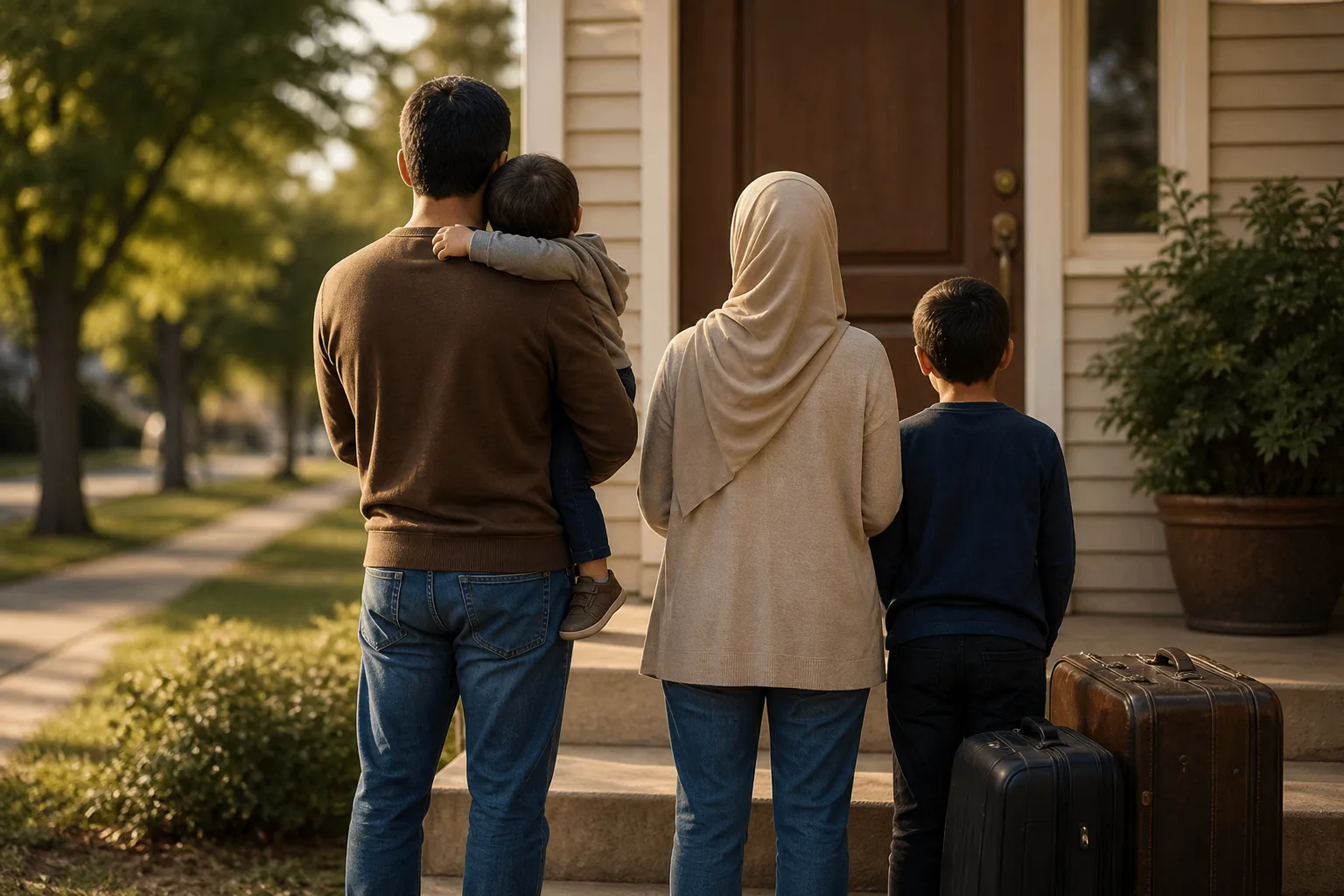
This is where confident people go wrong in both directions. Since 2000 the United States has issued roughly 3.4 million green cards to people born in the 44 Muslim-majority countries, and it is tempting to count every one of them as a Muslim. Do that and you manufacture about a million phantom Muslims, because survey-anchored estimates put actual Muslims at about 10 percent of legal immigration, well below what the country labels imply. Emigrants are not a random sample of the countries they leave.
For some countries the shortcut works. Somalia and Afghanistan are about as uniformly Muslim as countries get, and their American flows came through refugee and evacuation channels that drew from that majority; the roughly 200,000 Afghans resettled after the 2021 withdrawal are almost entirely Muslim.
For other countries it fails, and Iran fails worst. Iran is ~99 percent Muslim on paper, yet only 24 to 34 percent of Iranian Americans identify as Muslim, because the post-1979 exodus was led by Jews, Baha’is, Armenians, and secular families. American law reinforces that filter: the Lautenberg amendment reserves a near-guaranteed refugee lane specifically for Iran’s religious minorities. The pattern repeats down the list. Metro Detroit holds the largest Chaldean Catholic community outside Iraq, built by Iraqi Christians fleeing after 2003. Egyptian Americans are majority Coptic Christian in heritage, the inverse of Egypt itself. Lebanese Americans, the largest Arab-ancestry group in the country, are roughly three-quarters Christian. And Indonesia, the largest Muslim country on earth at about 87 percent, sends a diaspora that standard references put at around two-thirds Christian, shaped by Chinese-Indonesian Christians who fled the 1998 riots (more than 7,300 won US asylum in the decade after) and by church-network migration.
I lived this lesson before I could cite it. As a young engineer in the Bay Area, I spent about five years working alongside two men, one born in Iran, one in Afghanistan. Passport arithmetic would have scored them as two Muslims, and it would have been half wrong. The Iranian was a Christian: gentle, considerate, openly grateful for America. The Afghan was, as far as I could ever read him, a thoroughly westernized family man who held his Islam loosely. I tell their story more fully in The Many Islams. The short version is that the country on each man’s paperwork told me nothing that the man himself didn’t have to correct.

Refugees, the one flow where religion is recorded#
Refugee processing is the single US immigration channel that actually records religion, and it has since fiscal year 2002. The record contradicts the popular picture. From FY2002 through FY2019, Christian refugees (about 465,000) outnumbered Muslim refugees (about 311,000). The Muslim share moves with policy, from 46 percent in the record year of 2016 down to 16 percent by 2019. Selection can cut against minorities too: the FY2016 Syrian cohort was 99 percent Muslim, more Muslim than Syria itself, because the UNHCR camps that feed US referrals held displaced Sunnis while Syrian Christians sheltered elsewhere. Neither “the refugee program is a Muslim pipeline” nor “America shut out the persecuted” survives the actual series. Each channel is a mechanism, and mechanisms select.
Dearborn as it actually is#
No American city carries more symbolic weight in this conversation than Dearborn, Michigan, so here is what the data says. The 2020 census, the first to tabulate Middle Eastern and North African write-in ancestry, found 54.5 percent of Dearborn’s roughly 110,000 residents are of MENA ancestry, making it the first majority-Arab-American city in the country. The largest groups are Lebanese, then Yemeni, and in 2021 the city elected its first Arab-American mayor, Abdullah Hammoud. Now recall the statistic this article opened with before you decide what that means: nationally, Arab-American has historically meant majority-Christian. Dearborn’s particular Lebanese-Yemeni mix does lean heavily Muslim, so the shorthand is closer to true there than almost anywhere else. But “majority-Arab city” and “Muslim city” are different claims, and keeping them separate is the discipline this whole subject requires.
You cannot love a caricature#
Everything above is sourced arithmetic. What follows is conviction, and I’ll own it in the first person.
Most American Christians hold a picture of Muslims assembled entirely from screens: cable segments, war footage, viral clips, campaign ads. If the numbers in this article surprised you, that’s the tell that someone else built your picture, for purposes that were not yours and were certainly not your Muslim neighbor’s. Roughly one American in seventy is Muslim. Odds are decent that you already work with one, buy groceries from one, or wave at one across the street without knowing it, and odds are near certain that what you assume about that person is wrong in the specifics, because the specifics run against intuition at every turn. The Iranian at your office is probably not Muslim. The Arab family at church might be more traditionally Arab than the Muslim family two doors down.
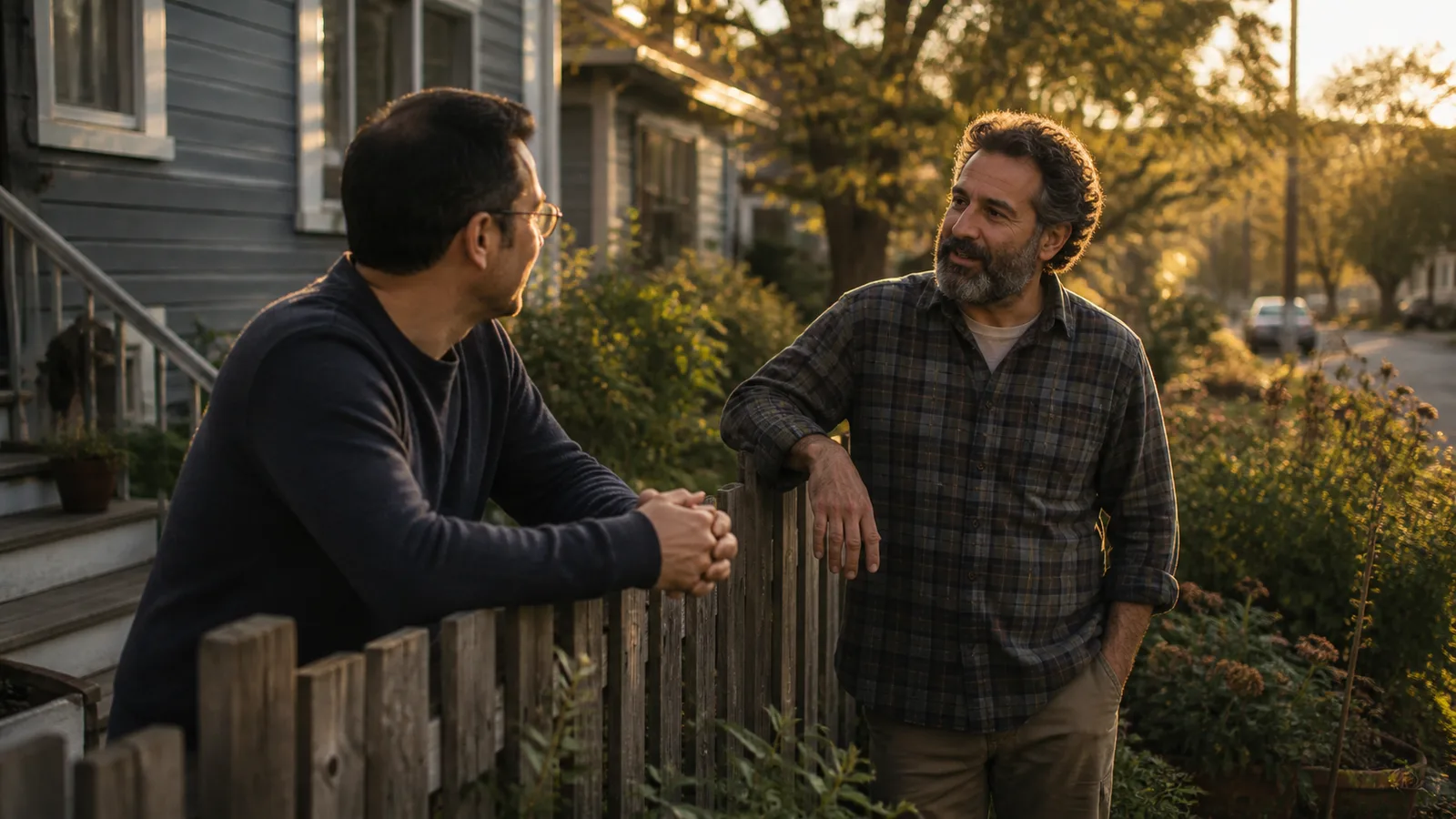
I know the distance between the screen version and the real one because I’ve sat in the real one. Years ago in the Bay Area, my neighbor was a young North African man, about twenty-five, devout in a way that ordered his whole household. One evening I was in an apartment with him and his friends, four young Muslim men and me, a video game going, when prayer time came. Nobody hid it and nobody performed it; they invited me to stay, and while they prayed I sat in the awkwardness and silently asked my own God to reach them. I’m still not certain what the right theological posture for that moment is. But no cable segment ever showed me an evening like that one, and he’s the neighbor you’ll meet properly in part 2.
When a scribe asked Jesus which commandment came first, the second half of his answer was “You shall love your neighbor as yourself” (Mark 12:31). There’s no exemption for neighbors whose theology I intend to contend with, and contend I will; that’s what the rest of this series does. But you cannot love a caricature, and you cannot witness to one either. A caricature never invites you in for tea. A caricature never asks why you believe what you believe, and never gives you the chance to answer. When was the last time a Muslim ate at your table, or you at theirs?
So here’s the assignment. This week, learn the actual name and the actual story of one Muslim you already cross paths with: the coworker, the pharmacist, the neighbor. Ask where the family is from and when they came, and listen knowing that “from Iran” or “from Egypt” is the start of a question, not the answer to one. If the conversation ever reaches scripture, read what the Quran actually is before you speak about it. Your neighbor can tell the difference between a Christian who did the reading and one who is repeating a cable segment.
Go deeper#
- Pew Research Center, 2023-24 Religious Landscape Study. The largest current probability survey of American religion, and the anchor for every honest count.
- Ihsan Bagby, The American Mosque 2020 (ISPU). The full enumeration of US mosques, with twenty years of growth data.
- Pew Research Center, “The Religious Affiliation of U.S. Immigrants” (2013). The canonical method for estimating immigrant religion, and the antidote to passport arithmetic.
- Nabeel Qureshi, Seeking Allah, Finding Jesus. A Muslim-American memoir that models loving the people while contending over the doctrine.