Praying for the Persecuted
What the persecution of Christians actually looks like in the data (the honest numbers, Nigeria in depth, the blasphemy-law map) and what a family in a safe country can concretely do about it.
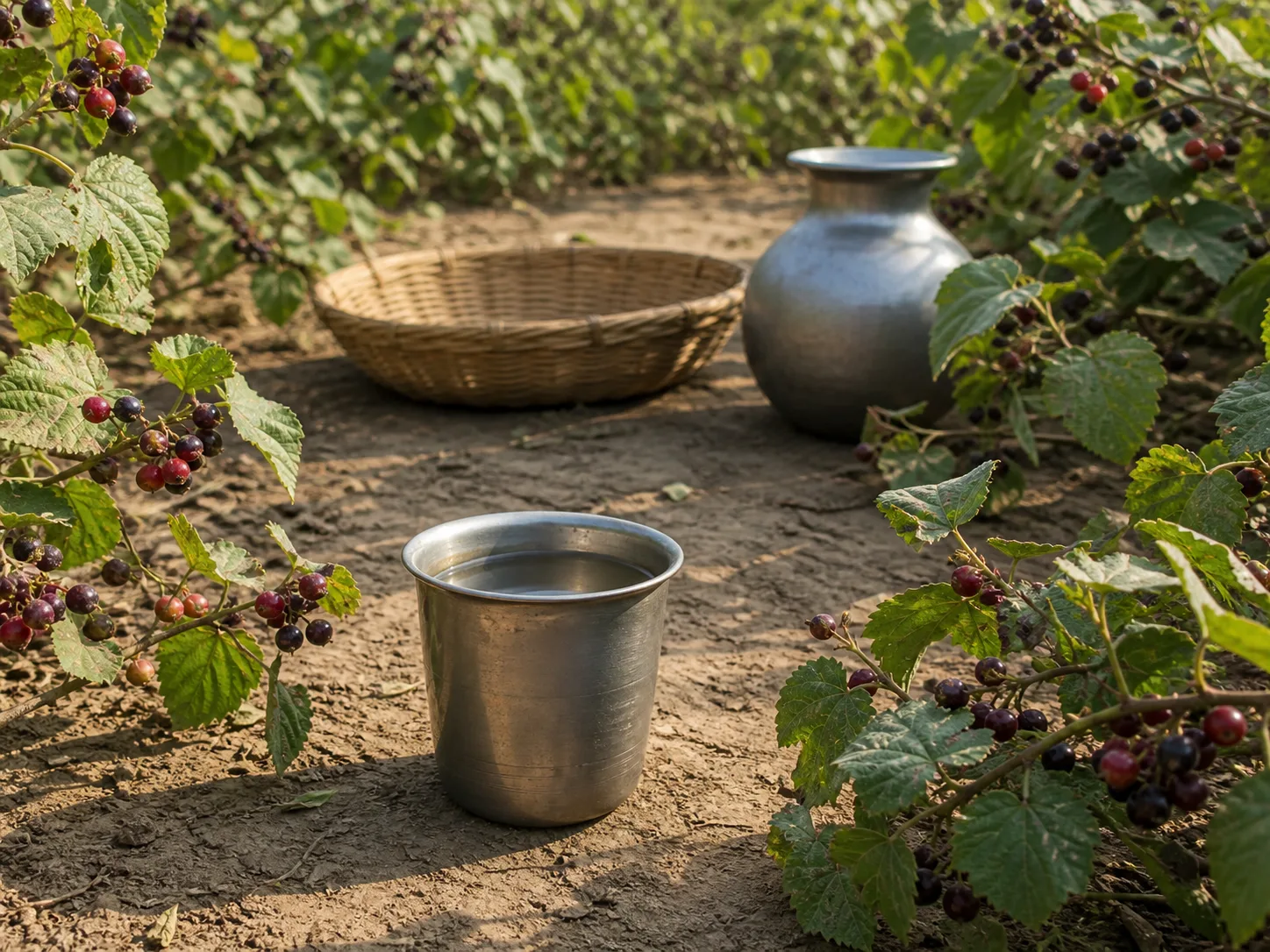
In June 2009, in a berry field near Sheikhupura, Pakistan, a Catholic farm laborer named Aasiya Noreen fetched water for the crew. Some of her Muslim coworkers refused to drink from a cup a Christian had touched. An argument followed, then an accusation that she had insulted Muhammad, and in November 2010 a court sentenced her to death for blasphemy. The world knows her as Asia Bibi.
Two men in power defended her. Salmaan Taseer, the governor of Punjab, was shot by his own bodyguard in January 2011; the killer was executed in 2016 and his shrine now draws pilgrims. Shahbaz Bhatti, the federal minorities minister and Pakistan’s only Christian cabinet member, was assassinated two months later. Bibi spent eight years on death row before Pakistan’s Supreme Court acquitted her on 31 October 2018, a ruling that sharply criticized the evidence against her. Rioters paralyzed cities demanding she hang anyway. She reached Canada in May 2019. Her life was spared, and it still cost her the country she was born in.
That is one case, the best-documented one in the field. This article is about the rest, and about what a Christian family in a safe country does once it knows.
What every research body agrees on#
Severe, systematic persecution of Christians across a substantial set of countries is not a contested claim. Pew Research Center, which has coded 198 countries every year since 2007 using only public documentation, consistently finds Christians harassed in more countries than any other religious group, with Muslims second. The US Commission on International Religious Freedom documents it. The State Department documents it. Notre Dame’s Under Caesar’s Sword project, seventeen scholars working across more than twenty-five countries, documented it in peer-reviewed form. The phenomenon is established. The fight is over the numbers.
The honest numbers#
For years, Christians repeated a statistic that 90,000 to 100,000 believers are martyred annually, one every five minutes. It came from the Center for the Study of Global Christianity at Gordon-Conwell, and in 2013 the BBC’s More or Less program took it apart: roughly 90% of the figure consisted of war deaths in the Democratic Republic of Congo, counted as martyrdoms because the victims were presumed to be active Christians who died “in a situation of witness.” Christians killed in a civil war, largely by other nominal Christians, are not on any honest definition killed for their faith. The researchers themselves backed away from the number.
The defensible figures are smaller and still terrible. Open Doors, a Christian ministry whose research methodology is published and has been externally reviewed, verified 4,998 killings for faith-related reasons in its 2024 reporting year and 4,476 in 2025, and describes those counts as deliberate floors. Thomas Schirrmacher of the International Institute for Religious Freedom told the BBC his upper-bound guess was 7,000 to 8,000 a year. Between 70 and 90 percent of the documented killings in recent years happened in one country: Nigeria.
One more number needs its full label. Open Doors’ 2026 headline is 388 million Christians facing high levels of persecution and discrimination. That figure counts the entire Christian population of every country scoring above a threshold, so it measures exposure to a hostile environment, not individually verified victimization; named critics in Germany and the Netherlands have called it exaggerated, while the academic Jason Bruner judges it within the margin of other trackers. Quote it with the definition attached or don’t quote it. I learned in the first article on the Quran that a Christian who repeats a bad number loses the argument the moment anyone checks. The same discipline applies when the bad number flatters our side.
Nigeria, where most of the dying happens#
Every serious tracker agrees that more Christians are killed for faith-related reasons in Nigeria than in the rest of the world combined in most recent years. The best religiously disaggregated dataset is the Observatory of Religious Freedom in Africa’s six-year report: 79,323 people killed between October 2019 and September 2025, about 35,000 abducted. Of the identified civilian dead, Fulani-identified militant groups killed 18,577, nearly four times the toll of Boko Haram and ISWAP combined, and across the dataset roughly 2.4 Christians died for every Muslim, with far higher ratios in the Middle Belt states. The atrocities behind those numbers have names: the Owo church massacre on Pentecost 2022, the Christmas 2023 Plateau massacres, the June 2025 attack on Yelwata in Benue.
The framing is contested, and you should know both sides. ACLED-based analysts and Nigeria specialists point out that victims span all faiths, that heavy Muslim casualties fall in the North-West, and that land competition, climate-driven herder migration, and cycles of reprisal drive much of the violence; most specialists and the UN reject the legal term “genocide.” On the other side, Hudson’s Nina Shea and CSIS answer that “farmer-herder clash” cannot explain massacres at Christmas services, the targeted killing of clergy, or the kill ratio, and that resource competition and religious targeting are not mutually exclusive. Both the pure-religion reading and the pure-resources reading are weaker than the evidence. Disproportionate, often religiously selective targeting of Christians in the Middle Belt is established; so are large numbers of Muslim dead.
Two housekeeping notes on Nigeria. First, the “125,000 Christians killed since 2009” figure that circulated through American politics came from a group called Intersociety, and a BBC verification found its methodology opaque, with about half its sampled incidents not even specifying the victims’ religion. Don’t repeat it. Second, on 31 October 2025 the United States redesignated Nigeria a Country of Particular Concern, the religious-freedom law’s strongest designation, reversing the 2021 delisting that USCIRF had objected to every year since.
The laws on the books, and the mobs off them#
Pew’s most recent count found 79 of 198 countries with blasphemy laws and 22 with apostasy laws as of 2019, with the Middle East and North Africa the epicenter: 18 of the region’s 20 countries criminalize blasphemy and 13 criminalize leaving Islam. Roughly a dozen jurisdictions keep death on the books for apostasy. Counting statutes flattens a real difference, though, as Hudson’s critique of the Pew survey argues: Europe’s remaining blasphemy laws are dormant relics, while MENA’s are enforced.
Here’s the part that should reorder your prayers. Courts almost never execute anyone for apostasy; judicial executions are vanishingly rare in the modern era. The accusation itself is the weapon. Mobs, family violence, indefinite pretrial detention, and militants do the killing, as the USCIRF enforcement record for Pakistan shows in detail. In August 2023 in Jaranwala, after two Christians were accused of desecrating a Quran, mobs mobilized over mosque loudspeakers burned roughly two dozen churches and hundreds of Christian homes; of about 5,000 participants, fewer than 400 were arrested and most were bailed. And it matters that classical Islamic jurisprudence’s majority position prescribed death for apostasy while many Muslim scholars and most Muslim-majority states today reject criminalizing conversion. Senegal is not Saudi Arabia. Say it precisely or a hostile fact-checker will say it for you.
Three more countries deserve a sketch. In Egypt, home to the Middle East’s largest Christian community, Copts have absorbed jihadist mass-casualty attacks (the Palm Sunday 2017 bombings killed about 45) on top of chronic structural discrimination in church construction and conversion law. In Iran, persecution is state policy aimed at converts: Article18’s joint annual report documents 254 Christians arrested in 2025, with 73 sentenced to more than 280 years in prison, some for nothing more than distributing Bibles, a pattern the UK Home Office corroborates for asylum courts. In Afghanistan, the entirely underground convert church displaced North Korea at the top of the World Watch List in 2022, the only time that has happened, and a Taliban spokesman resolved the matter by telling Voice of America that no Christians live in Afghanistan at all.
Iran’s numbers have a face for me. One of the two coworkers I wrote about in The Many Islams was an Iranian Christian, an engineer I logged hundreds of night-survey hours beside in my Bay Area years. He was the gentlest, most considerate man on any crew I worked with, and, as I read him, openly grateful for America. You learn whether gratitude is real when you spend that many dark hours with a man. Article18’s arrest counts explain his: he could worship and say the name of Jesus out loud with no sentence attached. When I pray for Iran’s converts, I picture him.
Two facts that keep us honest#
This is the last article in a series about loving your Muslim neighbor, so two facts belong here up front. First, Muslims are the largest victims of jihadist violence on earth: compiled attack data puts roughly 91% of jihadism’s victims as Muslims, and the Global Terrorism Index shows the deaths concentrated in the Sahel, Somalia, Nigeria, Iraq, and Afghanistan. ISWAP slaughters Muslim “apostates” on an industrial scale. Second, the worst single persecutor of Christians is not Muslim at all: North Korea has topped the World Watch List in 24 of its 25 years, and China and India are major and worsening, which is why about half of USCIRF’s eighteen recommended designations are not Muslim-majority countries.
The Muslim family on your street is statistically more likely to have fled this violence than to sympathize with it. If your prayers for the persecuted church curdle into suspicion of the neighbor whose kids play with yours, you have not understood the data, and you have not understood Jesus, who answered the question “who is my neighbor?” with a story about a despised outsider doing the loving (Luke 10:29-37). Praying against persecution and loving Muslims are one posture.
What a family actually does#
“Remember those who are in prison, as though in prison with them, and those who are mistreated, since you also are in the body” (Hebrews 13:3). That’s a command with a method built in: as though in prison with them. Nobody prays vaguely for a cellmate. So don’t pray vaguely.
Pray with names and places. “The persecuted church” is an abstraction; Youcef Nadarkhani, sentenced to death for apostasy in Iran in 2010, acquitted after global pressure in 2012, and repeatedly re-imprisoned since, is a man. The pattern in the documented cases (Bibi, Nadarkhani, Mariam Ibrahim in Sudan, Andrew Brunson in Turkey) is that sustained, named, international attention preceded each release. That’s practitioner consensus rather than a controlled experiment, but the organizations that do this work treat named-prisoner advocacy as their highest-yield activity, and the released prisoners agree.
Support organizations with your eyes open. Open Doors publishes its methodology; read the definitions before you repeat its headline numbers. International Christian Concern produces on-the-ground country reporting. Voice of the Martyrs does direct support work (Bibles, safe houses, aid to prisoners’ families) that outsiders can’t audit, so describe it rather than quantify it. For casework you can verify, Article18 on Iran is the standard governments themselves use.
Advocate the way the persecuted actually ask. The central finding of Under Caesar’s Sword is that persecuted communities overwhelmingly pursue survival and quiet negotiation, and outside help works best when it follows local believers’ judgment about visibility. A loud Western campaign, uncoordinated, can get the people it champions killed. Write your legislators about named cases and about asylum processing for converts, whose credibility assessments in Europe are documented to be inconsistent, and let the organizations closest to the ground set the volume.
And teach your kids. This is where the discipline of a family that leads, protects, and provides gets concrete: pick one country. Nigeria, since that’s where most of the dying is, or Iran, or Afghanistan. Put it on the wall. Once a week at dinner, pray for it by name, with one fact from a country profile your kids are old enough to hear. A child who grows up praying for Christians in Jos and for the Muslim neighbors on your own block will not need to be talked out of either fear or indifference later. She’ll have been trained past both.
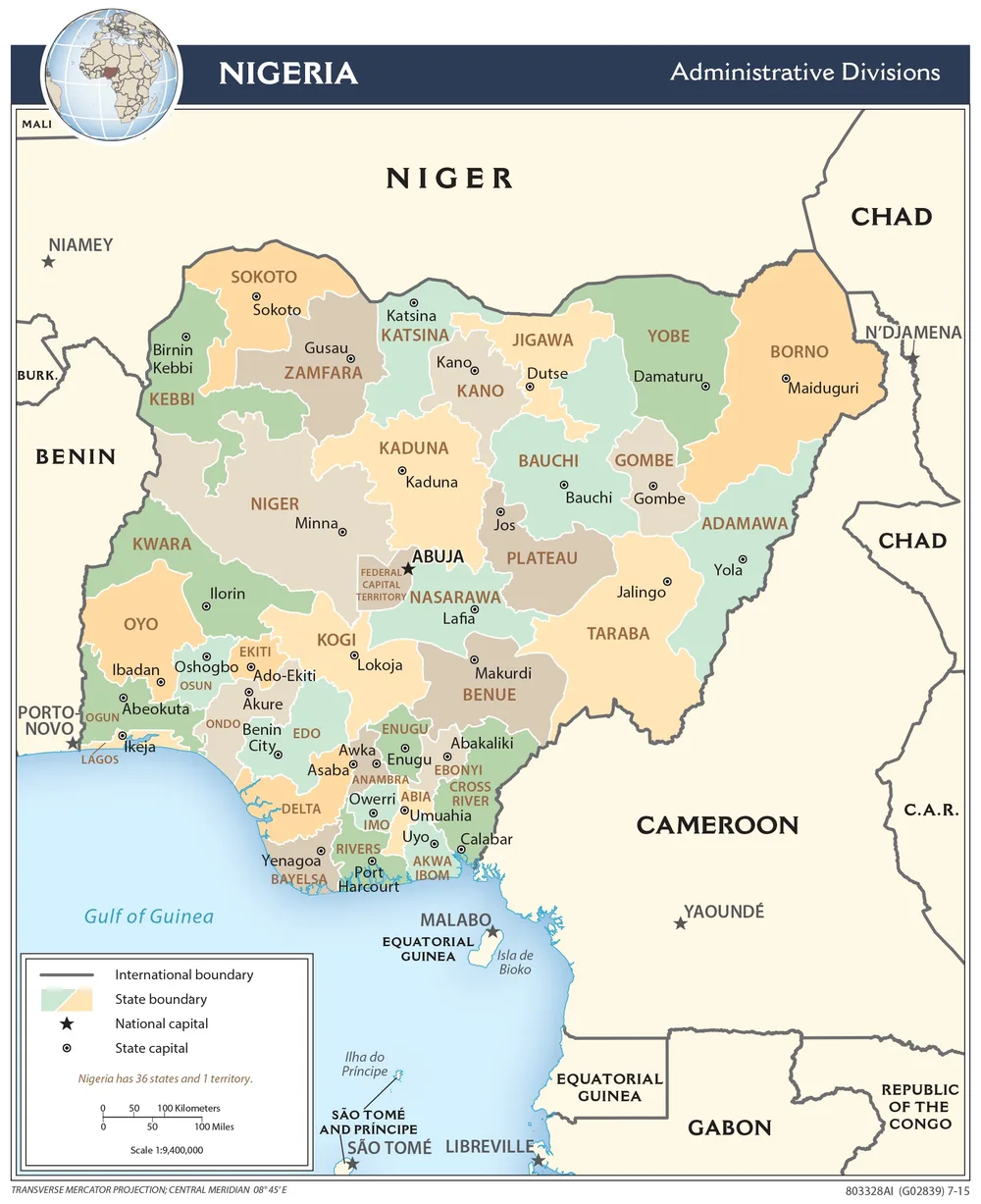
CIA Maps public domain
Asia Bibi’s ordeal began with a cup of water offered and refused. Offer the cup anyway. Pray for the ones imprisoned for it, by name, starting this week.
Go deeper#
- Remember the Prisoners. A seven-part series on this site that takes six countries one at a time (Nigeria, Pakistan, Iran, China, North Korea, and India) and ends with a practical toolkit for writing to prisoners and to Congress.
- Under Caesar’s Sword (Notre Dame/RFI, Cambridge UP 2018). The peer-reviewed anchor on how persecuted Christians respond and how outside help actually helps.
- Open Doors World Watch List. Country rankings and profiles; read with the published methodology and its definitions in hand.
- Article18 annual reports. The standard casework documentation on Iran’s imprisoned Christians, used by governments and courts.
- USCIRF Annual Report. The US statutory commission’s religion-neutral documentation, covering persecution of Muslims, Christians, and everyone else.