Accusation Is the Weapon
How Pakistan's blasphemy laws work in practice: the Zia-era statutes, the accusation-loudspeaker-mob pattern from Gojra to Sargodha, the entrapment rings exposed since 2024, and the debt and forced marriages that hit Christian families hardest.
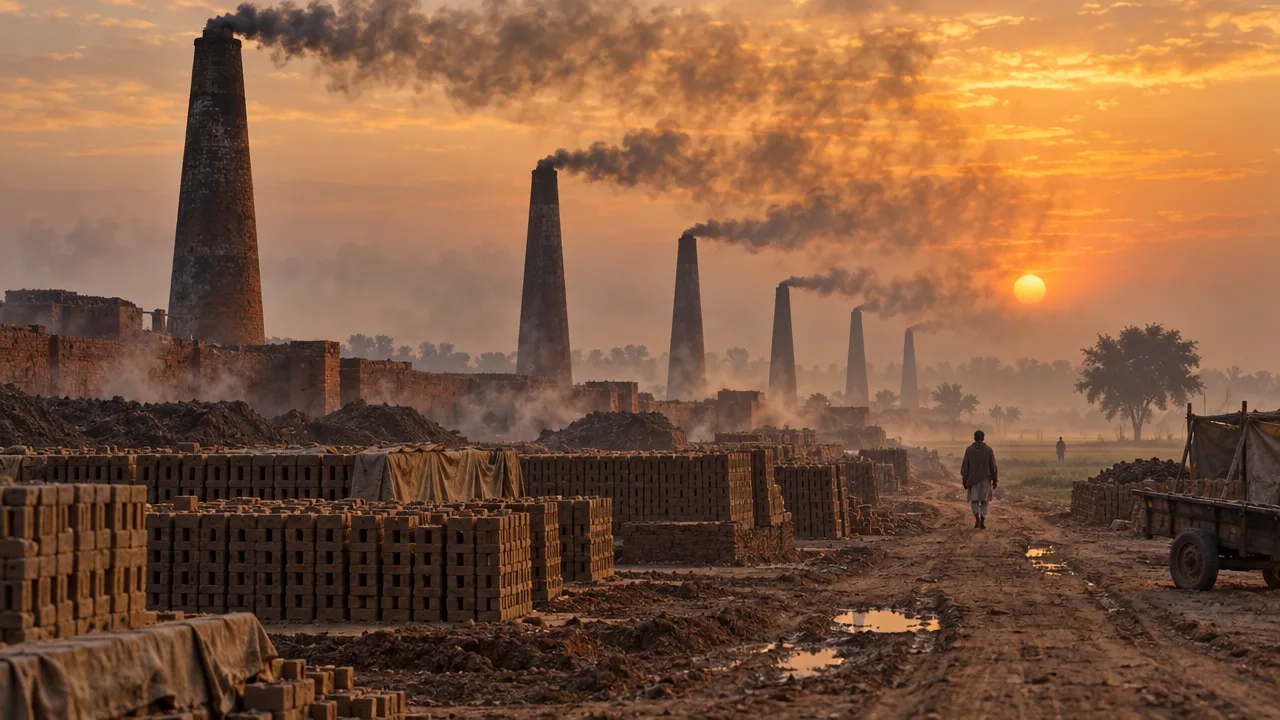
On July 10, 2026, three justices of Pakistan’s Supreme Court acquitted the last three men on death row for killing Shahzad Masih and his pregnant wife, Shama Bibi. The bench cited contradictions in witness testimony and gave the men the benefit of the doubt, and it dismissed the Punjab government’s appeal against the earlier acquittal of 102 other accused, according to Morning Star News. Twelve years earlier, on November 4, 2014, a crowd in Kot Radha Kishan had beaten the couple and thrown them into the brick kiln where they worked. The kiln burned them alive. Today no one stands convicted of it.
The overview article in the Your Muslim Neighbor series made the general point: in Pakistan, courts rarely kill anyone for blasphemy, and the accusation itself does the damage. This article shows how that works, one part at a time.
How General Zia made blasphemy a capital crime#
Pakistan inherited religious-offense laws from British India. Sections 295 and 298 of the 1860 penal code and Section 295-A, added in 1927, punished insulting or injuring any religion, with short prison terms. The International Commission of Jurists’ 2015 study traces what changed under the military ruler Muhammad Zia-ul-Haq. In 1982 his government added Section 295-B, life imprisonment for defiling the Quran. In April 1984, Ordinance XX added Sections 298-B and 298-C, which make it a crime for Ahmadis to call themselves Muslims or to preach their faith. In 1986 came Section 295-C: death or life imprisonment for defaming the Prophet Muhammad.
The death penalty became mandatory in 1990. In Muhammad Ismail Qureshi v. Pakistan, the Federal Shariat Court ruled that life imprisonment as an alternative was “repugnant” to Islam and that the penalty “is death.” It gave the government until April 30, 1991, to amend the law, after which the ruling amended it automatically (ICJ). The statute now demands a death sentence for an offense that requires no proof of intent, and the case usually rests on one accuser’s word.
The state has never executed anyone under these sections. That fact explains the system instead of excusing it. The Centre for Social Justice in Lahore counts at least 2,793 people accused of blasphemy from 1987 through 2024, and at least 104 killed outside any court after an accusation between 1994 and 2024. Twenty-six of those 104 were Christians, in a country whose 2023 census counted Christians at 1.37 percent of the population.
Four steps from rumor to fire#
The cases follow a script. Someone makes an accusation, often during a dispute over money, land, or a grudge. A mosque loudspeaker announces it. A mob gathers faster than the police. And afterward, almost nobody is punished.
Gojra, 2009. On July 31, a rumor spread that Christians had desecrated a Quran in the village of Korian, and more than 50 houses burned. On August 1 the violence reached the Christian quarter of Gojra town, where eight Christians were burned to death, among them a seven-year-old boy named Musa (Catholic Online). Punjab authorities said the desecration story was false. In 2011 a court acquitted 70 suspects for lack of evidence (Khaleej Times), and by 2013 The Express Tribune reported that not a single person had been convicted.
Joseph Colony, Lahore, 2013. On March 8 a Muslim acquaintance accused a Christian man named Sawan Masih of insulting the Prophet. The next day a mob of about 3,000 torched more than 100 Christian homes (CSW). In 2014 a trial court sentenced Sawan to death. In 2017 an anti-terrorism court acquitted all 115 people charged with the arson after the prosecution’s witnesses said they could not recognize any of them (CSW). The Lahore High Court acquitted Sawan in October 2020, and AsiaNews reported that the court saw a land-grabbing motive behind the complaint.
Kot Radha Kishan, 2014. Shahzad and Shama were bonded laborers, working off a debt to the kiln’s owner. Shama’s family told reporters the owner, Yousaf Gujjar, had refused to let the couple leave because of what they owed, and that when the desecration rumor was announced over loudspeakers in nearby villages, he locked them in a room at the kiln (Christian Today). An anti-terrorism court sentenced five men to death in 2016. The Lahore High Court freed two of them in 2019, and in July 2026 the Supreme Court freed the other three.
Sargodha, 2024. On May 25, neighbors in Mujahid Colony accused Nazir (Lazar) Masih, a 73-year-old Christian shoe-factory owner, of burning Quran pages. A mob of more than a thousand stoned him and beat him with steel rods before police pulled him out, and he died of his injuries on June 3 (CSW). The Human Rights Commission of Pakistan’s fact-finding mission concluded the attack was probably a targeted one, growing out of a personal dispute that was given a religious color. Two years later his family was still waiting for justice and for the compensation it was promised.
One crack showed in July 2026. A Faisalabad anti-terrorism court sentenced a crane operator named Irfan Yousaf to 10 years for tearing down churches during the 2023 Jaranwala riots, the first conviction from that attack. The same judge acquitted 13 co-defendants and blamed “defective” police work (Christian Daily International).
The blasphemy business#
Since 2024, Pakistani state bodies have documented a newer version of the same machine, one that runs through phones instead of loudspeakers. In January 2024 a confidential Punjab Police Special Branch report titled “The Blasphemy Business” described a private group, operating as the “Legal Commission on Blasphemy Pakistan,” that allegedly lured young men into sharing blasphemous material online and then worked with officers of the Federal Investigation Agency (FIA) to extract bribes for dropping the charges (UCA News).
Pakistan’s own National Commission for Human Rights confirmed the pattern in October 2024. It found young men “targeted using female operatives under pseudonyms,” arrests often carried out by private individuals rather than police, and reports of torture. The commission counted 767 people in jail on blasphemy charges as of July 2024, against 11 in 2020 (Morning Star News summary). In June 2025 Human Rights Watch added a report on accusations used to extort money and seize land.
The courts split. On July 15, 2025, after 42 hearings on 101 petitions from families of the accused, Justice Sardar Ejaz Ishaq Khan of the Islamabad High Court ordered the federal government to form a commission of inquiry within 30 days. Nine days later a two-judge bench suspended his order on appeal, saying a commission might interfere with pending trials (The Friday Times). The court’s own figures put online blasphemy cases at roughly 400 FIRs and 700 accused (The Express Tribune).
The ring’s victims were mostly young Muslim men, and Christians sit in the same pipeline. Shagufta Kiran, a Christian mother of four arrested by the FIA in 2021, was sentenced to death in September 2024 for forwarding a WhatsApp message she says she never read. Amir Peter, a 61-year-old Catholic from Lahore, was arrested in July 2025 after he accused a shopkeeper of overcharging him and the shopkeeper answered with a 295-C complaint. He died in custody on July 1, 2026, still awaiting trial (Morning Star News).
Debt, brick kilns, and the Christian poor#
Shahzad and Shama died at a kiln for a reason. Kiln work runs on peshgi, a cash advance that the worker repays in labor, at rates set by the owner, often across generations. The Bonded Labour System (Abolition) Act of 1992 outlawed it, and Punjab’s 2016 kiln law caps advances at 50,000 rupees. The practice continues anyway.
The State Department’s 2017 religious-freedom report recorded minority leaders’ complaint that the government failed to protect minorities from bonded labor in brick-making and agriculture, “an illegal practice in which victims were disproportionately Christians and Hindus.” A 2024 report by the UK All-Party Parliamentary Group for Pakistani Minorities estimated religious minorities at up to half of kiln workers in Punjab and Sindh. That is an estimate; no census of kiln workers by religion exists. The mechanism, though, is plain in Kot Radha Kishan: a family that owes money to the man who controls the site cannot leave, and cannot count on him when a crowd arrives.
Girls taken, converted, and married#
The other recurring crime targets girls. A Christian or Hindu girl, usually between 14 and 18, disappears. Days later she reappears with a conversion certificate and a marriage certificate, and her family is told she chose both. On April 22, 2026, UN human-rights experts warned of “continued and widespread” abduction and forced conversion through marriage in Pakistan. They reported that about 75 percent of 2025’s victims were Hindu and 25 percent Christian, that nearly 80 percent of cases occurred in Sindh, and that a child cannot legally give the free consent that marriage and conversion require.
The phenomenon is established. The most repeated number is not. The figure of “1,000 girls a year” traces to a 2014 report by the Movement for Solidarity and Peace, whose own text gives a range of 100 to 700 Christian girls plus about 300 Hindu girls, and whose method was extrapolation, not a count. The Centre for Social Justice, which counts only reported cases, recorded 421 from 2021 through 2024, 137 of them Christian girls and 71 percent of them minors. Both sides agree the reported cases are a floor. Quote the documented count, and call the 1,000 an estimate.
One legal change points the right direction. On May 30, 2025, President Asif Ali Zardari signed the Islamabad Capital Territory Child Marriage Restraint Act, setting 18 as the minimum marriage age in the federal capital. It covers only Islamabad, not Sindh, where most abductions happen, and the Council of Islamic Ideology said it conflicted with sharia.
What changed in 2025 and 2026#
The statute itself has not moved. In January 2026 The Diplomat reported that officials had discussed removing the death penalty for blasphemy when other crimes were taken off the capital list, and that one official said “the timing wasn’t right.” A Sahiwal court handed down two more death sentences for online blasphemy in December 2025. In its 2026 annual report, the U.S. Commission on International Religious Freedom again asked the State Department to keep Pakistan designated a Country of Particular Concern, as it has been since 2018, and to lift the waiver that has spared it any penalty.
Where the numbers cut both ways#
Most of the accused are Muslims. Of the 344 people the Centre for Social Justice recorded as accused in 2024, about 70 percent were Muslims, 14 percent Ahmadis, 9 percent Hindus, and 6 percent Christians (Morning Star News). Of the 104 people killed outside the courts since 1994, 67 were Muslims. The law endangers every Pakistani. Minorities face it far out of proportion to their numbers: Christians were about 6 percent of the accused and a quarter of those killed outside the courts.
Ahmadis have it worst by statute. Ordinance XX makes their ordinary worship a crime. A community the 2023 census counts at under a tenth of one percent made up 14 percent of 2024’s accused, and the community’s own persecution reporting records killings and mosque attacks through 2025. Any honest account of Pakistan’s blasphemy regime includes them.
Two popular claims fail. “Pakistan executes Christians for blasphemy” is false; the state has executed no one under these sections, and the killing happens outside the courts. “A thousand Christian girls a year” overstates what anyone has counted. Use the counts above.
One claim holds. The pattern of accusation, loudspeaker, mob, and impunity is documented by Pakistan’s own human-rights commission, its high courts, and its police intelligence. My conviction is that this is the strongest ground a Christian can stand on, because Pakistani institutions have said it themselves.
Pray for Pakistan by name#
“You shall not spread a false report. You shall not join hands with a wicked man to be a malicious witness” (Exodus 23:1).
- Shagufta Kiran, sentenced to death in September 2024, for her four children, and for the lawyers working to overturn her conviction.
- The families of Shahzad Masih and Shama Bibi, and of Amir Peter and Nazir Masih, who have buried their dead without a conviction.
- The young men held in online entrapment cases, Muslim and Christian alike, and for Justice Sardar Ejaz Ishaq Khan and every judge who has to rule on them.
- Christian and Hindu girls in Sindh and Punjab, that they would be found and returned, and for the police and courts that decide whose word counts.
- Kiln families in Kasur and Faisalabad districts, for release from peshgi debt and for owners whose consciences turn.
- Pakistan’s Ahmadis, who live under the same laws with fewer defenders than anyone.
Stand up this week#
Write one letter. Use congress.gov’s member finder to get your representative and both senators, and send each the same short message. Ask them to urge the Secretary of State to keep Pakistan on the Country of Particular Concern list and end the national-interest waiver, as USCIRF recommended in its 2026 report, and to raise Shagufta Kiran’s case by name. “Open your mouth for the mute, for the rights of all who are destitute” (Proverbs 31:8).
Go deeper#
- National Commission for Human Rights, Blasphemy Report (October 2024). Pakistan’s own statutory commission on the entrapment cases. Read it first; no one can call it foreign propaganda.
- International Commission of Jurists, On Trial (2015). The legal history of the blasphemy sections and how trials run.
- Human Rights Watch, “A Conspiracy to Grab the Land” (2025). Interviews with 14 accused people and the officials around them, on accusation as a tool for extortion and land seizure.
- HRCP fact-finding report on Sargodha (2024). A Pakistani human-rights group’s field investigation of a single mob attack, start to finish.
- UN experts on forced conversion through marriage (April 2026). The current international statement on the girls, with its 2025 breakdown.