Freedom of Religion Acts
India's state anti-conversion laws, the incident counts that have climbed every year since 2021, Manipur told with both its ethnic and religious dimensions, and why Washington keeps declining its own commission's advice.
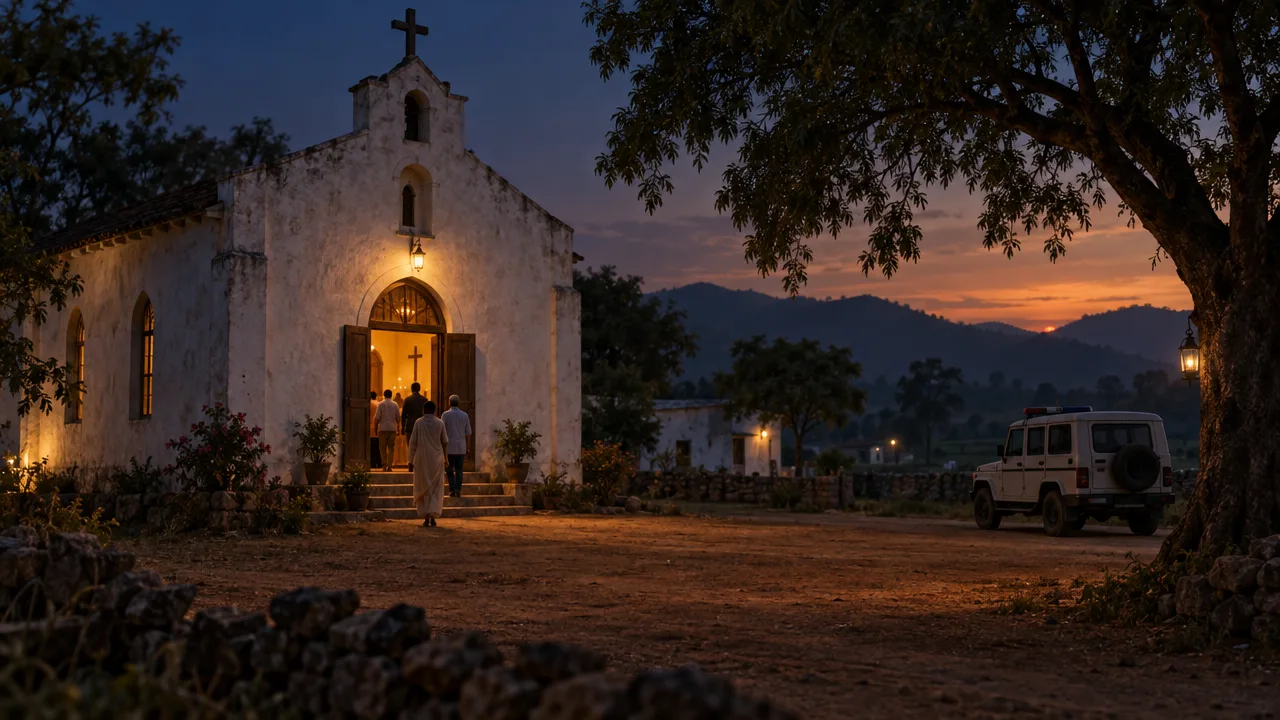
On Maundy Thursday, April 14, 2022, a congregation of the Evangelical Church of India gathered in Hariharganj, in Uttar Pradesh’s Fatehpur district. Activists from the Vishwa Hindu Parishad (VHP), a Hindu-nationalist organization, surrounded the service, locked the gates, and called the police, alleging that 90 Hindus were being forcibly converted. The next day police registered a first information report (FIR, the complaint that opens a criminal case) on the word of the VHP’s local vice-president, naming 35 people and 20 unidentified others. More cases followed, reaching the pastor, Vijay Masih, staff of the Broadwell Christian Hospital, and officials of a Christian agricultural university in Prayagraj.
It took three and a half years for anyone to say plainly what had happened. On October 17, 2025, Justices J.B. Pardiwala and Manoj Misra of India’s Supreme Court quashed the cases in a 158-page judgment. “The criminal law cannot be allowed to be made a tool of harassment of innocent persons,” they wrote, and they held that letting strangers to a conversion launch prosecutions dilutes the freedom of religion itself.
The court gave the defendants their vindication. It left the laws standing. This article is about those laws, the movement that writes and enforces them, and the Christians who live under them. Here, as in China and North Korea, the pressure does not come from Islam. It comes from Hindutva, the political ideology that defines Indian nationhood in Hindu terms, and from the state governments that have written parts of its program into criminal law. Hundreds of millions of Hindus live peaceably beside Christian neighbors. The critique here is aimed at the statutes, the organizations, and the named perpetrators.
Thirteen states now police conversion#
India’s constitution guarantees every person the right “freely to profess, practise and propagate religion” (Article 25). The anti-conversion laws, many of them titled “Freedom of Religion Acts,” operate underneath that promise at the state level. By July 2024, twelve states had one, including Uttar Pradesh, Madhya Pradesh, Gujarat, Odisha, and Uttarakhand. The last two years have added and hardened more:
- Rajasthan passed its law on September 9, 2025, and it took effect October 29, 2025. Voluntary conversion now requires prior permission from the district administration, and the maximum sentence is life imprisonment. Christian groups have challenged it in court.
- Maharashtra, India’s second-most-populous state, passed its Freedom of Religion Bill on March 16, 2026, becoming the 13th state with such a law by Christian Solidarity Worldwide’s count. Anyone who intends to change faith must notify the district magistrate 60 days in advance; “unlawful conversion” carries up to seven years, ten for repeat offenders. It took effect after presidential assent, with gazette notification on July 30.
- Chhattisgarh rewrote its existing law in March 2026. The new text, which became law in April, requires public notice of a person’s intended conversion, invites anyone to object within 30 days, reaches online speech, and sets ten to twenty years when the convert is a minor, a woman, or a member of a Scheduled Caste or Tribe. Returning to one’s “ancestral religion” is not treated as a conversion at all, a carve-out that Christian Daily International reports exempts conversion to Hinduism.
Read those provisions as a pastor would. A public notice listing your name, your old religion, and your new one hands a village mob its target list. An exemption for returning to Hinduism tells you which direction the law is watching. The marriage clauses, which punish conversion by “marriage-related deception,” are widely read as aimed at interfaith couples, and critics note they fall hardest on religious minorities and interfaith couples, Muslim men prominent among them.
How an accusation becomes an arrest#
The laws punish conversion by “force, coercion, misrepresentation, undue influence, allurement,” and fraud. Allurement is the word that does the work, because in practice a prayer for healing, a free meal after a service, or a school scholarship can be recast as an inducement. The Fatehpur pattern repeats across the country: activists arrive at a house church or a Sunday service, call the police, and the police arrive with an FIR already framed around “conversion.” Pastors are held while bail is argued.
The same pressure follows Christians to the grave. In January 2025, villagers in Chhindwada, in Chhattisgarh’s Bastar district, blocked the burial of a pastor, Subhash Baghel, in the local graveyard. His body lay in a mortuary for nearly three weeks until the Supreme Court directed burial at a Christian burial ground in Karkapal, about 20 kilometers away. The United Christian Forum counted 23 burial-related incidents in 2025, 19 of them in Chhattisgarh.
Two trackers, one direction#
Two Indian Christian bodies count these incidents, with different methods and different totals, and it helps to hold both.
The United Christian Forum runs a toll-free helpline and logs what callers report. Its annual totals have risen from 127 in 2014 to 834 in 2024, and every year since 2021 has set a new record. For 2025 the Forum had logged 706 incidents by November, with Uttar Pradesh (184) and Chhattisgarh (157) leading. Its full-year 2025 figure had not been published in the sources I could verify.
The Evangelical Fellowship of India’s Religious Liberty Commission is stricter. It field-checks each report, and from more than 915 cases reported in 2025 it confirmed 747 incidents, up from 640 in 2024 and 147 in 2014. The two series disagree on levels because they measure different things. They agree on the slope: five to seven times as many incidents a year as a decade ago.
Manipur, where ethnicity and faith burned together#
On May 3, 2023, violence broke out in the northeastern state of Manipur after a tribal students’ march against a court recommendation to grant Scheduled Tribe status to the Meitei, the state’s largest community. The Meitei live mostly in the Imphal Valley and are largely Hindu; the Kuki-Zo live mostly in the hills and are largely Christian. By November 2024 the state’s security adviser put the toll at 258 dead, militants included, with more than 50,000 displaced.
Manipur is first an ethnic conflict over land, tribal status, and political power, and a Christian writer who calls it a simple religious persecution will be corrected, rightly. Armed men on both sides have killed. In November 2024, suspected Kuki militants abducted and killed three Meitei women and three children in Jiribam. Human Rights Watch has also recorded Kuki allegations that police stood by or joined Meitei mobs.
The church toll is its own dimension, and it is enormous. Imphal’s Catholic archbishop, Dominic Lumon, reported 249 churches burned within the first 36 hours. UN experts later cited more than 253 churches destroyed. And the burning did not track ethnicity alone. Meitei Christians, about 1 percent of the state, lost churches to mobs from their own community; Meitei pastors told Christianity Today that the terms offered for safety were to burn their Bibles and sign affidavits converting to the traditional Sanamahi faith.
Graham Staines and Kandhamal, the older wounds#
None of this began in 2014. On the night of January 22, 1999, in Manoharpur village in Odisha’s Keonjhar district, a mob led by a Bajrang Dal activist named Dara Singh set fire to a station wagon where the Australian missionary Graham Staines, who had spent decades caring for leprosy patients, lay asleep with his two young sons, Philip and Timothy. All three burned to death. Singh’s 2003 death sentence was commuted to life in 2005, and the Supreme Court upheld the life term in 2011.
His widow, Gladys, publicly forgave the killers and stayed to run the work; India awarded her the Padma Shri in 2005. The story is still moving. In April 2025, co-convict Mahendra Hembram left prison after 25 years and was met with garlands and chants of “Jai Shri Ram”. In September 2026, Odisha told the Supreme Court that its Sentence Review Board had rejected Dara Singh’s plea for early release on August 31, 2026. Gladys Staines has said that, following Jesus’ teaching, she continues to forgive.
Nine years after Manoharpur came Kandhamal, also in Odisha. On August 23, 2008, the VHP leader Swami Laxmanananda Saraswati and four followers were murdered; Maoist insurgents were widely held responsible, but Hindu-nationalist groups blamed Christians. In the weeks that followed, about 100 Christians were killed by rights groups’ count (official figures are lower), some 300 churches and 6,000 Christian homes were damaged or destroyed, and 56,000 people were displaced. In 2016 India’s Chief Justice called the state’s compensation inadequate and questioned its record of acquittals. Seven Christians were convicted of the swami’s murder in 2013; Christian advocates maintain their innocence, and the Supreme Court bailed one of them in 2019 after ten years in prison.
Washington’s own commission keeps saying CPC#
The US Commission on International Religious Freedom, the bipartisan body Congress created in 1998, has recommended that the State Department designate India a Country of Particular Concern every year from 2020 through its 2026 report, citing “systematic, ongoing, and egregious” violations and noting that Uttarakhand and Rajasthan hardened their anti-conversion laws. The State Department has never made the designation, under administrations of both parties. My reading is that India’s value as a strategic partner has outweighed the commission every time.
Defenders of India’s government answer that USCIRF is biased; the RSS-aligned weekly Organiser called it a lobbying instrument that relies on selective NGOs and media. The strongest reply to that charge is not an American report. It is India’s own Supreme Court calling the Fatehpur prosecutions harassment.
Dalit Christians and the 1950 order#
One discrimination is written into national law. A Presidential Order of 1950 limits Scheduled Caste status, and with it reserved college seats, government jobs, and legal protections, to Hindus, Sikhs, and Buddhists. A Dalit who becomes a Christian or a Muslim loses the protections even though his caste status follows him into the village. In October 2022 the government appointed a commission under former Chief Justice K.G. Balakrishnan to study the question; its term has been extended repeatedly. In March 2026, the Supreme Court held that a convert to Christianity cannot be recognized as a Scheduled Caste member under the order’s “absolute and unequivocal” religious test. For a Dalit family weighing baptism, the ruling puts a price on conversion in lost seats and jobs.
What holds up and what doesn’t#
Established: the laws, their provisions, and their spread to 13 states; the rising incident counts from two independent Christian trackers; the Staines and Kandhamal histories; the destruction of hundreds of churches in Manipur; USCIRF’s repeated recommendation and State’s refusal.
Contested: whether the laws address real coercion. Supporters argue that fraudulent and induced conversions happen; critics, and the Fatehpur judgment, point to accusations that collapse under scrutiny. Incident totals are also contested at the level of method: the Forum logs reports, while the Evangelical Fellowship verifies them. Cite each with its name.
Fails: calling Manipur a pure religious genocide, which erases the ethnic war and the Meitei dead; calling it purely ethnic, which cannot explain Meitei Christians forced to burn their Bibles; and saying “Hindus persecute Christians,” which indicts a billion people for the acts of specific movements.
Honest context belongs here too. Indian Muslims, a far larger minority, face the same movements; USCIRF’s India reporting documents pressure on both communities, and a BJP legislator used the Rajasthan debate to urge Muslim members to “return to their original religion”. My conviction is that Christian advocacy on India that leaves Muslims out will not be believed, and should not be.
Pray for India’s Christians by name#
“Love your enemies and pray for those who persecute you” (Matthew 5:44). Gladys Staines has lived that verse in public for 27 years.
- Pastor Vijay Masih and the Fatehpur congregation, cleared by the Supreme Court after three and a half years: for restored reputations and a church that can meet without fear.
- Christian families in Chhattisgarh’s Bastar region, where 19 of 2025’s 23 burial disputes occurred: for the right to bury their dead near home.
- Meitei Christians and Kuki-Zo believers in Manipur’s relief camps: for homes rebuilt, and for Meitei and Kuki churches to reach across the line that the fighting drew.
- Gladys Staines, and for Dara Singh and Mahendra Hembram: for her continued strength, and for the repentance she has asked God to give them.
- Pastors in Maharashtra and Rajasthan learning to work under new notice and permission rules: for wisdom, and for courts that apply the Fatehpur standard.
- Dalit Christians who lost protections in the March 2026 ruling: for provision, and for the Balakrishnan commission to report honestly.
Stand up this week#
Write your US Representative and both Senators. Use congress.gov’s member finder to get their names and contact pages. Ask them one thing: to press the State Department, by letter or at the next budget hearing, to act on USCIRF’s recommendation and designate India a Country of Particular Concern. Cite the October 17, 2025 Supreme Court judgment in which India’s own justices called anti-conversion prosecutions “a tool of harassment of innocent persons.” Name Pastor Vijay Masih. One paragraph is enough.
Go deeper#
- Supreme Court of India, Rajendra Bihari Lal v. State of U.P. (2025 INSC 1249). The 158-page Fatehpur judgment; the best primary document on how the laws are abused.
- Evangelical Fellowship of India, Hate and Targeted Violence Against Christians in India, 2025 report. Verified, incident-by-incident casework from inside India.
- USCIRF country recommendations. The commission’s India findings, which cover every religious minority, not Christians alone.
- Christianity Today, “Meitei Christians Caught in Middle of Manipur Violence”. The Manipur story that neither the purely ethnic nor the purely religious reading can hold.
- Human Rights Watch on Manipur. Secular documentation of abuses by all sides, and of the state’s failure to stop them.