The Worst Place on Earth to Own a Bible
North Korea has ranked first on the World Watch List every year since 2002 except one. What the UN, the State Department, and Korea Future have documented about how the regime punishes Christians, their children, and refugees sent back from China.
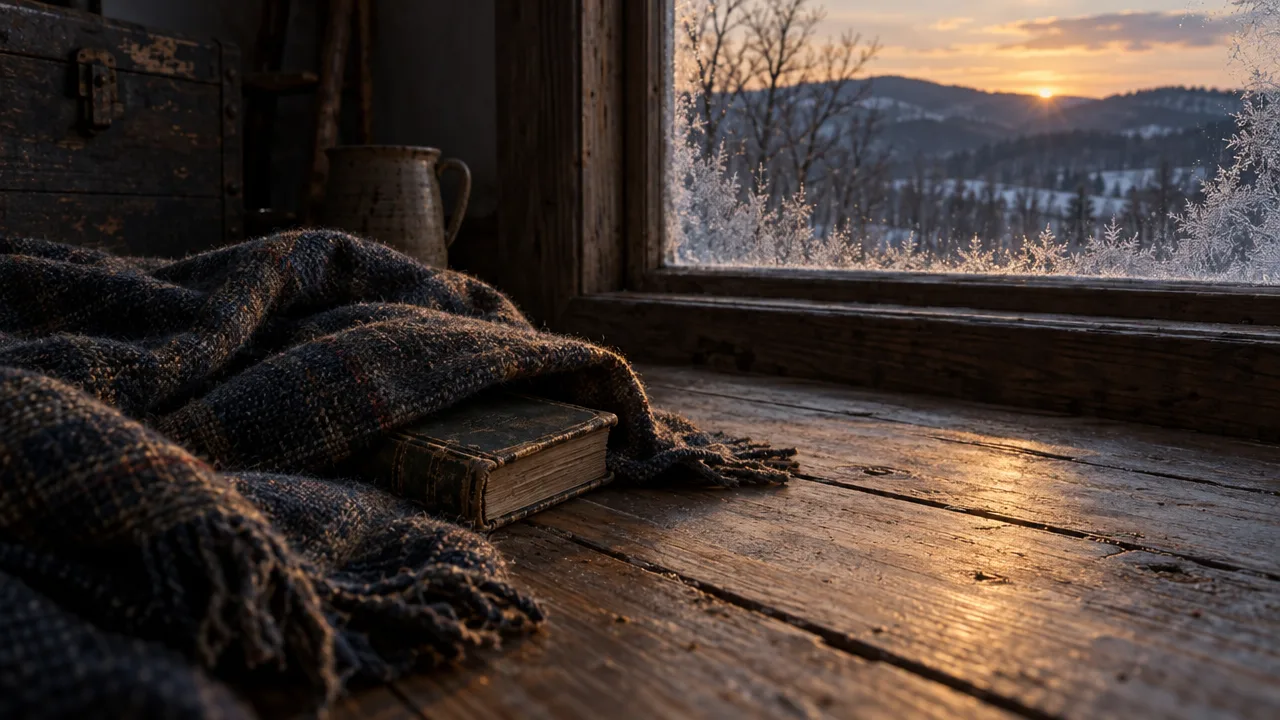
In 2009, North Korean authorities arrested a family over their religious practice and a Bible in the house. According to the US State Department’s 2022 Report on International Religious Freedom, every member of the family received a life sentence in a political prison camp, including a two-year-old child.
The report doesn’t name them, and seventeen years later no public source says whether any of them is alive. The case reached Washington through testimony gathered by Korea Future, a documentation group whose work this article leans on heavily, and it fits a pattern the same report describes: officials punishing the relatives of people charged with religious “crimes,” sometimes arresting entire families.
North Korea sits at #1 on Open Doors’ World Watch List 2026 with a score of 97 out of 100. It has held first place every year since 2002 except 2022, when Afghanistan displaced it. The overview article in this site’s earlier series covered the global numbers. This one covers the country where the state itself is the persecutor, and where the documented record is grim enough that nobody needs to embellish it.
Pyongyang was once called the Jerusalem of the East#
The regime’s hostility makes more sense once you know what the city used to be. On January 14, 1907, Korean Christians and Western missionaries gathered in Pyongyang for a Bible study that grew into what historians call the Great Pyongyang Revival, a season of public confession and conversion that spread across the peninsula. By the early twentieth century Pyongyang held Union Christian Hospital, a Presbyterian theological seminary, and Union Christian College, and missionaries and Korean believers alike called the city “the Jerusalem of the East.” One of the revival’s leaders, Kil Sŏn-ju, was among the first Koreans ordained to the Presbyterian ministry.
That church did not survive the division of Korea in 1945 and the war that followed. Many northern believers fled south, and the ones who stayed became a named category in the new state’s records.
Songbun, or how a grandfather’s faith follows a family#
North Korea sorts its citizens by songbun, a hereditary classification that the analyst Robert Collins documented in Marked for Life (Committee for Human Rights in North Korea, 2012). The system divides the population into a loyal “core” class, a “wavering” class, and a “hostile” class, and it assigns status by what your parents and grandparents were and did. The US Commission on International Religious Freedom reports that religious believers are assigned to the lowest ratings.
The UN Commission of Inquiry (COI) found in 2014 that songbun weighs religion alongside class and birth, and that it determines where a person may live and work, what schooling they get, and whom they may marry. Picture, for illustration, a child whose grandfather was a deacon in 1950. The child never met him and may never have seen a Bible. Under the system the COI describes, the file still carries the grandfather’s faith, and the child pays for it in where the family may live and what work the child is assigned.
Scripture sets the opposite rule. “The son shall not suffer for the iniquity of the father” (Ezekiel 18:20). North Korea punishes the son for the faith of the father, and treats that faith as the iniquity.
What the UN found about religion#
The COI was the most rigorous outside examination North Korea has ever received. Its three commissioners heard about 80 witnesses in public hearings in Seoul, Tokyo, London, and Washington, and conducted 240 confidential interviews. On religion, its findings are blunt: the state “considers the spread of Christianity a particularly severe threat,” and, apart from a few state-controlled churches, “Christians are prohibited from practising their religion and are persecuted”. The Commission concluded that the regime commits crimes against humanity and urged referral to the International Criminal Court.
The COI also explained why Christianity in particular draws that treatment: the faith challenges the official cult of personality around the Kim family and gives people a way to organize outside state control. A church is a loyalty the regime did not issue.
Eleven years later the picture had worsened. A September 2025 UN human rights office review, Blocking people’s eyes and ears, found expanded use of the death penalty, tighter surveillance, and deeper isolation since 2020, with freedom of religion still severely restricted. The legal engine of that tightening is the December 2020 Law on Rejecting Reactionary Ideology and Culture, which authorizes penalties up to death for bringing in, viewing, or distributing “reactionary” material. The statute is written about foreign culture broadly; USCIRF and religious-freedom monitors report it being used against religious material and practice.
What Korea Future documents, and how#
Most of what we know about individual cases comes from people who got out. Korea Future collects testimony from survivors, witnesses, and former perpetrators, cross-checks it, and builds case files that identify the officials and institutions responsible, then hands that material to governments and UN bodies for accountability work. It is documentation built to hold up in a legal setting, not fundraising copy.
Its first volume of Persecuting Faith (2020) drew on 117 interviews conducted over seven months and identified 273 victims of religious-freedom violations, 76 of them still held in the penal system at the time of publication. The charges recorded against victims read like a list of ordinary Christian life: religious practice, religious activity in China, possessing religious items, contact with religious persons, attending worship, and sharing beliefs. The punishments recorded include arbitrary detention, torture, sexual violence, punishment of family members, and execution. The second volume (2021) documented 244 victims, more than 70 percent of them women and girls, ranging in age from two to over 80.
The State Department adds one more line that deserves attention. Citing the Korea Institute for National Unification, its reports say punishment is especially strict for anyone who studied or possessed a Bible or had contact with Christian missionaries. That contact almost always happens in one place: China.
China sends them back#
North Koreans who escape usually cross into China’s Jilin and Liaoning provinces, and for many of them China is where they first meet Christians, in border churches and missionary shelters. China treats these escapees as illegal economic migrants and returns them under border agreements with Pyongyang, despite being a party to the 1951 Refugee Convention. It is the same Party-state whose licensing of its own churches is the subject of part 4.
On the night of October 9, 2023, Chinese authorities forcibly returned more than 500 North Koreans in a single operation, the largest mass repatriation in years; South Korean civic groups put the number near 600. The returns did not stop. Human Rights Watch documented at least 406 more between January 2024 and September 2025, bringing the total it could document since 2020 to at least 1,076, including 212 trafficked women sent back from southern China during 2024. In March 2026 the Database Center for North Korean Human Rights (NKDB) released a report arguing that the repatriations may amount to crimes against humanity.
For a returnee, the interrogation question that matters most is who they met in China. USCIRF reports that repatriated refugees face severe punishment if they engaged in religious activity abroad, including contact with Christian missionaries. A woman who accepted a meal and a Bible from a border church is, in the state’s eyes, a returning agent of a hostile ideology.
The camps, and the numbers nobody can count#
The regime runs a network of political prison camps called kwanliso. The COI estimated in 2014 that 80,000 to 120,000 political prisoners were held in four large camps, where it found deliberate starvation used as a means of control. That estimate rests on witness testimony and satellite imagery of the camps’ infrastructure, and the Commission presented it as an estimate.
How many of those prisoners are Christians is unknown. A figure of 50,000 to 70,000 Christians in camps circulates widely, and the State Department’s 2022 report repeats an NGO estimate of roughly 70,000. Nobody outside the regime can verify it. No independent observer has entered a kwanliso, the camps do not publish rosters, and the testimony that exists describes individual prisoners, not a census. I think the right way to say it is the plain way: tens of thousands of political prisoners are held in conditions a UN commission called crimes against humanity, Christians are among them, and the precise number is not known.
How to weigh defector testimony#
A skeptic will say that almost everything above comes from defectors, and defectors have reasons to exaggerate. The objection deserves a real answer, because it has been right before. North Korea’s most famous camp survivor, Shin Dong-hyuk, whose story anchored Blaine Harden’s Escape from Camp 14, changed key parts of his account in 2015, including which camp held him and how many times he escaped. Harden attributed the changes to trauma and shame, and still wrote that he expected more revisions.
The serious documenters work around exactly that problem. The COI applied a stated standard of proof, “reasonable grounds,” meaning a reliable body of information consistent with other material, and it relied on patterns across hundreds of independent witnesses, not any single story. Korea Future interviews former perpetrators as well as victims, and names the officials involved. Satellite imagery confirms the camps’ guard towers, barracks, and work sites. So here is the standard I’d hold myself to: trust patterns attested by many unconnected witnesses and corroborated by imagery or perpetrator testimony; hold single dramatic stories loosely until a second source appears; and treat any precise count from inside the camps as an estimate, whoever publishes it.
Established, contested, and failed#
Established. North Korea bans independent religious practice and punishes it with prison, forced labor, torture, and execution (COI 2014; State Department; USCIRF). Songbun marks religious family background for generations. China forcibly returns escapees, and returnees who met Christians face harsher treatment. North Korea ranks #1 on the World Watch List.
Contested or unverifiable. Any specific count of Christians in North Korea or in its camps. Individual execution reports that come from a single activist source, such as the 2009 report of a woman publicly executed for distributing Bibles: plausible, consistent with the documented pattern, and not independently confirmed.
Fails. “North Korea persecutes Christians alone.” Korea Future’s second volume found more victims who practiced shamanism than Christianity (150 to 91). The regime attacks every religion it can find, and Christians are the target it fears most, not the only one. And “50,000 Christians are in North Korean camps” stated as a fact fails; state it as an unverified estimate or leave it out.
Pray for these people by name and place#
- The family arrested in 2009, and the child who would now be about nineteen, if living. Pray that someone in that camp knows the name of Jesus and says it to them.
- The women sent back from Jilin, Liaoning, and Yunnan. Human Rights Watch counted 212 trafficked women among the 2024 returns alone. Pray for the ones interrogated about the churches that sheltered them.
- The border churches in northeast China that shelter escapees at the risk of their own members’ freedom.
- The security officers who run the interrogations, whose agencies carry out most of the religious-freedom abuses Korea Future has documented. Korea Future has interviewed some of their former colleagues. Pray for more to defect, and for some of them to believe.
- Families carrying hostile songbun for a faith they never practiced. “But the word of God is not bound!” (2 Timothy 2:9).
- Korea Future and NKDB investigators, whose case files may one day be evidence in a courtroom.
Stand up this week#
Write one letter to your US representative and both senators asking them to press China, publicly and in bilateral talks, to stop forcibly returning North Korean refugees, and to cite Human Rights Watch’s October 2025 finding of at least 406 returns since January 2024. Find your members at congress.gov/members/find-your-member. Keep it to one page, name the October 9, 2023 mass return, and ask for a written reply.
Go deeper#
- UN Commission of Inquiry report, A/HRC/25/63 (2014). The baseline. Read the methodology section before the findings.
- Korea Future. The Persecuting Faith volumes and the North Korean Prison Database, built from survivor and perpetrator testimony.
- Marked for Life by Robert Collins (HRNK, 2012). The standard English-language study of songbun.
- Human Rights Watch on forced returns (October 2025). The documented count of repatriations since 2020, case by case.
- USCIRF North Korea page. Annual findings and the commission’s CPC recommendation.