Sacred Ground: What Conquerors Do to Holy Places
From the Dome of the Rock to Hagia Sophia to the church for sale down the street: what the historical record actually shows about conquest and holy places, in both directions.
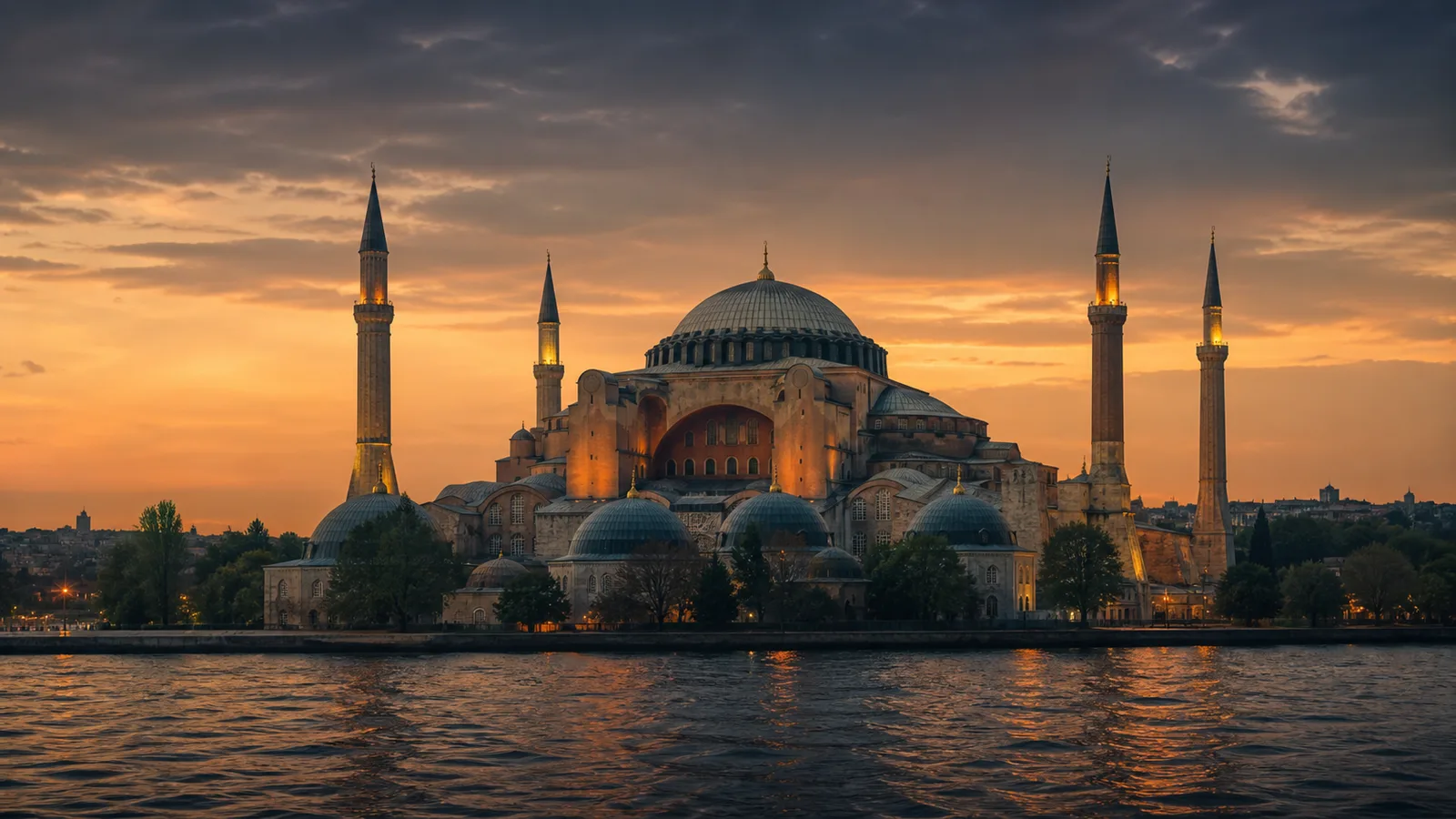
On July 24, 2020, the adhan sounded from the minarets of Hagia Sophia, and Justinian’s cathedral held Friday prayers as a mosque for the first time in 86 years. Two weeks earlier, Turkey’s Council of State had annulled the 1934 decree that made the building a museum, and President Erdoğan reopened it for Muslim worship, calling the change the rectifying of a mistake. UNESCO said it “deeply regrets” the decision. The EU’s foreign policy chief, Greece, the US State Department, the Ecumenical Patriarch, and Pope Francis all objected. The Byzantine historian Judith Herrin called it “an act of cultural cleansing”.
None of that changed the outcome. A NATO member state, in the twenty-first century, deliberately re-enacted a fifteenth-century conquest ritual over the objections of nearly every institution the modern world has built for such moments. During prayers, the mosaics of Christ are curtained.
If you want to understand why that act carried so much weight, you have to know the history it was quoting. This last article in the series is about that history: what conquerors do to holy places. The record is heavier than most defenders of Islam admit and more symmetric than most critics admit, and it ends somewhere uncomfortable for American Christians, which is exactly where I want to end it.
The pattern at the moment of conquest#
Start in Jerusalem, 691/2 AD. The caliph ʿAbd al-Malik built the Dome of the Rock on the Temple Mount, dated by its own foundation inscription to 72 AH. Precision matters here, because critics routinely get this wrong: the Dome was not a converted church. The Temple Mount had lain largely derelict since 70 AD, used partly as a refuse dump under Byzantine rule. The building’s force is in its siting and its message. Around its arcade runs a 240-meter mosaic band, the earliest dated monumental Quranic text anywhere, and it is aimed squarely at the Trinity: it addresses the “People of the Book” directly, declares Jesus a messenger and not God’s son, and repeats the creed that God “begetteth not nor was begotten” (Quran 112:3, Pickthall). On the holiest ground of the older faiths, the new empire wrote its rebuttal of the central Christian claim in gold. Scholars argue about emphasis, not substance: Oleg Grabar read the building as a proclamation of Islam’s supremacy in a still-majority-Christian city, deliberately rivaling the dome of the Holy Sepulchre, while Lawrence Nees notes the inscriptions omit the Quran’s harsher anti-Christian verses and reads a quasi-ecumenical appeal. Nobody disputes what the words say.
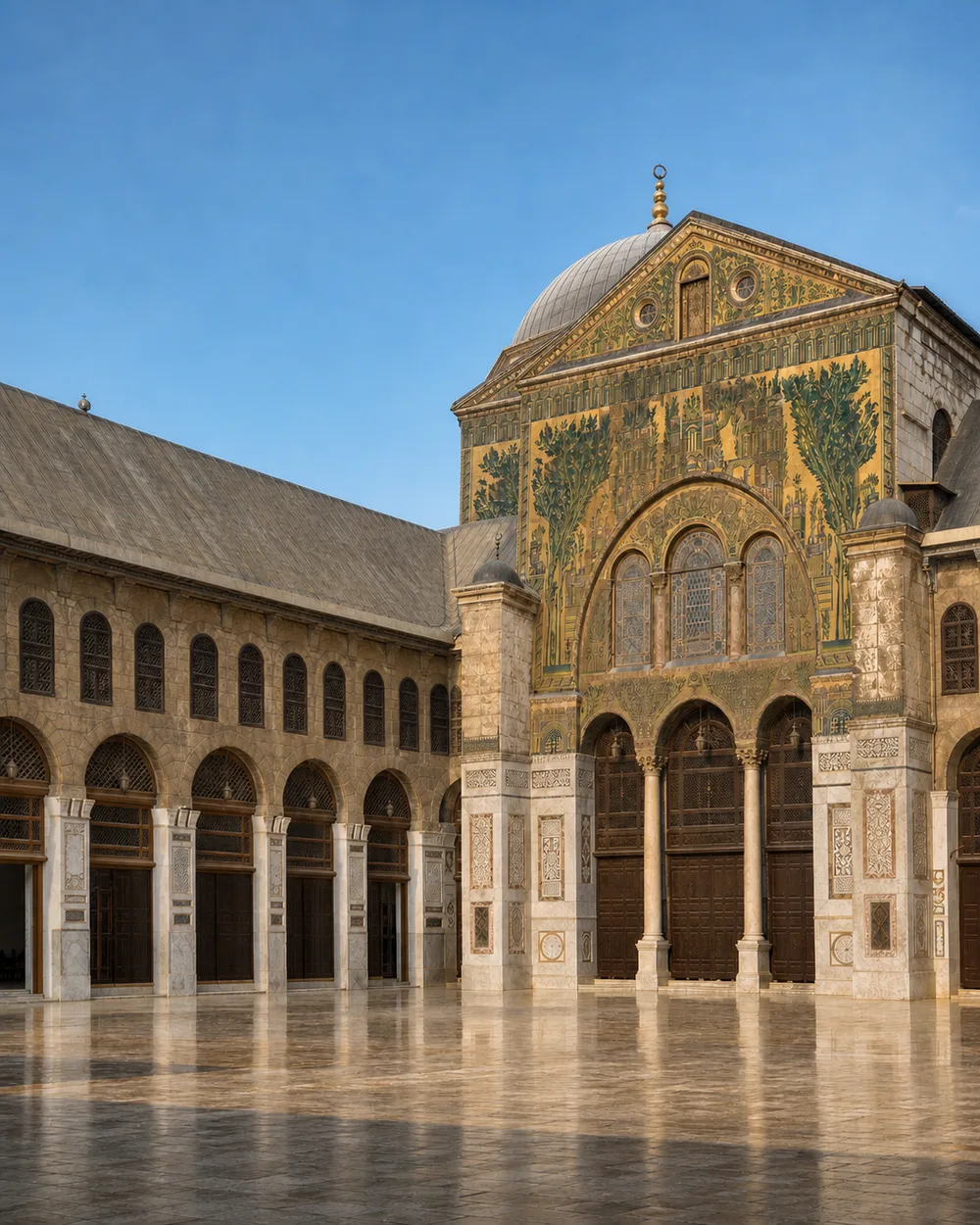
Damascus is the harder case. After the Muslim capture of the city, Christians and Muslims shared the walled compound of the Cathedral of St. John the Baptist for roughly seventy years, worshipping in separate sections. Then in 705 the caliph al-Walid I demolished the cathedral over Christian objection, compensating the Christians with other church properties, and raised the Great Mosque on the site. The shrine holding John the Baptist’s head was kept inside the mosque and is venerated by Muslims and Christians to this day. Note what that one site records: seventy years of tolerated shared worship, then imperial demolition. Both facts are the history.
Constantinople, May 29, 1453. Mehmed II took the city and had the adhan called and Friday prayers held in Hagia Sophia as the definitive act of taking possession. That became the Ottoman template across the Balkans: the principal church of a conquered city was typically converted as an act of possession, from Thessaloniki’s ancient Rotunda to Hagia Sophia’s namesakes in Ohrid and Trabzon. Erdoğan in 2020 was quoting Mehmed, not innovating.
India supplies the bloodiest chapter and the most contested numbers. The touchstone study is Richard Eaton’s “Temple Desecration and Indo-Muslim States,” which counts at least 80 instances of temple desecration between 1192 and 1729 “whose historicity is reasonably certain,” against Hindu-nationalist claims of 60,000. Eaton reads the destruction as political theater in an Indian idiom: sultans targeted the royal temples of enemy and rebel kings, whose temples embodied their sovereignty, while temples inside consolidated Muslim domains were generally left alone and sometimes state-protected. The scale is honestly unresolvable. Eaton himself calls 80 a floor, critics argue he undercounts and soft-pedals the religious exultation in the court chronicles, and the nationalist figures have no documentary basis. What is established is that major destructions happened, repeatedly, and that Somnath was sacked in 1026 and destroyed again more than once after.
No commandment behind the pattern#
Here is where a Christian writer has to slow down, because the tempting next sentence is false. There is no doctrine of Islamic law commanding that conquered sanctuaries become mosques. Classical jurists distinguished cities taken by treaty, whose churches were protected, from cities taken by force, where existing churches survived at the ruler’s discretion — a permissive framework, not a command, and jurists writing on modern questions note the fiqh literature contains no worked doctrine of church-to-mosque conversion at all.
The tradition’s own counter-precedent is the strongest evidence. In 637, the caliph Umar, invited by Patriarch Sophronius to pray inside the Church of the Holy Sepulchre, refused precisely so that Muslims would not later claim the church, praying outside instead and guaranteeing Christians their churches and crosses. The story reaches us through later Islamic historiography, so hold it loosely as biography — but the fact it explains is solid: the Holy Sepulchre, the most tempting prize in Christendom, remained a church through nearly 1,300 years of Muslim rule. The defensible claim, and the one I am making, is this: Muslim conquerors repeatedly chose to mark victory through sacred architecture, within a legal framework that permitted it for cities taken by force. A recurring conquest-era pattern, freely chosen at the moments that mattered most. Not a commandment.
The traffic ran both ways#
Any tally that stops there flunks the honesty test, because the reverse column is at least as long.
When Christian kingdoms took al-Andalus back, they converted the congregational mosque of essentially every major city they conquered, usually within days: Toledo in 1085, Córdoba in 1236 (Ferdinand III consecrated the Great Mosque as a cathedral the same year he took the city), Seville in 1248, where the Almohad minaret still stands as the cathedral’s bell tower, and Granada after 1492, where the Great Mosque was razed and, by 1526, mosque worship had been extinguished in Spain entirely. Norman Sicily did the same; Syracuse’s cathedral has been a Greek temple of Athena, a church, a mosque, and a church again, all in one building. The Crusaders, on taking Jerusalem in 1099, converted the Dome of the Rock into a church, Templum Domini, and al-Aqsa into a palace and then Templar headquarters; Saladin reversed both in 1187. As Ottoman rule receded from Europe, scores of mosques in Greece alone were converted or demolished (that count comes via a Turkish state-aligned outlet, so treat the exact figure with care; the direction of traffic is not in doubt).
And then Bosnia, in living memory. Between 1992 and 1995, forces fighting under a self-consciously Christian-nationalist banner destroyed 614 mosques and damaged 307 more, including the UNESCO-listed Ferhadija mosque, dynamited in Banja Luka in 1993 with its rubble carted away and hidden. The same war produced Srebrenica, where more than 8,000 Muslim men and boys were executed in a campaign international courts ruled genocide. In that war, Muslims were primarily the victims, and the men blowing up their minarets claimed my faith while doing it. If I am going to ask Muslims to reckon honestly with 1453, I do not get to skip 1993.
Where the distinction actually lies#
Strip away the polemics, and most of this is simply what conquerors do, whatever their book. The template predates Islam: Christianity itself converted the pagan temples of the late-antique Mediterranean, the Pantheon becoming a church in 609 and the Parthenon cycling church-then-mosque. Islam’s own founding act follows the same script: in 630 Muhammad cleansed the Kaaba of its 360 idols and rededicated the pagan shrine to Allah alone, keeping the older rituals with new meanings. Spain carried the script to the Americas, and there the ground being overwritten included sites of industrial-scale human sacrifice; at Tenochtitlán’s Templo Mayor precinct, archaeologists have excavated a tower built from more than 600 human skulls, confirming what the conquistadors described. Conquerors of every tradition mark victory on the defeated’s most charged sacred real estate. Islam’s cases are prominent because Islam’s conquests were prominent.
One distinction in the record is still worth stating, carefully. The Christian conversions of mosques were overwhelmingly re-consecrations of formerly Christian ground: Spain had been Christian for centuries before 711, Palermo’s mosque was itself a converted basilica, and even Córdoba’s mosque traditionally stood on the basilica of San Vicente (though archaeologists dispute that identification, so I hold it loosely). Reclamation and conquest are not the same moral act, and the difference is real. But before any Christian reader gets comfortable, the same record shows the Reconquista did not stop at buildings: it ended in forced conversions and the expulsion of Spain’s Muslim population outright, an end-state no premodern Muslim conquest imposed on Christians at comparable scale. The ledger humbles everyone who reads all of it.
The question waiting in the American real-estate listings#
Which brings this series home. You have probably seen the viral version of the American question: churches becoming mosques, framed as Córdoba on the installment plan. The documented record says something different. In 2019, about 4,500 Protestant churches closed while about 3,000 opened, and the buyers of the dead buildings are mostly developers, breweries, gyms, and other congregations — immigrant Christian churches being the most common religious buyer. Muslim congregations are one buyer class among many, and in every documented US case the sale was voluntary, made by Christian owners after the congregation had already died; the documented motives are price, existing religious-assembly zoning, and growth. The viral European numbers fare worse: “London closed 500 churches and opened 423 mosques” is fabricated, and the real UK count is roughly 41 conversions out of thousands of closures. If you want a modern act of conquest symbolism, Hagia Sophia 2020 is it: a state decision, explicitly ceremonial, internationally condemned. A dying parish in Buffalo selling its building for $250,000 is not.
Back in the Bay Area years ago, I had a Muslim neighbor who prayed five times a day, sometimes right in front of me in his own living room while we talked about God. I think about that devotion now, because I live rural these days, more than an hour from the city center, and out here the emptying is not a statistic. Churches around us close, and when the buildings change hands, the new owners strip the remnants a little at a time, but they always leave just enough that you know it was a church. The grief runs in two directions at once. People are losing the faith, and the faith of the people who came before is being erased slowly enough to watch.
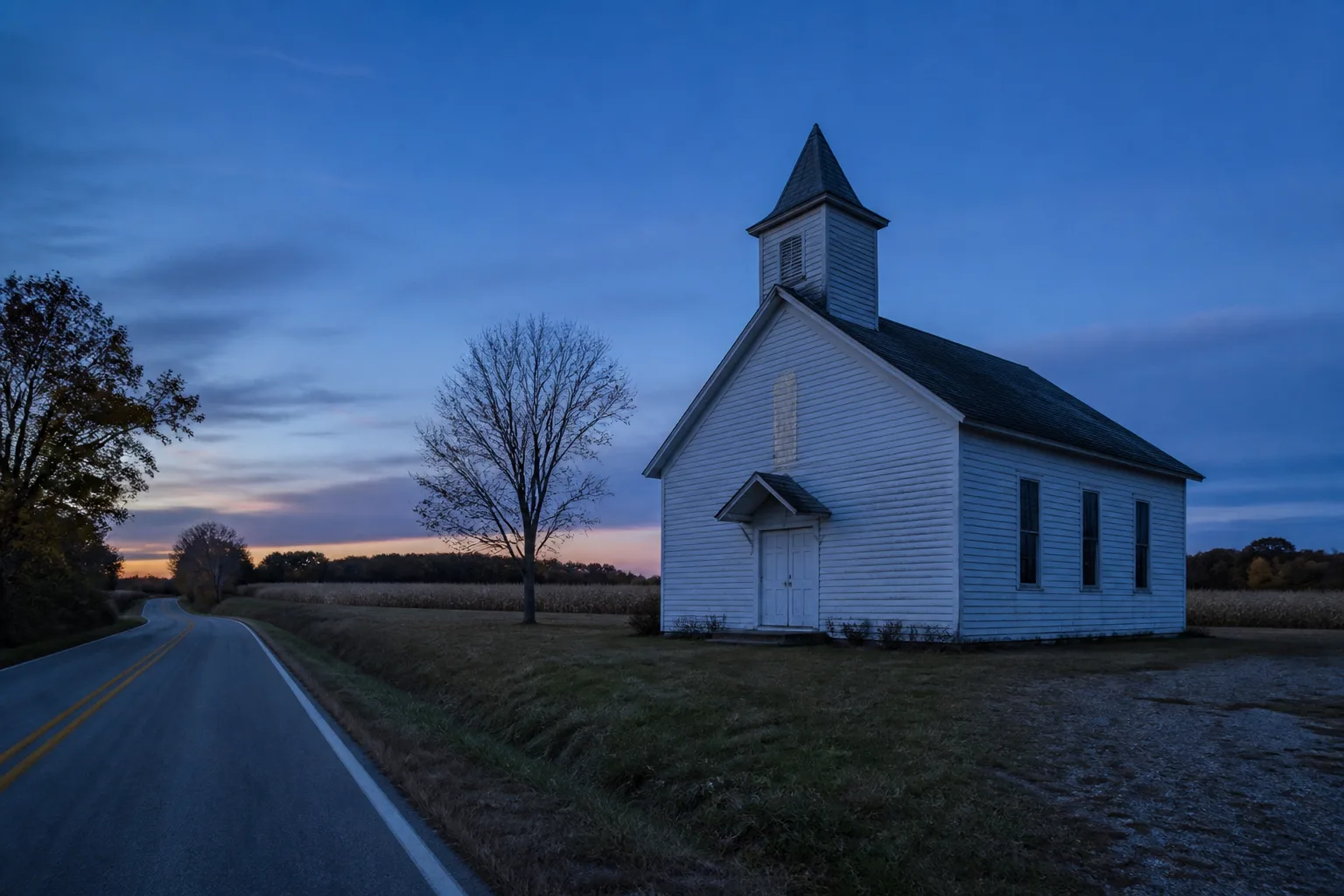
Here’s the part that should bother us. The documented American story is not who is buying our churches; it is why we are the ones selling. Christian affiliation in this country fell from 78% of adults in 2007 to 62%, where it has roughly leveled off since 2019. The largest study of the exodus estimates about 40 million Americans stopped attending church since the 1990s, and finds most of them left casually: they moved, it got inconvenient, nobody followed up. More than 20 million say they are open to returning. No caliph emptied those pews. We did, one skipped Sunday at a time, and the buildings followed the people out the door.
I have spent seven articles asking Christians to look at Islam’s history without flinching, and I am not going to flinch now. I love my Muslim neighbors and I want them to meet Jesus; that is exactly why I refuse to hand them a persecution narrative we manufactured from zoning records. Paul told the Athenians that “The God who made the world and everything in it, being Lord of heaven and earth, does not live in temples made by man” (Acts 17:24). Hagia Sophia was lost to a conquering army, and that loss deserves to be named for what it was. The church on the corner of your town is being lost to a calendar. One of those two problems is yours to fix, and it doesn’t require a single word about Islam. It requires you in a pew, this Sunday, with your kids beside you.
Go deeper#
- Oleg Grabar, The Dome of the Rock (2006): the field’s dominant interpreter on what ʿAbd al-Malik built and why; the place to test everything this article said about Jerusalem.
- Richard M. Eaton, “Temple Desecration and Indo-Muslim States” (2000): the canonical study behind the “at least 80” figure, and a model of how to count atrocities honestly.
- Jim Davis & Michael Graham, The Great Dechurching (2023): the data on 40 million departures, and why most of them are more recoverable than you think.
- Robert Hoyland, Seeing Islam as Others Saw It: the primary sources for how the conquered world experienced the first Islamic century, in their own words.