What the Quran Actually Is
What the Quran is, how Islam says it was compiled, what the earliest manuscripts actually show, and an honest comparison with the New Testament that neither side's apologists will love.
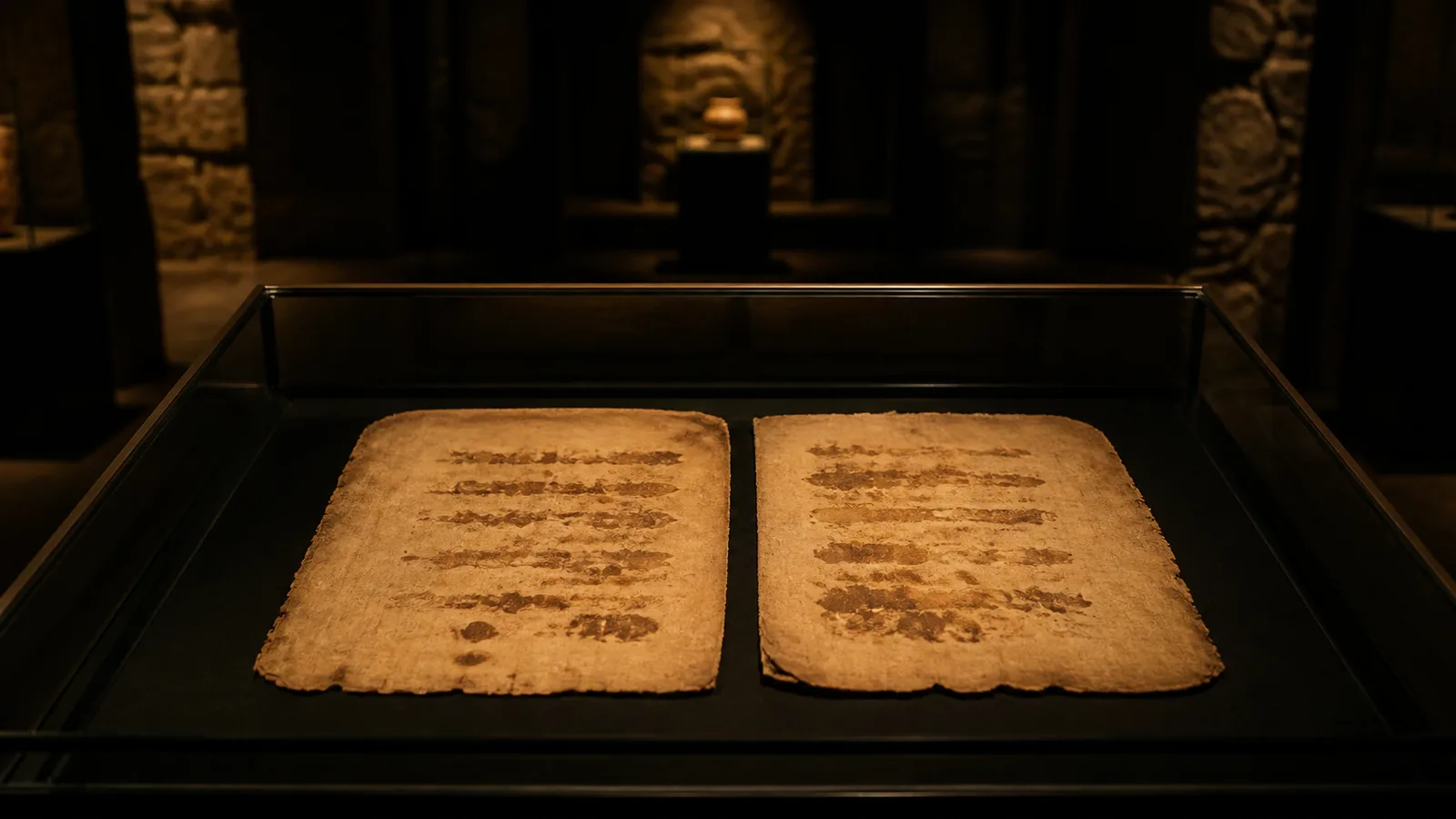
In the summer of 2015, the University of Birmingham put two leaves of parchment under glass and drew camera crews from around the world. Radiocarbon testing had dated the leaves, with 95.4% probability, to between 568 and 645 AD (Birmingham Quran manuscript). Muhammad died in 632, so the headlines wrote themselves: the oldest Quran ever found, possibly older than Muhammad himself. Muslim commentators announced vindication. Some Christian commentators announced that the Quran predated its own prophet.
Both were reading a press release, not the evidence. Radiocarbon dates the death of the animal whose skin became the page, not the ink on it, and palaeographers such as François Déroche place the handwriting in the mid-to-late seventh century (the caveats are on record, and Stephen Shoemaker has catalogued the method’s misfires). What the leaves actually show is more modest and more interesting: recognizably Quranic text, on very early parchment, matching the book a volunteer at a dawah table would hand you today.
That gap between the headline and the evidence is the reason for this series. I’m a Christian. I love Muslim people, I want them to meet Jesus, and I’ve come to believe that Christians who engage Islam owe their neighbors the respect of knowing what this book actually is, because most of what Muslims hear from Christians about the Quran is secondhand and wrong in its details. This first article is deliberately descriptive. Convictions get their turn later in the series. Facts go first, and I’ll cite mine the way I had to in college.
The shape of the book#
The Quran has 114 surahs (chapters). After the seven-verse opener, they run roughly from longest to shortest (Britannica’s overview covers the arrangement): Surah 2 alone is 286 verses (Al-Baqarah), while the surahs at the back are a few lines each. The order is not chronological. Islamic tradition itself sorts each surah as Meccan or Medinan, 86 and 28 of them respectively (Britannica), meaning before or after Muhammad’s 622 migration to Medina. The long legal and polemical surahs are mostly late Medinan; the short, urgent, oracular ones are early Meccan. So reading the Quran cover to cover means reading it in something close to reverse chronological order.
What does that do to a first-time reader? It drops you into the deep end of a swimming pool built backwards. You open to hundreds of verses of law, covenant polemic, and rulings on disputes you haven’t been introduced to, addressed to communities you haven’t met, and the material that would orient you (the early preaching about judgment, resurrection, and the one God) sits at the back of the book. The Quran is also not a narrative. It names Muhammad only four times (3:144, 33:40, 47:2, 48:29) and contains almost no connected biography; the familiar life of Muhammad comes from later literature, which the next article covers.
The order matters for more than readability. Islam has a formal doctrine, naskh (abrogation), under which a later revelation can supersede an earlier one, and the Quran itself describes God replacing one verse with a better one (Q 2:106). How far that reaches was disputed inside the classical tradition: some counted over a hundred verses abrogated by the late “sword verse” of Q 9:5, while al-Suyuti counted about twenty in the whole book, and the classical commentators disagreed openly about what 9:5 cancelled (Ibn Kathir records both restrictive and sweeping views side by side). The point for now is structural: in Quranic interpretation, chronology decides which verse governs, and the book’s page order hides the chronology. A later article in this series deals with abrogation on its own.
Islam’s own account of the text#
Here is the traditional account, told from Islam’s own sources. The revelations came piecemeal from 610 to 632, memorized by companions and partly written down on whatever was at hand. After Muhammad’s death, the first caliph Abu Bakr ordered a collection. Then, around 650, the third caliph Uthman commissioned a committee under Zayd ibn Thabit to produce a standard codex, sent copies to the garrison cities, and dealt with everything else. The record of how he dealt with it sits inside Sunni Islam’s most trusted hadith collection. Sahih al-Bukhari 4987 records that Uthman sent each province a copy of the new standard and ordered all other Quranic materials, whether fragments or whole codices, burned.
There was something to burn. Reports preserved in Islamic literature, catalogued by Arthur Jeffery in his 1937 Materials for the History of the Text of the Qur’an, describe senior companions holding their own codices: Ibn Mas’ud’s reportedly lacked surahs 1, 113, and 114, and Ubayy ibn Ka’b’s reportedly contained two extra short surahs (the source reports are collected here). Standardization happened because real divergence existed, and it happened early, roughly twenty years after Muhammad’s death, by state authority.
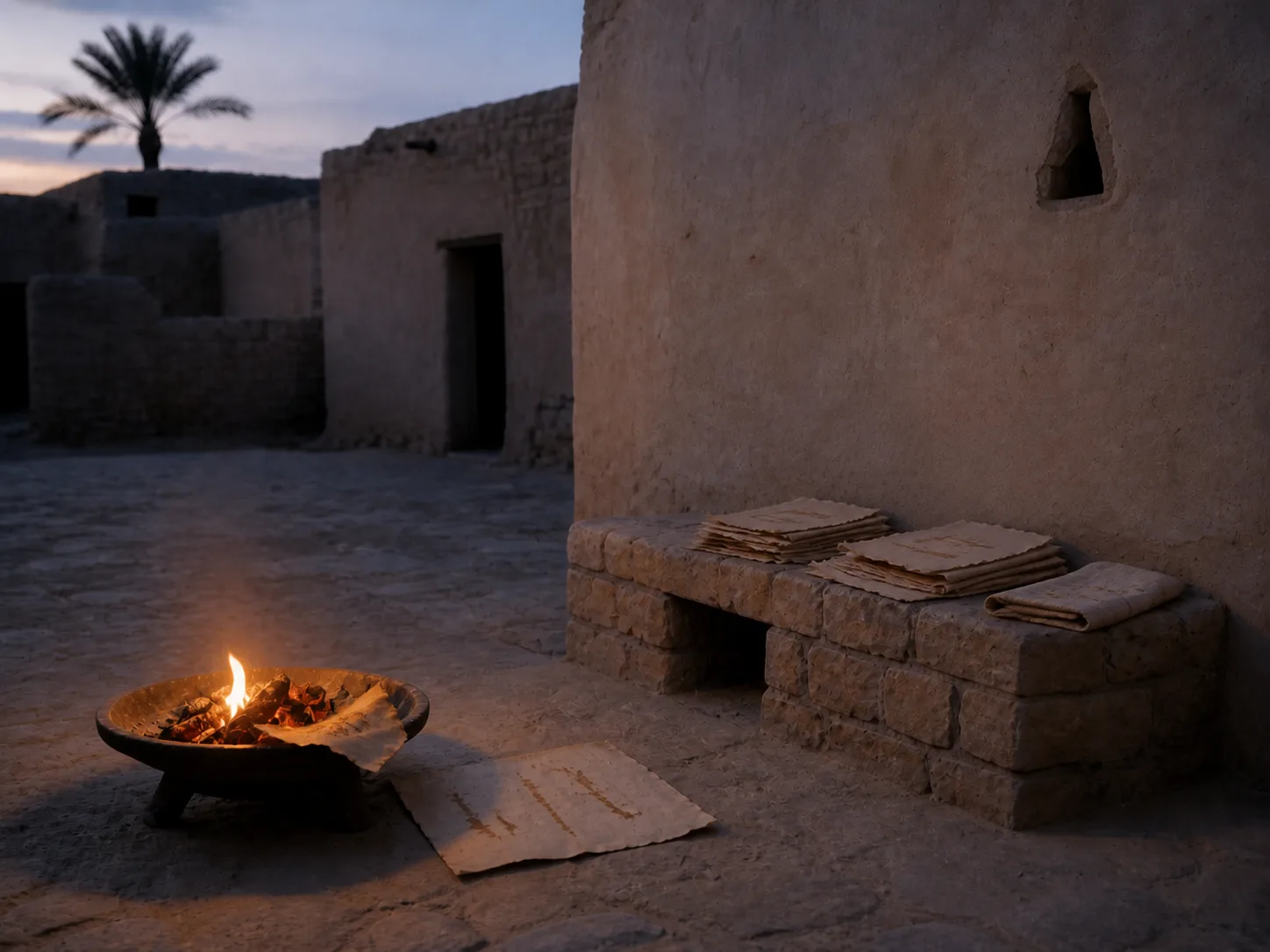
Against that history stands the tradition’s own claim about the text: “Lo! We, even We, reveal the Reminder, and lo! We verily are its Guardian” (Quran 15:9, Pickthall). Muslims read that verse as a divine guarantee of verbatim preservation. Hold the burn order and the guarantee in your mind together, because the manuscripts are about to complicate both sides’ favorite stories.
The manuscript that escaped the fire#
In 1972, workers restoring the Great Mosque of Sana’a in Yemen found a cache of decaying manuscripts in the roof. Among them was a palimpsest: parchment whose original writing was washed off and written over. The upper text is standard. The lower, erased text is the only known surviving witness to a non-Uthmanic text-type: the same surahs and the same substance, but different wording in many places and a different surah order, exactly the kind of variation the companion-codex reports describe (Sadeghi & Goudarzi, “Ṣan’ā’ 1 and the Origins of the Qur’ān,” Der Islam 2012; accessible overview). Radiocarbon puts the parchment in the range 578–669. One manuscript slipped through Uthman’s bottleneck, and it is not letter-identical to the standard text.
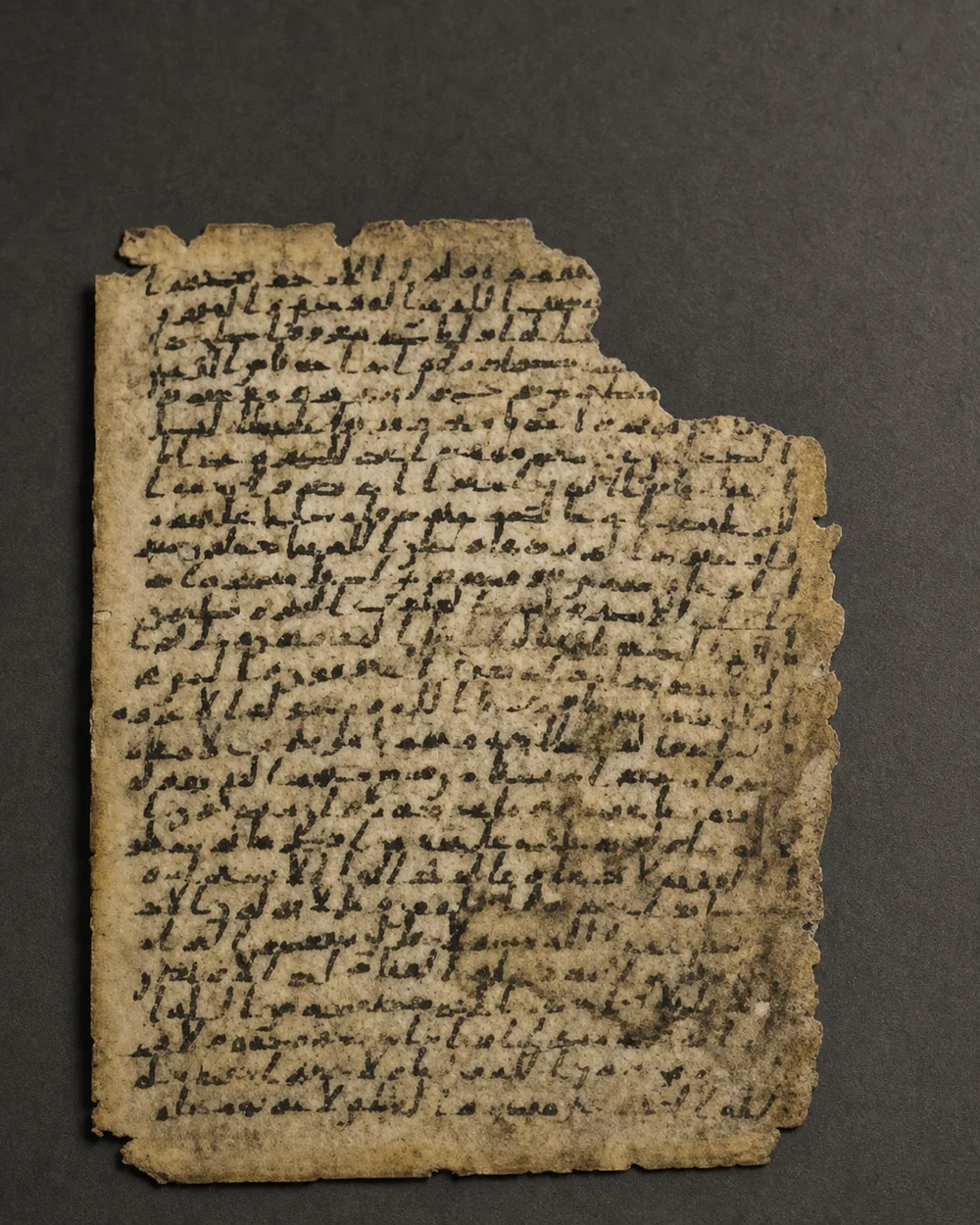
Honesty requires the other half. Behnam Sadeghi’s own analysis of the palimpsest is conservative: he concludes the Uthmanic text sits closer to the common source than the erased text does, which supports early, careful fixation of the standard edition rather than late invention. And in 2019 Marijn van Putten proved something new: certain words are spelled inconsistently across the Quran but identically inconsistently at the same verses in all the early manuscript traditions, which is only possible if every early Quran descends from one written archetype (van Putten, BSOAS 2019). The remaining question is when that archetype closed. Nicolai Sinai’s survey of the evidence concluded the traditional dating, around 650, “ought to be the default view” (Sinai, BSOAS 2014). Stephen Shoemaker dissents, arguing for canonization decades later under the caliph Abd al-Malik (his skeptical case); his position is credentialed and contested, and it is the minority one.
One text, several readings#
There’s a second layer most Christians have never heard of. Early Arabic script was a skeleton: consonants without most of their distinguishing dots and without vowels. Reading traditions grew up around that skeleton, and in the tenth century Ibn Mujahid (d. 936) canonized seven of them (Shady Nasser’s academic study calls this “the second canonization”). Nearly every printed Quran today follows the reading of Hafs from ‘Asim, standardized by the 1924 Cairo edition, while northwest Africa prints the reading of Warsh from Nafi’ (the reading systems and their regions).
The readings differ in thousands of small ways, mostly vowels, and a modest number change meaning. In the Quran’s opening surah, verse 4 is recited both as māliki (“master”) and maliki (“king”) of the Day of Judgment, and both are canonical (Quran.com’s own qira’at entry for 1:4). None of the differences is doctrinally revolutionary, and the tradition made room for multiplicity from the start: Sahih al-Bukhari 4991 records Muhammad saying the Quran was revealed in seven ahruf, or modes.
Both popular spins on this fail. The apologetics-circuit line that these amount to “thirty-one different Qurans” inflates reading traditions into rival books, which no specialist accepts. The street-level Muslim claim that every Quran on earth is identical to the letter fails against two printed editions you can buy today that differ in real words.
The honest comparison with the New Testament#
Now the comparison every Christian reader is waiting for, stated the way the evidence actually sits rather than the way either side’s apologists prefer.
The New Testament is 27 documents by multiple authors, written roughly 50–100 AD, and for its first three centuries no authority on earth could have standardized it. The result is gloriously messy: about 5,800 catalogued Greek manuscripts (INTF’s registry), containing on the order of 400,000 variants, the overwhelming majority trivial slips (Daniel Wallace’s careful accounting). The disputed passages are not hidden; Mark 16:9–20 and John 7:53–8:11 sit in double brackets in the church’s own critical editions (so treated in Nestle-Aland and UBS). Messy, but transparent: rival readings survive for anyone to compare, which is exactly what lets text critics reconstruct the early text.
The Quran is one proclaimer’s recitations over about 22 years, standardized by the state within about two decades of his death. Its consonantal text from the mid-600s onward is more uniform than any comparably old Christian text, and its gap between composition and substantial surviving witnesses is shorter than the New Testament’s (Sinai; Sadeghi & Goudarzi). Clean, but opaque: because Uthman’s edition displaced its rivals, the manuscripts mostly verify his edition, and the state of the text before the bottleneck is the live scholarly question.
So two overclaims die together. The Muslim claim of perfect verbatim preservation is falsified in its strong form by the burn order in Bukhari 4987, the Sana’a lower text, the companion-codex reports, and the divergent readings still in print, almost all of it documented in Islam’s own sources. The Christian pulpit claim that the Quran was “written two hundred years later” or wholesale corrupted is rejected by the scholarship; the archetype is proven and the early dating is the field’s default view.
Where does that leave the comparison? Asymmetric, but not where either side wants it. Christianity’s textual claim is modest: inspired originals, human transmission. Luke opens his Gospel by describing his research method: “it seemed good to me also, having followed all things closely for some time past, to write an orderly account” (Luke 1:3). And Christianity made textual criticism of its own scripture a seminary discipline, printing the variants inside its own Bibles. Islam’s claim is maximal: verbatim divine preservation of every letter (Quran 15:9, Pickthall, quoted above). The Quran’s vulnerability is not the quality of its copies. It’s the absoluteness of the claim made for them, which its own canon and manuscripts cannot sustain.
Why this matters to a Christian#
Years ago in the Bay Area, my neighbor was a devout young Muslim from North Africa, and we spent long evenings in his living room talking about programming and about God; I tell that story properly in the Your Muslim Neighbor series. One detail from those evenings belongs in this article. When prayer time came he prayed in front of me, and I assumed the choreography I was watching, the standing and bowing and prostrating in fixed sequence, came from the Quran. It doesn’t. The postures and order of salat come from the hadith literature, not from the book itself, and I learned that only years later. Through all those hours of conversation about God, I sat across from a devout man while holding a picture of his scripture that his scripture does not contain.
A Christian who repeats the “written centuries later” line to a Muslim friend will lose the conversation the moment that friend checks, and will deserve to. A Christian who knows the real record (early text, real standardization, real suppressed variants, real plural readings, and a preservation claim stronger than the evidence) can have an honest conversation, the kind where you also let your friend press you on Mark 16 and you don’t flinch, because your Bible printed the brackets itself.
So here’s the assignment. Pickthall’s translation is public domain and free online. This week, read the last thirty surahs, the short early Meccan core, about twenty minutes of reading. Next time the Quran comes up with a Muslim coworker or neighbor, you’ll be talking about a book you’ve read.
Go deeper#
- Nicolai Sinai, The Qur’an: A Historical-Critical Introduction (2017). Where the academic field actually stands, from the scholar whose dating work anchors it, in one readable volume.
- Keith Small, Textual Criticism and Qur’an Manuscripts (2011). An evangelical scholar applying New Testament-style textual criticism to early Quran manuscripts; read him for the documented editing, not for slogans.
- Sadeghi & Goudarzi, “Ṣan’ā’ 1 and the Origins of the Qur’ān” (2012). The key study of the palimpsest, free online, and more tradition-friendly than you’d expect.
- James White, What Every Christian Needs to Know About the Qur’an. The most careful popular-level Christian treatment; models arguing from what the sources actually say.