The Muhammad of the Sources
What can actually be known about Muhammad: the 7th-century witnesses that establish he existed, the 200-year gap behind his detailed biography, and his military career stated exactly as Islam's own sources report it.
Somewhere in Mesopotamia around the year 640, a Christian churchman we know only as Thomas the Presbyter added an entry to his Syriac chronicle: “In the year 945, indiction 7, on Friday 4 February at the ninth hour, there was a battle between the Romans and the Arabs of Muhammad in Palestine twelve miles east of Gaza.” The year 945 of his calendar is our 634. He wrote like a man keeping a logbook, and what he logged is the earliest dated document on earth that names Muhammad. It was written roughly eight years after Muhammad’s traditional death, by a hostile outsider with no motive to invent an Arab prophet and every reason to wish the whole business away.
That one sentence frames everything this article has to say. The serious question was never whether Muhammad existed. The serious question is how much can actually be known about him, and the honest answer splits cleanly in two: his existence and the skeleton of his career are as secure as seventh-century history gets, while the detailed biography every Muslim child learns arrives startlingly late. A Christian who wants to speak about Islam credibly needs both halves.
Hostile witnesses, early dates#
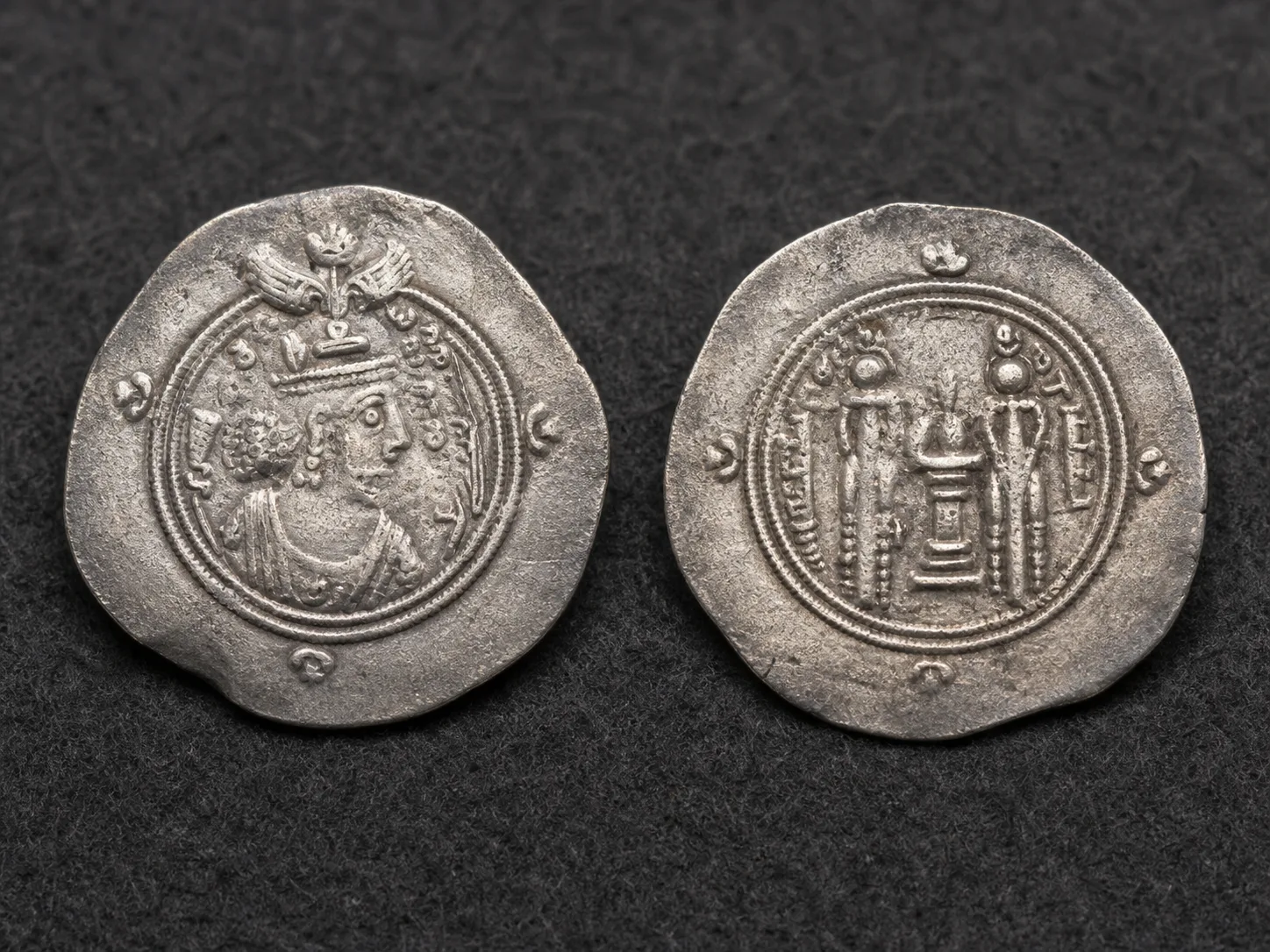
Thomas does not stand alone. A Greek anti-Jewish tract, the Doctrina Jacobi, set in 634 and conventionally dated to the same decade, reports that “a prophet has appeared, coming with the Saracens,” and records a Jewish elder’s verdict: “He is false, for prophets do not come with sword and chariot.” The Khuzistan Chronicle and the Armenian history attributed to Sebeos, both from the 660s, name Muhammad as the Arabs’ leader; Sebeos even sketches a recognizable outline of a merchant who preached the God of Abraham and gave his people laws. By the 680s, coins on both sides of a Muslim civil war carry “Muhammad rasul Allah”, and in 691 the Dome of the Rock inscriptions proclaim him in monumental mosaic. Greek, Syriac, Armenian; Chalcedonian, Nestorian, Jewish. Independent witnesses, most of them enemies, converging on the same man within living memory of his death.
That is why the internet-popular thesis that Muhammad was invented later has no standing in the academy. Patricia Crone, the most famous skeptic the field ever produced, wrote in 2008 that “we can be reasonably sure” Muhammad existed and that the Quran substantially records his preaching. Stephen Shoemaker, today’s most radical credentialed revisionist, treats his existence as certain and argues only about the shape and end of his career. Even Answering-Islam, a Christian apologetics site, declined to endorse Robert Spencer’s Did Muhammad Exist? If the arch-skeptics and the Christian polemicists agree on a point, take it as settled. He existed.
The two-hundred-year gap#
Now the other half. The Quran names Muhammad only four times and contains almost no narrative biography. The earliest connected life of Muhammad, by Ibn Ishaq (died around 767), was composed some 120 to 135 years after his death, and it does not survive on its own. We have it through the recension of Ibn Hisham, who died in 833, two centuries out, and who tells us openly that he omitted material “which it is disgraceful to discuss” and things “which would distress certain people.” The canonical hadith collections come later still. Sahih al-Bukhari, the tradition’s gold standard, was compiled around 870, roughly 240 years after the events, its ~7,000 selections drawn (per the tradition itself) from some 600,000 candidates.
Picture the equivalent: the earliest surviving life of Charlemagne written around 950 and preserved only in an edition from 1020 that admits to censoring its source. How much fine detail would you trust after that trip?
Secular scholarship on the hadith runs from Goldziher and Schacht’s deep skepticism to Motzki’s partial rehabilitation, and the working consensus lands about here: no academic treats a “sahih” grading as historical verification, some material demonstrably circulated within two generations of Muhammad, and almost nothing can be verified back to the man himself. So the defensible position holds both truths at once. Existence and skeleton, established. The detailed traditional biography, late and unreliable in its particulars. A Christian writer who says “Muhammad never existed” discredits himself with every informed reader; one who quotes a ninth-century anecdote as courtroom fact does the same.
Twenty-seven campaigns, nine battles#
What does that late-but-real tradition say about his career? It says, without embarrassment, that he was a military commander. The earliest biographical genre is literally called maghazi, “raids.” Ibn Ishaq records 27 campaigns Muhammad personally led, with fighting in nine of them, plus dozens of dispatched expeditions (traditional lists count 35 to 66, many of them bloodless patrols). The polemical “he fought a hundred battles” inflates patrol into battle; the sources themselves do not support it.
The arc the tradition tells: within a year of arriving in Medina in 622, Muhammad began authorizing raids on Meccan caravans, raids that preceded any Meccan attack on Medina. At Nakhla in 624 his men killed a Meccan during a sacred truce month, and Quran 2:217 was revealed to address the scandal: fighting in the sacred month is grave, but barring people from the way of God is graver. Then Badr (624), a stunning victory; Uhud (625), a defeat the sources candidly preserve, which historians count in the tradition’s favor; the Trench (627), a failed Meccan siege of Medina. Then the conquest of the Khaybar oasis in 628, the near-bloodless conquest of Mecca in 630 under a general amnesty with a short proscription list of which only three to six people were actually executed, the victory at Hunayn where some 6,000 captives were released after the enemy tribe’s delegation converted, and finally Tabuk, a march against a rumored Byzantine threat that never materialized, from which frontier Christian and Jewish communities were made tribute-payers under Quran 9:29.
Mecca deserves a sentence of its own. A seventh-century commander taking his capital enemy city almost without blood and issuing amnesty was rare in the ancient world, and a Christian writer who hides that card looks tendentious. The record is what it is, in both directions.
The Banu Qurayza executions#
The hardest episode in the record, in both directions, came after the Trench. The sources report that the Banu Qurayza, the last major Jewish tribe of Medina, negotiated with the besieging coalition; after it dispersed, Muhammad besieged them, they surrendered to the arbitration of Sa’d ibn Mu’adh, and Sa’d ruled that the men be executed and the women and children enslaved. Sahih al-Bukhari 3043 records Muhammad’s endorsement of the verdict as the ruling of God. Ibn Ishaq puts the dead at 600 to 700, with some reports up to 900; the canonical hadith give no total. The Quran itself alludes to it: “Some ye slew, and ye made captive some” (Quran 33:26, Pickthall).
In 1976 W.N. Arafat argued the massacre never happened, and his argument still circulates in Muslim apologetics. It did not survive scholarly scrutiny. M.J. Kister’s 1986 re-examination showed the event attested across independent early legal, exegetical, and historical channels, and mainstream scholarship has followed Kister since. What remains contested among scholars is the number, so write a range and say the exact figure is unrecoverable. The event itself stands, on Islam’s own sources, ratified in Islam’s own most trusted collection.
Zayd, Zaynab, and the abolition of adoption#
One more episode belongs in any honest portrait, and it needs to be told with discipline. Zayd ibn Harithah was Muhammad’s freed slave and legally adopted son, known for years as “Zayd ibn Muhammad,” and he is the only companion named in the Quran. Muhammad arranged Zayd’s marriage to his own cousin Zaynab bint Jahsh; the marriage failed; Zayd divorced her; and Muhammad married her, with revelation presenting the marriage as commanded. The Quran’s own wording records the awkwardness: “thou didst hide in thy mind that which Allah was to bring to light, and thou didst fear mankind whereas Allah hath a better right that thou shouldst fear Him” (Quran 33:37, Pickthall). In connection with this, Quran 33:4–5 abolished legal adoption (“call them after their fathers”), Zayd reverted to “ibn Harithah,” and Quran 33:40 declared, “Muhammad is not the father of any man among you, but he is the messenger of Allah and the Seal of the Prophets” (Pickthall). Classical Islamic law replaced adoption with guardianship, a consequence still live today.
You may have heard a more lurid version, where Muhammad glimpses Zaynab undressed and desire drives the whole affair. That story is a later accretion, absent from the Quran, and Ibn Kathir himself declined to transmit those reports as unfit. I’m leaving it out, and not reluctantly, because the undisputed core already carries the full weight: the Quran registers concealment and fear, and a legal institution was abolished so the marriage would stand. One correction while we’re here, since polemics routinely bungle it: Zayd died at Mu’tah in 629 as the first-appointed commander of the army, honored to the end. There is no “sent him to die” story in the sources.
The stories this series will not use#
The same discipline cuts a few famous polemic staples. You will find, all over the internet, the killings of two mocking poets, an old man named Abu Afak and a mother of five named Asma bint Marwan, presented as bedrock. They are not. Both stories appear in Ibn Ishaq without any chain of transmission, and in al-Waqidi through a transmitter the hadith critics condemned; al-Daraqutni called this very report fabricated; neither appears in any canonical collection. Muslim hadith criticism grades them fabricated or unreliable by its own rules, not as modern spin.
Here’s the thing about a sourcing standard: it only means something if it costs you material you would have liked to use. If I reject weakly attested flattery of Muhammad, I have to reject weakly attested charges against him. And the discipline costs less than you’d think, because the strongly attested record makes the same point. The killing of the poet Ka’b ibn al-Ashraf, lured out at night and killed at Muhammad’s instigation, is in Sahih al-Bukhari 4037 itself, deception expressly permitted for the job. Cite that one. A hostile fact-checker will verify it.
Two framings of Muhammad that both fail#
Put the whole record together and two popular pictures collapse at once.
The first is the modern apologetic claim that Muhammad fought only in defense. On the tradition’s own record, the caravan raids came before any Meccan attack, Nakhla was an ambush in a truce month, Khaybar attacked a community that had not attacked Medina, and Tabuk marched on a rumor and came home with tribute treaties. Joel Hayward, a Muslim academic sympathetic to his subject, concludes the near-pacifist depiction “cannot be sustained” by an even-handed reading of the early sources, and even Watt, the most sympathetic major Western biographer, never claimed the wars were defensive in the apologetic sense.
The second is the mirror-image polemic of the bloodthirsty warlord slaughtering untold thousands. The tradition’s own maximal casualty figures for the entire decade, Qurayza included, total roughly 1,000 to 1,500, in an era when single battles elsewhere killed tens of thousands. Mecca received amnesty. Hunayn’s captives went home. Conquered People of the Book were typically made tribute-payers, not forced converts.
What survives is the picture Sean Anthony’s Muhammad and the Empires of Faith draws from the earliest layers, Muslim and non-Muslim alike: a religious founder who was also a ruler and commander, whose wars mixed defense, preemption, raiding normal to his culture, and expansion. The Doctrina Jacobi’s sword-bearing prophet and the maghazi’s proud campaign lists are the same man. The warrior-prophet image is original, not a later smear.
What a Christian does with the record#
I believe Christians need to know both books, and this is why. The contrast that matters is founder against founder, example against example. Jesus told Peter, “all who take the sword will perish by the sword” (Matthew 26:52), led no army, and died without resistance; Muhammad ruled a state and commanded in war, and his community’s law followed his example, as every layer of the sources agrees. Make that contrast honestly and it holds against any fact-checker. Pad it with fabricated poetess stories or inflated body counts, and you hand your Muslim neighbor a legitimate reason to dismiss everything else you say, including the gospel.
And that neighbor is the point. The man I have been describing from the sources is revered by people I love and want to see meet Jesus.
My neighbor in those Bay Area years was the devout young North African man I write about at length in the Your Muslim Neighbor series. Our conversations ran to programming and to God, and when prayer time arrived he would perform the salat while I waited. What I did not know, watching him, is that the choreography of that prayer comes not from the Quran but from the hadith, the same late layer of tradition this article has been dating. His most visible act of devotion rested on the sources weighed above, and I could not have told him so, because back then I knew even less about them than he did. He was kind and sincere, and he deserved a Christian friend who knew the record. He didn’t get one then. I am trying to be one now.
You do not love a Muslim by flattering the record, and you do not love him by falsifying it. You love him by knowing the record cold and staying at the table.
Go deeper#
- Robert Hoyland, Seeing Islam as Others Saw It (Darwin Press, 1997). The standard catalogue of every 7th–8th-century non-Muslim witness, Thomas the Presbyter included; if you buy one academic book on this subject, buy this one.
- Sean W. Anthony, Muhammad and the Empires of Faith. The best current synthesis of what can actually be known about the historical Muhammad.
- Ibn Ishaq, The Life of Muhammad (Guillaume translation). Read Islam’s earliest biography for yourself instead of taking anyone’s excerpts on faith.
- W. Montgomery Watt, Muhammad at Medina. The classic academic account of the Medinan decade, useful precisely because it is sympathetic and still not apologetic.