The Many Islams
Sunni, Shia, Sufi, Salafi, Ahmadi, Ismaili, Quranist, cultural, reformer. A sourced map of Islam's internal divisions, and why the fates of its dissidents show where each tradition's center of gravity sits.

In another life, as a young engineer in the Bay Area, I spent about five years working alongside two men I still think about. One was from Iran: soft-spoken, considerate, openly grateful for America — and a Christian. We logged hundreds of hours together in cars between site visits and walking school buildings from ten at night to three in the morning for lighting surveys, the kind of hours where you actually learn a man. The other was from Afghanistan: also an engineer, also excellent company, a married father who, as far as I could ever tell, held his Islam loosely and his adopted country warmly. If you had handed a stranger the two labels — Iranian, Afghan — and asked which man loved Jesus and which was the Muslim, the labels would have taught him nothing.
Two coworkers. Two countries that share a border. And one word, “Islam,” that told me almost nothing about either man until I learned which Islam had shaped him.
That gap is the subject of this article, because it’s the step most of us skip. Nobody who knows churches confuses a Southern Baptist deacon with a Greek Orthodox monk, or a Lutheran pastor with a prosperity televangelist. Then we turn around and treat “Muslim” as one thing. Critics flatten every Muslim into a jihadist-in-waiting; defenders flatten every hard doctrine into a misunderstanding. Both moves fail the evidence, and both make you useless to the actual person across the fence. So this is the map.
Where the oldest split came from#
When Muhammad died in 632, he left no undisputed successor. The majority held that the community should choose its leader and settled on Abu Bakr, Muhammad’s companion; a minority held that Ali, Muhammad’s cousin and son-in-law, had been divinely appointed (History.com). The first camp became the Sunnis, today 87 to 90 percent of the world’s Muslims; the second became the Shia, 10 to 13 percent, concentrated heavily in Iran, Pakistan, India, and Iraq (Pew Research Center).
Here’s the part most Westerners miss. The Sunni/Shia divide is a fight over who leads, not over what the law contains. Mainstream jurisprudence on both sides retains sharia’s claim on public law, and the polling reflects it: in Iraq, home to one of the world’s largest Shia populations, 91 percent of Muslims favor sharia as the official law of the land, about the same as Sunni-majority Afghanistan’s 99 percent (Pew 2013, summarized by Al Arabiya). Shia-governed Iran sits on the short list of states where leaving Islam can carry a death sentence (Pew, 2022). Anyone waiting for the Sunni/Shia line to produce a reformed Islam is watching the wrong axis. The divisions that matter for that question run elsewhere, and they cut across it.
Two currents inside the mainstream#
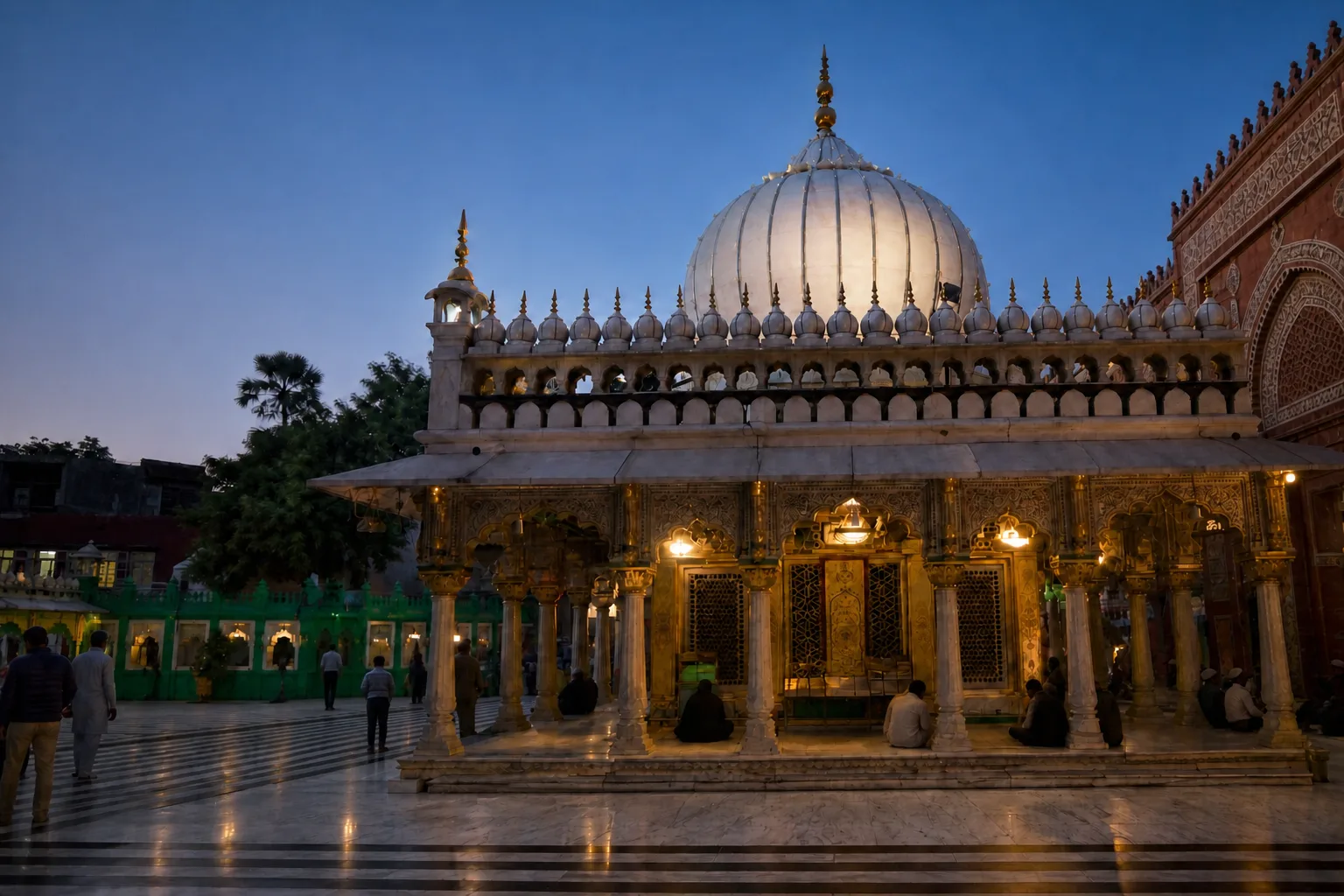
Sufism is the older current: the mystical stream of Islam, organized into orders from the twelfth century onward, beginning with the order gathered around Abd al-Qadir al-Jilani, who died in 1166 (Britannica). Sufi orders run across the Sunni/Shia divide and across continents (Pew). For long stretches of history in South Asia and West Africa, the saint’s shrine and the local order were what everyday Muslim piety looked like.
Salafism is the counter-current: strip away the shrines and the accumulated scaffolding, and return to the Quran, the hadith, and the practice of the first generations. If that instinct sounds familiar to a Protestant, it should, and a serious cohort of analysts draws the conclusion out loud: Islam already had its Reformation, and Salafism is what it produced. The Reformation, they remind us, was a scripturalist, anti-clerical purification movement, and its Islamic equivalent yielded Wahhabi Saudi Arabia rather than tolerance (Mehdi Hasan); Graeme Wood goes as far as calling the rise of the Islamic State “the modern Reformation” (BBC). This reading is contested. Tom Holland and others answer that unmediated scripture-reading eventually dissolves clerical authority altogether and opens space for liberal readings too (New Statesman; Mun’im Sirry). But on the first view, what liberal reformers actually want is an Enlightenment, and Europe’s own Enlightenment arrived only after a century of religious war. Keep that debate in mind as you read what follows, because the record of Islam’s actual reformers is the evidence both sides argue over.
The dissenters, and what happened to them#
Start with the community that did, wholesale, what Western commentators keep asking for. The Ahmadiyya, founded in Punjab in 1889 by Mirza Ghulam Ahmad, renounced violent jihad from the 1890s, teaching that the age of the sword was over and jihad continues by the pen; their motto is “Love for All, Hatred for None,” and they preach loyalty to whatever state their members live under (USCIRF). They number an estimated 10 to 20 million. The mainstream’s answer was not engagement. Pakistan’s Second Constitutional Amendment declared Ahmadis non-Muslim in 1974, and Ordinance XX criminalized their practice of Islam in 1984: calling themselves Muslim, offering the salaam greeting, or calling their worship places mosques can bring three years in prison and exposure to capital blasphemy charges (Ordinance XX). Gunmen killed 86 Ahmadis in their Lahore mosques in 2010, and jihadists in Burkina Faso executed nine Ahmadi worshippers in 2023 after their imam refused to renounce his faith (Amnesty; Ahmadiyya press office). To be fair to the record: the formal ground for excommunicating them is Ghulam Ahmad’s claim to prophethood, which mainstream Islam reads as violating the finality of Muhammad, not their pacifism. The functional lesson stands anyway. A peaceful, pro-secular-state denomination with millions of members and 130 years of institutional life has moved mainstream doctrine not an inch; the mainstream, holding state power, redrew the boundary of Islam to put them outside it.
The Quranists tried a different door: accept the Quran alone and drop the hadith as binding, which quietly removes most of the legal machinery, since stoning, apostasy execution, and much of classical jihad law rest on hadith rather than the Quran (19.org). Their most prominent leader, the Egyptian-American Rashad Khalifa, was assassinated in Tucson, Arizona in 1990 after Saudi-sponsored scholars declared him an apostate.
Sudan’s Mahmoud Muhammad Taha made the boldest argument of all. In The Second Message of Islam (1967) he inverted the classical doctrine of abrogation: the peaceful, universal verses Muhammad delivered in Mecca are the eternal message, and the legal-military verses from Medina were a concession to seventh-century conditions, due for retirement (Wikipedia). In January 1985, at age 76, he was tried in a matter of days, convicted of apostasy under a code that did not then contain the crime, refused to recant, and was publicly hanged in Khartoum; his books were burned and his movement banned (MERIP). His student Abdullahi An-Na’im, jailed nineteen months and then exiled, became a law professor at Emory and wrote the most viable reform argument now on offer: sharia enforced by the state ceases to be sharia, because coerced belief has no religious value, so the secular state is an Islamic requirement (Harvard University Press). Notice where he was free to write it. Atlanta.

The West has produced its own attempt. In December 2015, about a dozen signatories led by Zuhdi Jasser and Asra Nomani launched the Muslim Reform Movement at the National Press Club, with a Declaration rejecting violent jihad and institutionalized sharia and affirming secular governance and the right to leave Islam; two signatories posted it on the door of the Islamic Center of Washington, deliberately imitating Luther’s 95 Theses (Declaration; Washington Times). Not one major US Muslim organization endorsed it; the response ran from silence to hostility (Wikipedia). Why is disputed: the founders blame Islamist gatekeeping, while mainstream organizations point to the signatories’ alignment with anti-Muslim political currents (Christian Post). A decade on, the movement is effectively a letterhead, reporting about $33,000 in revenue in 2023 filings (InfluenceWatch). And the Luther imitation exposed the structural problem: Luther nailed his theses to the door of an institution that could excommunicate or negotiate. Sunni Islam has no such institution. Authority lives in a distributed scholarly consensus, policed by takfir (excommunication) and backed by apostasy law in 22 countries and blasphemy law in 79 (Pew, 2022).
Line the fates up and a pattern appears: every reform current that survived did so under the protection of a non-Muslim state. An-Na’im at Emory. Mustafa Akyol at the Cato Institute, after Malaysia’s sharia police detained him in 2017 for lecturing on freedom of conscience (Global Voices). The Ahmadi caliph in London. The fates of the dissidents are not a footnote to the map; they are the map. They tell you where each tradition’s center of gravity actually sits, more reliably than any spokesman can.
Two quieter models#
Not every divergence ends at a gallows or a letterhead. The Nizari Ismailis, a Shia community of roughly 12 to 15 million under a living, hereditary Imam, the Aga Khan, read Islam as an ethical framework compatible with pluralism: no sharia-state ambitions, heavy investment in secular development, an explicit theology of coexistence (MDPI). It works, and it has worked for generations. But look at the enabling condition: one man holds absolute interpretive authority over his community, which is precisely the institution Sunni Islam lacks, and the Imamate itself long ago relocated to Europe.
The other quiet model has no founder at all. Across the West and the ex-Soviet and ex-Ottoman spheres, millions of Muslims hold the identity while privatizing the practice, and the polling gradient is dramatic: sharia as official law draws 99 percent support in Afghanistan and 84 percent in Pakistan, against 12 percent in Turkey, 10 percent in Kazakhstan, and 8 percent in Azerbaijan (Pew 2013). Even among supporters, most read sharia as family and property law, and majorities in most countries say it should apply to Muslims only. In the United States, 64 percent of Muslims say there is more than one true way to interpret Islam (Pew 2017). Same book, same prophet, wildly different centers of gravity. Geography and tradition are not details in this subject; they are most of the answer. If a reformation comes to the diaspora, the data suggest it arrives not as theses on a door but as a quiet exit, one unobserved Ramadan at a time.
Know which Islam you are talking to#
So what does a Christian do with this map? Use it on a person, not on a category. The Muslim across your fence might be a Sufi whose grandfather tended a shrine Salafis would demolish, an Ismaili whose Imam preaches pluralism, an Ahmadi who fled Pakistan because his mosque was a crime scene, a secular Turk who last prayed at a funeral, or a convinced Salafi who can quote the abrogation doctrine back at you. Those are different conversations, and pretending otherwise wastes the one in front of you.
Two disciplines follow. First, drop the universal-suspicion filter: presuming that any Muslim you meet is practicing authorized deception, the so-called taqiyya lens, fails scholarly scrutiny and fails the person in front of you, and this series critiques doctrines as hard as the sources allow while refusing that move. Second, get specific before you get theological. Paul told the Colossians, “Walk in wisdom toward outsiders, making the best use of the time. Let your speech always be gracious, seasoned with salt, so that you may know how you ought to answer each person” (Colossians 4:5-6). Each person. Not each category.
I learned this the slow way. Around 2009 or 2010, six or seven years after 9/11, Islam wasn’t really a thing in my circles; nobody I knew was arguing about it. I was deep in apologetics, I already counted a Muslim coworker as good company, and the Navy had made me curious about other cultures, so I came to those friendships open. Two things surprised me anyway. Nearly every praying Muslim I met had an opinion about Jesus and would gladly talk about him, with a confidence that could edge toward condescension; I read that as cultural register, not personal insult. And underneath the confidence sat surprisingly little detail: surface objections to the Bible, surface talking points about the Quran. The confidence and the depth turned out to be two different measurements. You find out which one you’re hearing by asking.
I love Muslim people, and I want them to meet Jesus. That is exactly why I refuse to be lazy about them. This week, ask one Muslim coworker or neighbor two questions: where is your family from, and what did Islam look like in your house growing up? Then listen longer than feels natural. The answers will tell you which Islam you are talking to, and everything worth saying afterward depends on it.
Go deeper#
- Mustafa Akyol, Reopening Muslim Minds. The insider’s case that Islam’s own suppressed rationalist tradition can ground freedom of conscience.
- Abdullahi An-Na’im, Islam and the Secular State. The strongest surviving reform argument, from Taha’s exiled student.
- Ayaan Hirsi Ali, Heretic. The maximal outside-the-faith version of the reform case, including Taha’s Mecca/Medina move; read it against Akyol.
- Nabeel Qureshi, No God but One. A former Muslim’s comparison of Islam and Christianity, written with the specificity this article argues for.