What Sharia Actually Is
Sharia, fiqh, the five law schools, the five ruling categories, and the real Pew numbers: a precise, sourced answer to what the word means before anyone argues about it.

When a politician says the word sharia, what exactly is being talked about? I’ve watched that word carry a decade of American political weight, sometimes as a warning, sometimes as a reassurance, and in most of those sentences it has no verifiable content. The people applauding usually can’t define it. Neither can the people booing. This article exists so that you can. By the end you should be able to say what sharia is, where its rules actually come from, which parts of it are contested among Muslims, which parts are not, and what the best survey data says Muslims themselves want done with it.
I’m an engineer by trade, so I want the definition before the argument. The definition is where most of the argument gets decided.
A road, not a rulebook#
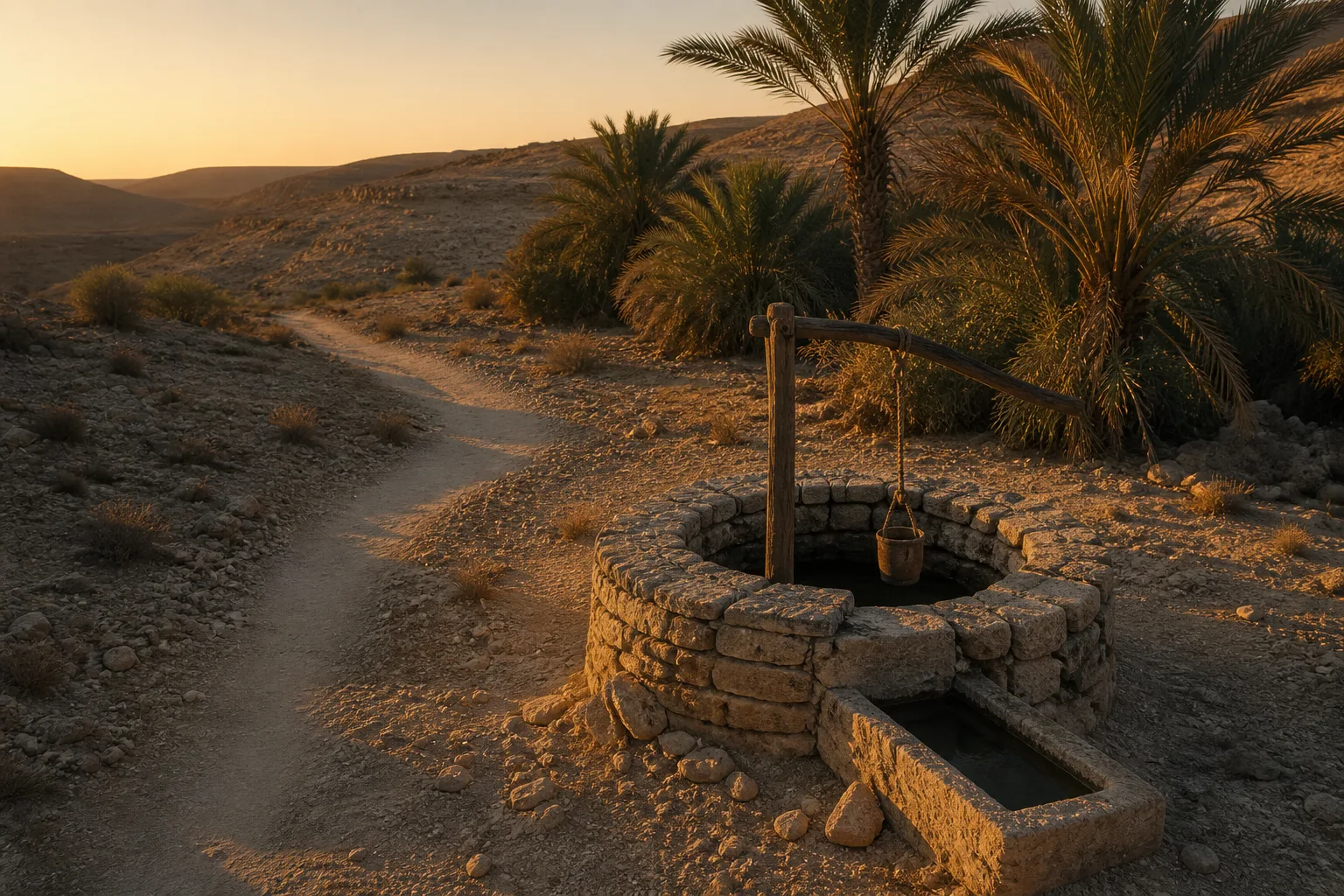
No government owns a statute book titled Sharia; the word names something prior to any book. In Arabic the root meaning is a path, the track that leads to water, and when the Quran sets Muhammad “on a clear road of (Our) commandment; so follow it, and follow not the whims of those who know not” (Quran 45:18, Pickthall), the word underneath “clear road” is sharia. In Muslim understanding, sharia is God’s way for human life, the divine will itself, and therefore perfect and unchanging.
What sits on the shelf is something else: fiqh, jurisprudence, the centuries of human scholarly effort to work out what that divine way requires in practice. The tradition itself draws the line clearly: sharia is revelation and cannot be wrong; fiqh is interpretation and can be, which is why fiqh comes in competing schools that have disagreed with each other for over a thousand years. Hold on to that distinction, because almost every confused public argument about sharia collapses it. When a scholar in Cairo and a scholar in Tehran both say they follow sharia and then give you incompatible rules, neither is lying. They share the road and dispute the map.
Five schools, not one system#
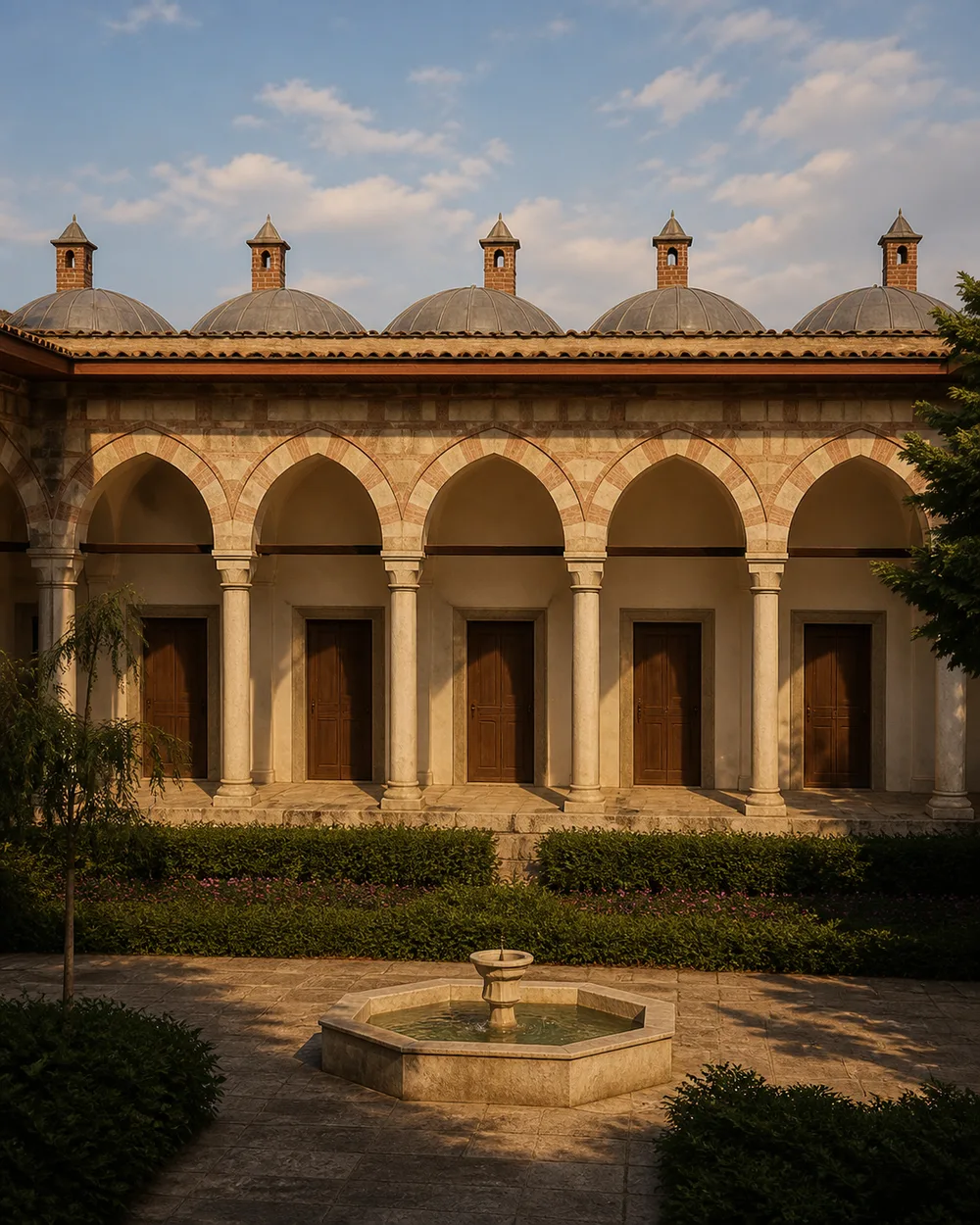
Sunni Islam settled into four surviving schools of law: the Hanafi, Maliki, Shafi’i, and Hanbali, named for the eighth- and ninth-century jurists whose methods they preserve. They agree on the broad architecture and diverge on method and detail, and the divergences are not trivia; they decide real outcomes in contract law, family law, and criminal procedure. Saudi Arabia’s judges work from the uncodified Hanbali system. Most of South Asia inherited Hanafi law.
Shia Islam has its own jurisprudence, the Jafari school, named for Jafar al-Sadiq (702–765). Its method parallels the Sunni schools with two notable differences: it admits reason (aql) as a formal source of law and extends the authoritative example beyond Muhammad to the Imams of his household. Iran’s constitution makes the Twelver Jafari school the official religion of the state, which matters for anyone assuming sharia-as-state-law is a Sunni phenomenon; the Sunni–Shia split is about authority and succession, not about whether law belongs to revelation.
So the honest answer to “which sharia?” is: whose fiqh, which school, applied by whom?
Five verdicts for every human act#
The scope surprises people most. Classical fiqh does not confine itself to crime and punishment; it sorts every human action into five categories: fard (obligatory, like the five daily prayers), mustahabb (recommended, meriting reward), mubah (neutral, the bulk of daily life), makruh (disliked, better left undone), and haram (forbidden). Prayer, diet, dress, marriage, inheritance, commerce, hygiene, war: all of it is classified.
Two consequences follow. First, for most observant Muslims most of the time, “following sharia” means personal piety: praying at the right times, eating halal, fasting Ramadan, avoiding interest-bearing debt. That’s the true half of the “sharia is just a religious lifestyle” claim. Second, the same system that classifies prayer also classifies apostasy, blasphemy, and the legal status of non-Muslims, and it was built by jurists who assumed a state would enforce the public parts. Both halves are really there. Any account that keeps one and drops the other is selling you something.
Where the rules actually come from#
Classical Sunni legal theory names four roots: the Quran; the sunnah (Muhammad’s example, known through hadith); ijma (scholarly consensus); and qiyas (analogy from settled cases). One fact reorders how you read that list. The Quran supplies far less of the actual law than outsiders assume, and the hadith supply far more.
Take the two rules Westerners associate with sharia most. Stoning for adultery is not in the Quran at all. It entered the law through hadith, including the remarkable sahih report in which the caliph Umar insists a “verse of stoning” was revealed and remained binding even though it was never written into the Quran’s text (Sahih al-Bukhari 6829, sahih). The death penalty for apostasy likewise rests on no Quranic verse; its anchor text is a hadith: “Whoever changed his Islamic religion, then kill him” (Sahih al-Bukhari 6922, sahih). If you read part two of this series, on why the hadith run everything, this is that claim cashing out. You cannot evaluate sharia by reading the Quran, because sharia’s content mostly isn’t there.
The hard core the schools agreed on#
This part has to be stated carefully, because both exaggeration and denial fail fact-checking.
The classical juristic mainstream, across the Sunni schools and the Jafari, treated adult male apostasy as a capital offense, and treated blasphemy against Muhammad comparably; that is a matter of documented legal history, resting on texts like Bukhari 6922 above. It is also true that many Muslim scholars, from modern reformists to the 250 signatories of the 2016 Marrakesh Declaration, argue from within Islamic sources against religious coercion, and that most Muslim-majority states do not criminalize conversion. “Islam commands killing apostates, full stop” flattens a live intra-Muslim argument and will be rightly attacked. “The apostasy penalty is a myth” flattens the legal record and the men it killed.
The modern legal map is measurable. Per Pew’s count of laws in force in 2019, 79 of 198 countries criminalize blasphemy and 22 criminalize apostasy, with 13 of the 22 apostasy laws in the Middle East and North Africa; roughly a dozen jurisdictions retain death as an available apostasy penalty. Two precisions keep that honest. Europe’s remaining blasphemy statutes are mostly dormant relics, while MENA’s are enforced. And courts almost never carry out apostasy executions; the canonical judicial case is Sudan’s hanging of the 76-year-old reformer Mahmoud Muhammad Taha in 1985, executed for arguing that the Quran’s peaceful Meccan message should supersede its Medinan legal-military rules. The lethal enforcement is overwhelmingly extrajudicial — the mob and the family, not the judge. Pakistan’s §295-C makes defaming Muhammad a mandatory-death offense that has never produced a judicial execution, yet accusation alone is regularly a death sentence; in Jaranwala in August 2023, a blasphemy allegation against two Christians put mobs through more than a dozen churches in a single day. Accusation itself is the weapon.
What Muslims say they want#
How many Muslims want this as law is not a matter for guessing; it has been measured. Pew’s 2013 study The World’s Muslims asked Muslims in more than twenty countries whether sharia should be “the official law of the land.” Read the actual table, not a summary of it:
| Country | Favor sharia as official law |
|---|---|
| Afghanistan | 99% |
| Iraq | 91% |
| Palestinian territories | 89% |
| Malaysia | 86% |
| Pakistan | 84% |
| Bangladesh | 82% |
| Egypt | 74% |
| Indonesia | 72% |
| Jordan | 71% |
| Nigeria (Muslims) | 71% |
| Tunisia | 56% |
| Kyrgyzstan | ≈35% |
| Lebanon | 29% |
| Kosovo | ≈20% |
| Bosnia | ≈15% |
| Turkey | 12% |
| Albania | ≈12% |
| Kazakhstan | 10% |
| Azerbaijan | 8% |
(Sources: the Pew report and full PDF; figures marked ≈ are from the same dataset as widely republished and may be off by a few points.)
That is not a monolith, and it is not a reassurance. It is a spectrum with a heavy tail. Support runs 71 to 99 percent across most of South Asia, the Middle East, and Muslim Africa, and 8 to 20 percent across Turkey, the Balkans, and Central Asia — the lands that went through Ataturk and the Soviets. Western Muslims sit near the low end: a 2016 ICM poll found 23% of British Muslims favored introducing sharia in some areas of Britain, and Pew’s 2017 US survey found 64% of American Muslims say there is more than one true way to interpret Islam.
The same survey supplies the qualifiers that keep the table honest. Sharia’s supporters disagree about what they’re supporting: most read it as family and property law, and in most countries surveyed, majorities of them say it should apply to Muslims only. Support for executing apostates varies enormously inside the pro-sharia camp, from 64% of all Muslims in Egypt and Pakistan to single digits across Central Asia and the Balkans; Pew found at least half of sharia supporters backing the apostasy death penalty in only 6 of the 20 countries where it asked.
So both stock claims fail the same table. “All Muslims want sharia law” dies at Azerbaijan’s 8 percent. “Sharia is just personal piety” dies at Afghanistan’s 99. The defensible sentence is longer and worth memorizing: most Muslims in most of the historic Muslim heartland want sharia as official law and are divided over what that means; most Muslims in Turkey, the Balkans, Central Asia, and the West do not.
Why you can’t assess Islam without assessing sharia#
Now my conviction, labeled as such.
You cannot assess Islam politically without assessing sharia, because the tradition itself refuses the split we keep offering it. Jesus drew a line his followers have argued over but never erased: “Render to Caesar the things that are Caesar’s, and to God the things that are God’s” (Mark 12:17). Classical Islam drew no such line; the jurists who built fiqh assumed law was a branch of revelation and the state its enforcer. The strongest proof is what Muslim reformers themselves have to argue. Abdullahi An-Na’im, the exiled student of the hanged Taha, spent a career making the case that the secular state is an Islamic imperative, because coerced belief has no religious value and sharia enforced by the state ceases to be sharia. Notice the shape of that argument. He has to prove secularism from inside sharia precisely because the default he’s fighting is sharia’s claim on the state. Reform that concedes the claim and reframes it survives; reform that denounces it got Taha hanged in Khartoum.
I want to be exact about what this does and doesn’t mean for the Muslims you know. I love Muslim people, I want them to meet Jesus, and the data above says an American Muslim statistically sits at the low-support end of that Pew table, not the high one. He is not a sleeper agent for the Hanbali school. But when we evaluate Islam as a public, political theology, the honest unit of analysis includes the law, because Islam’s own classical self-understanding includes the law.
I keep a test case in mind for holding both halves at once: the North African neighbor I wrote about in part 2 of the Muslim-neighbor series. He was in his mid-twenties and devout, his wife fully veiled and almost never seen, his prayers kept at the appointed times whether or not I was sitting on his couch. Our conversations ran to programming and to God, and my read of him, for whatever a young engineer’s read is worth, was that he would have welcomed sharia as the law of the land. What I didn’t know then belongs in this article. I assumed the whole visible pattern of his devotion came from the Quran. Most of it, down to the choreography of his daily prayers, comes from the hadith, and at the time I couldn’t have told you the difference.
When the word comes up, in a headline or across a fence, make the speaker specify three things: which rules (the fiqh of which school, or the speaker’s imagination), enforced by whom (the believer’s conscience, a family, a mosque, a state), and on whom (Muslims who chose it, or everyone in reach). Those three answers separate a Muslim keeping halal in Dearborn from §295-C in Pakistan. A Christian who can draw that distinction can contend hard about the real core, the apostasy texts and the 22 statutes, without slandering the neighbor God told him to love. Run the drill before you argue the word.
Go deeper#
- Islam and the Secular State, Abdullahi An-Na’im (Harvard UP, 2008). The strongest inside-the-tradition argument that state-enforced sharia betrays sharia; deliberately published in Muslim-world languages.
- Reopening Muslim Minds, Mustafa Akyol (2021). A believing Muslim’s case against apostasy and blasphemy coercion; Malaysia’s sharia police detained him for lecturing on exactly this.
- Pew, The World’s Muslims (2013). The polling in full, qualifiers included; read it before quoting anyone’s summary, including mine.
- Criminalizing Conscience, Family Research Council compendium. Country-by-country status of apostasy, blasphemy, and anti-conversion laws.