Know Your Sheep by Name
The shepherd calls his own sheep by name, and Proverbs says to train a child according to his way. Leading each kid by season and bent instead of running one generic program — including the dad of daughters and the dad going it alone.
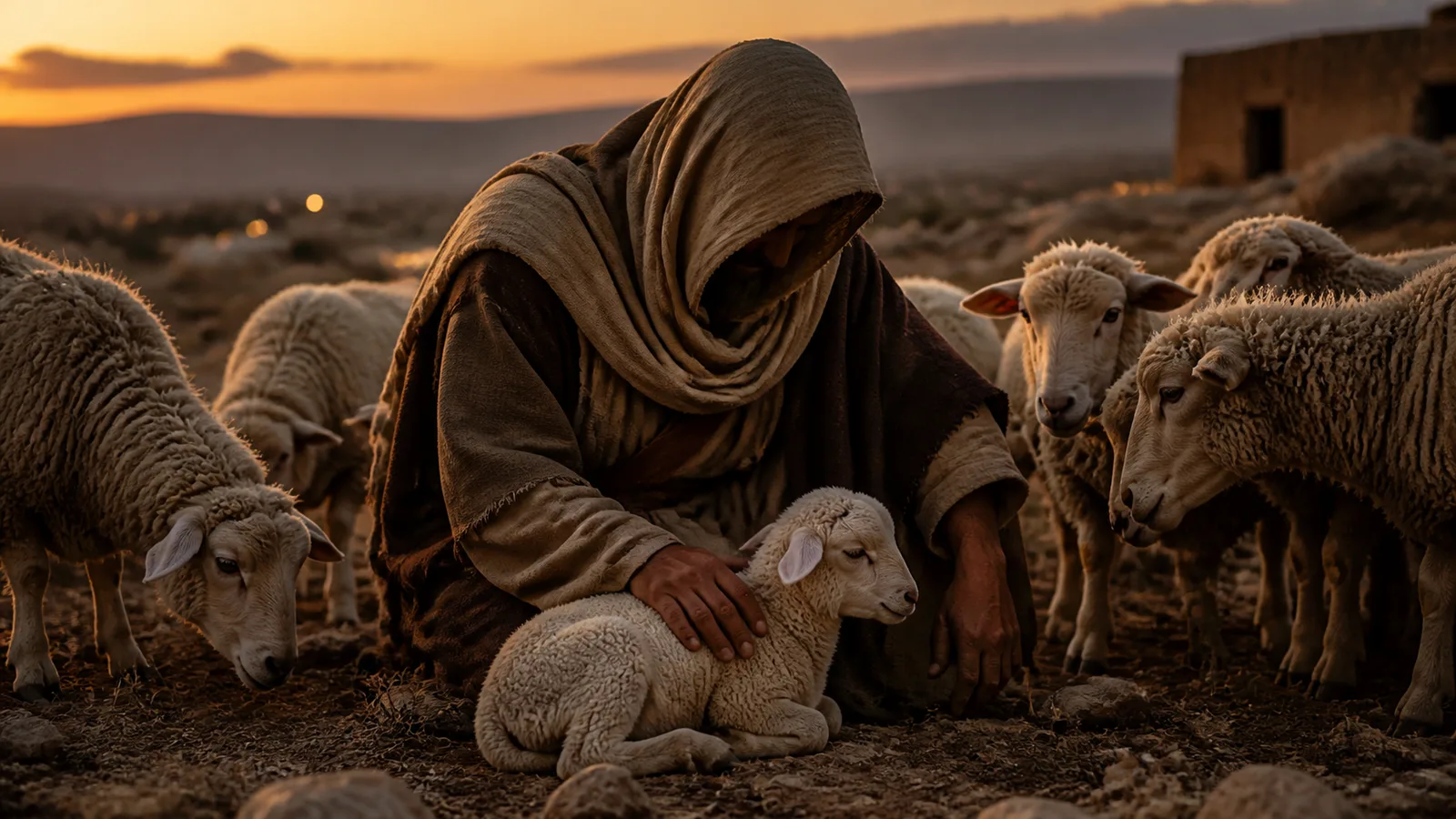
Two children from the same two parents, raised in the same house, and I am tempted to run them both off one program: same devotional at the same pace, same rules at the same ages, same lecture recycled from the older one to the younger one because it worked the first time.
It’s the exact thing no engineer would tolerate at work. Put two pumps from the same manufacturer side by side in an engine room. Same model and nameplate, installed the same week. Give them a year and they are not the same machine. One runs hot in the outboard bearing. One picks up a whine at high load that the other never develops. A Machinist’s Mate worth his crow knows his machines the way you know voices in the dark. You learn each one’s baseline sound, and you learn it by standing next to it for hundreds of hours, because the sound that should worry you isn’t loudness. It’s change.

I carried that habit into civilian facilities management, where I oversee maintenance across a large, complex asset portfolio. No serious operation runs one generic maintenance program across an asset register like that. Every asset gets a strategy fitted to its criticality and its actual failure modes. Treating a spare-parts conveyor like a critical compressor wastes money in one direction and destroys equipment in the other. The one place I lower the standard is my own house.
Scripture never lets the shepherd get away with that.
He calls them by name#
Jesus describes the true shepherd with a detail that’s easy to read past:
“To him the gatekeeper opens. The sheep hear his voice, and he calls his own sheep by name and leads them out.” (John 10:3)
By name. Not “he calls the flock.” Shepherds in the ancient Near East named their sheep and the sheep answered to those names, which tells you something about the resolution of the shepherd’s knowledge. He knows the limpy one, the skittish one, the one that bolts at running water, and he leads a flock made of individuals he could describe one at a time. Eleven verses later Jesus makes the standard explicit: “I am the good shepherd. I know my own and my own know me” (John 10:14).
That knowing is the expensive part. A program is cheap; you build it once and run it on everybody. Particular knowledge of a particular child costs the thing you have least of, which is sustained attention, given per kid, over years. This is the thread that runs through this whole series: the difference between the shepherd and the hired hand is what the work costs him. The hired hand can run the program. Only a father can know the sheep.
”According to his way”#
“Train up a child in the way he should go; even when he is old he will not depart from it.” (Proverbs 22:6)
The Hebrew under “in the way he should go” is literally according to his way — al pi darko. Commentators argue over this. Some read “his way” as the child’s individual bent, so the proverb commands training fitted to the particular kid. Others say “his way” means the right way appointed for him, and warn against turning a proverb into a personality theory. I’ll tell you where I land: even on the conservative reading, you cannot train a specific child toward the right way without knowing which wrong way this one drifts. The destination is fixed. The route is per child.
The rest of Scripture backs the fitted approach either way. Isaiah pictures God shepherding at differentiated pace, gathering the lambs in his arms and gently leading those that are with young (Isaiah 40:11). Carry some, gently lead others, all in one flock. And Paul gives four different treatments in a single sentence: “admonish the idle, encourage the fainthearted, help the weak, be patient with them all” (1 Thessalonians 5:14). Admonish the fainthearted kid and you crush him. Encourage the idle one and you feed the idleness. The treatment that heals one sheep injures the next, which means diagnosis comes before treatment, at home as much as anywhere.
The season changes the question#
Kids don’t only differ from each other. The same kid differs from herself, season to season, and the seasons change what your shepherding is for. Broad brush, the progression runs like this.
Early childhood is the what season. Questions are concrete: what is heaven, what happens when the dog dies. A small child learns faith mostly by imitation and rhythm, not argument. They’re recording who prays and whether the Bible on the table gets opened. Your job in this season is warmth and repetition. A five-year-old’s question can’t be answered too warmly, but it can be lectured to death.
The middle years are the why season. Somewhere around eight or ten the questions grow teeth: why does God let bad things happen, why did you say that word in traffic if we don’t say that word. This is also the season the hypocrisy detector comes online and starts auditing you specifically. A kid in the why season doesn’t need longer answers so much as honest ones, including “I don’t know, let’s find out,” which teaches more than a confident wrong answer ever will.
Adolescence is the whether season. Now the questions become load-bearing: whether any of this is true, and whether they can say so out loud in your house. And here a piece of research should recalibrate every father who grew up thinking doubt is the enemy. The Fuller Youth Institute followed 500 youth-group kids through their first three years of college and found that doubt itself didn’t predict faith falling apart. The doubt that correlated with losing faith was the unexpressed kind, while students who felt free to voice their doubts and struggles showed greater faith maturity down the line. That’s a correlation in churched college students, not a law of your house, but read the direction as an operating instruction. In the whether season your watch changes from answer desk to safe harbor, and the most spiritually productive sentence in your house might be your teenager saying “I’m not sure I believe this” to your face instead of to a stranger on the internet. If that sentence is unsayable at your table, it will be said somewhere else, without you.

Same standard the whole way through. Different interface every few years, and the father who never re-learns the interface ends up faithfully transmitting on a frequency his kid stopped monitoring two seasons ago.
In our house the season changes announce themselves in small ways first. The vocabulary shifts: my words come from the ’90s and 2000s the way my parents’ generation came with “groovy” attached, and suddenly my kids are using words I have to decode. The hair changes, what counts as cool changes. None of that is bad; it’s a flag on the calendar. But the surest signal is in the Bible questions. The answer that satisfied last year stops landing, and you can hear it in their voice — they’re not asking for the easy answer anymore. Keep issuing it anyway and they’ll quietly stop bringing the questions to you. When the slang starts outrunning you, assume the questions are about to.
Daughters and sons#
I want to say something honest here without pretending I can hand you a template, because the templates are where men go wrong in both directions.
The first wrong direction is treating the difference as total. That usually looks like a dad who disciples his son through shared activity, the garage and the trail, and routes his daughter’s spiritual life to her mother, as if Deuteronomy 6 said sons. It says children. Your daughter is not an auxiliary sheep, and a father who outsources her discipleship while hand-raising his son’s has made a stereotype into a shepherding failure.
The second wrong direction is pretending there’s no difference at all, and any father of both can tell you the same conversation does not land the same way twice. But in my experience the differences that matter most are individual before they are gendered. I’ve known daughters who process everything through debate and sons who need three days of silence before they’ll tell you what’s wrong. Shepherd the kid in front of you, not the category.
One asymmetry survives even that rule; I offer it as observation, not research. Your son is watching you to learn what he should become. Your daughter is watching you to learn what she should expect from any man who will ever claim to love her — husband included. The same data stream gets read twice, and the second reading is the one fathers forget. A father who is reliable and interested in his daughter’s actual interior life is setting her baseline for male behavior. So is a father who is absent or bored.
In my own house the contrast is real. My son tends to reason his way through a thing before he reacts to it. My daughter meets the same thing heart-first, quick and fully engaged — which gives her a compassion her brother has to work for, and costs her a calm he gets for free. Same lesson, two different landings, every time. Neither wiring is the right one; they’re two different sheep, and one father owes them two different approaches. And that’s before you even reach the boy-girl question, because two boys can be just as different from each other. The category never excuses you from the diagnosis.
The single shepherd#
About 2.5 million American households with children are headed by a father without a spouse present. If that’s you, most family-discipleship writing quietly assumes a co-shepherd you don’t have: a second set of eyes on the flock, another instrument that catches what yours misses. You’re standing port and starboard watches, six on and six off, indefinitely. Every Sailor knows how that rotation ends if nobody relieves you.
So build the relief into the design instead of waiting until you break. Scripture is not silent about your situation: “Father of the fatherless and protector of widows is God in his holy habitation. God settles the solitary in a home” (Psalm 68:5–6), and the home he settles people into, in the New Testament’s architecture, is the church. I mean church as your backup watch section, recruited by name, not as a building you attend. Recruit one trusted man per kid who knows them and asks real questions, and for your daughter, a godly older woman who can stand the parts of the watch you cannot. Debrief the people who already see your kids from angles you don’t, like their teachers or their grandmother. And recruit without embarrassment; no ship pretends one man is a full watch section, and your household shouldn’t either.
And guard against the guilt-driven version of the generic program, the one where you’re so stretched that the structured, identical routine becomes the whole strategy because it’s all you can sustain. Keep the routine. Just protect the one asset that can’t be systematized: unhurried minutes, per kid, where the only agenda is knowing them.
The quiet one#
In most families with more than one child, one of them is loud. The loud one sets the household agenda by default: their questions get answered because they ask them at volume, and their crises arrive with sirens. The quiet one gets shepherded by ambient exposure and is presumed fine.
Go back to the engine room. The sound that should worry a machinist is rarely the loud pump; the loud pump is telling you everything. The dangerous sound is the one that changed, and you cannot detect a change from a baseline you never learned. A quiet kid’s signals are small, which means the instrumentation has to be better, not worse. That instrumentation is one-on-one time, scheduled and defended, where the quiet one doesn’t have to out-shout a sibling to be heard. I’d like Shprd to one day help a father keep this kind of per-child picture, but the hours standing next to your kid are yours.
Jesus knew a man was in a tree before the man said a word, and called him down by name (Luke 19:5). And when God wanted to tell his people what redemption sounds like, he put it in exactly these terms: “I have called you by name, you are mine” (Isaiah 43:1). You can call your sheep by name because you’ve been called by name yourself. Go learn theirs properly.
Prepare · Ask · Act#
Prepare: One page per child, this week, handwritten. Four lines: what this kid is asking about God right now; what lights them up; where they’re struggling that they haven’t said out loud; one thing you do that works for their sibling but not for them. If you can’t fill a page, you haven’t failed the exercise. The blank page is the finding, and it tells you which kid you know by roster instead of by name.
Ask each kid one question fitted to their season, and take the answer without correcting it. Under eight: “What’s your favorite thing we do together, just us?” Eight to twelve: “What’s something about God that doesn’t make sense to you?” Teenager: “Is there anything you’re not sure you believe anymore?” Then thank them for telling you the truth. That thank-you teaches them doubt is speakable here.
Act: Put a standing one-on-one on the calendar for each child this month, and make the slots different shapes on purpose: the loud one and the quiet one should not get the same hour in the same form. Single dads, one more move: recruit one named backup watchstander per kid before the month is out, and tell them plainly what you’re asking them to watch for.