Keep Watch
Protection is a standing watch, not a reaction. How to threat-model your household (physical, digital, spiritual) and drill it like a Navy engine room, because nobody rises to the occasion.
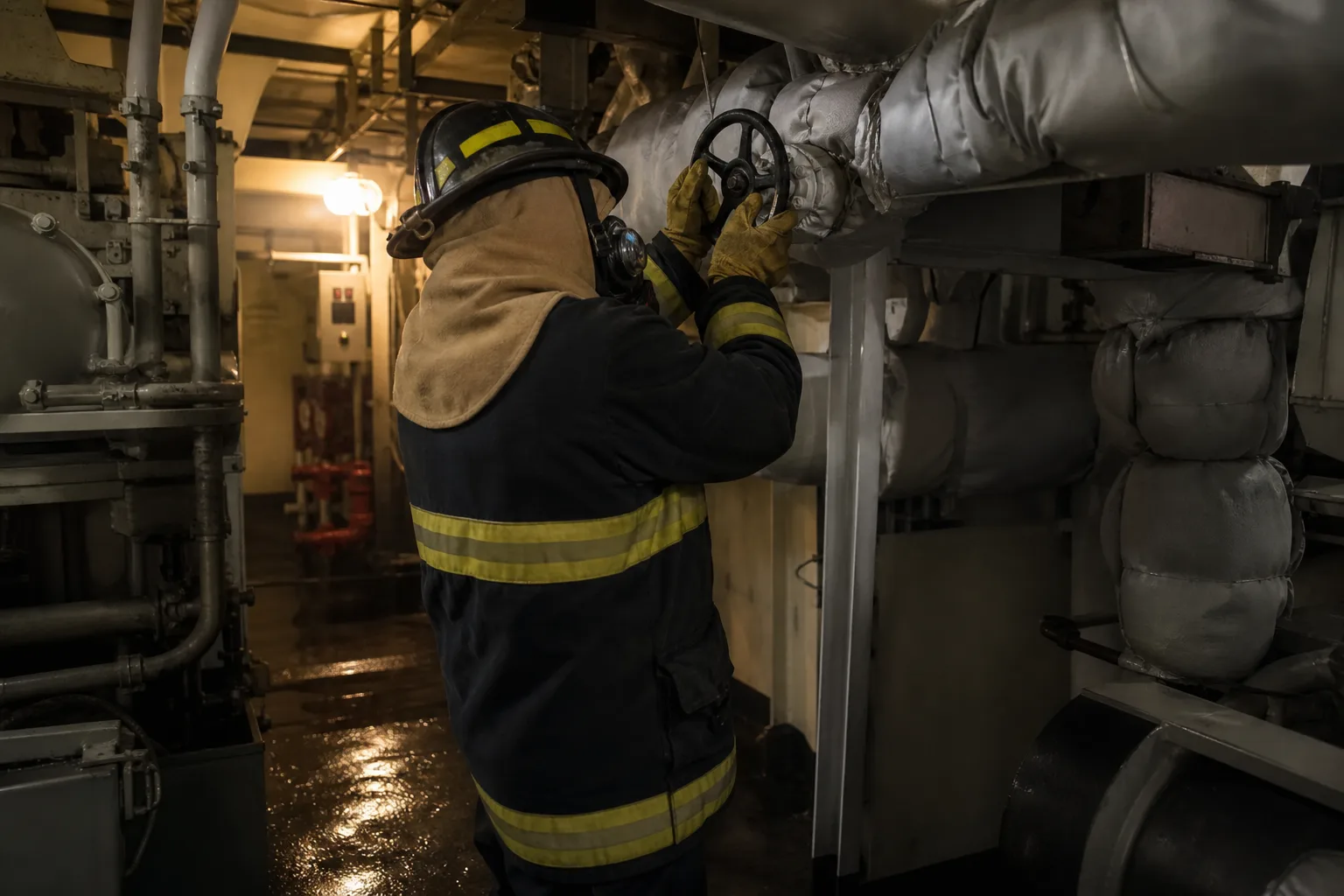
In the engine room of a Navy ship, we drilled casualties the way other people drink coffee. Daily, and without ceremony. Main space fire. Loss of lube oil pressure. Flooding in the shaft alley. The word would come over the 1MC, the whole watch team knew perfectly well it was a drill, and that knowledge changed nothing, because you executed like it wasn’t one. You donned the gear. You made the reports. You isolated the systems in the right order with your own hands.
The reason we did it is the least inspirational sentence I know: nobody rises to the occasion. Under real stress you do not become some sharper, braver version of yourself. You fall to the level of your training. And if there is no training, you fall to zero, which in a main space fire looks like standing in the smoke trying to remember where the exit is.
I know because, as a much younger man, I had the real one. Aboard USS Tarawa during Operation Iraqi Freedom, with most of our Marines ashore, a 100-psi steam line let go in their berthing space — a low-pressure line running right above the racks. I was on watch in A-Gang, the auxiliaries division, when it happened, and the first minute went exactly the way a thousand drills had built it to go: dress out, breathing apparatus on, investigate. The space was unbreathable, somewhere around 170 degrees, with a couple of inches of condensed steam already standing on the deck. I knew where the isolation valves were without having to think about it — that is precisely what the drills buy you — and made sure they were shut. Then came the unglamorous hours: ventilate the space, pump it dry. Live steam in a compartment where hundreds of men sleep can kill. It didn’t that day, because the watch was manned and the training held.
Here’s the part I can’t stop noticing since I retired: we drill relentlessly at work and wing it at home. The same man who ran quarterly fire evolutions at his plant, who sat through tabletop exercises and signed off on emergency action plans, has never once walked his own kids through what to do when the smoke alarm goes off at 2 a.m. I know, because for years that man was me.
Protection is the second of the shepherd’s pillars, and the whole argument of this article fits in one line: a shepherd’s protection is a standing watch, not a reaction. You don’t start protecting when the wolf shows up. By then you’re just reacting, with whatever training you happen to have. Usually that’s none.
A sword in one hand#
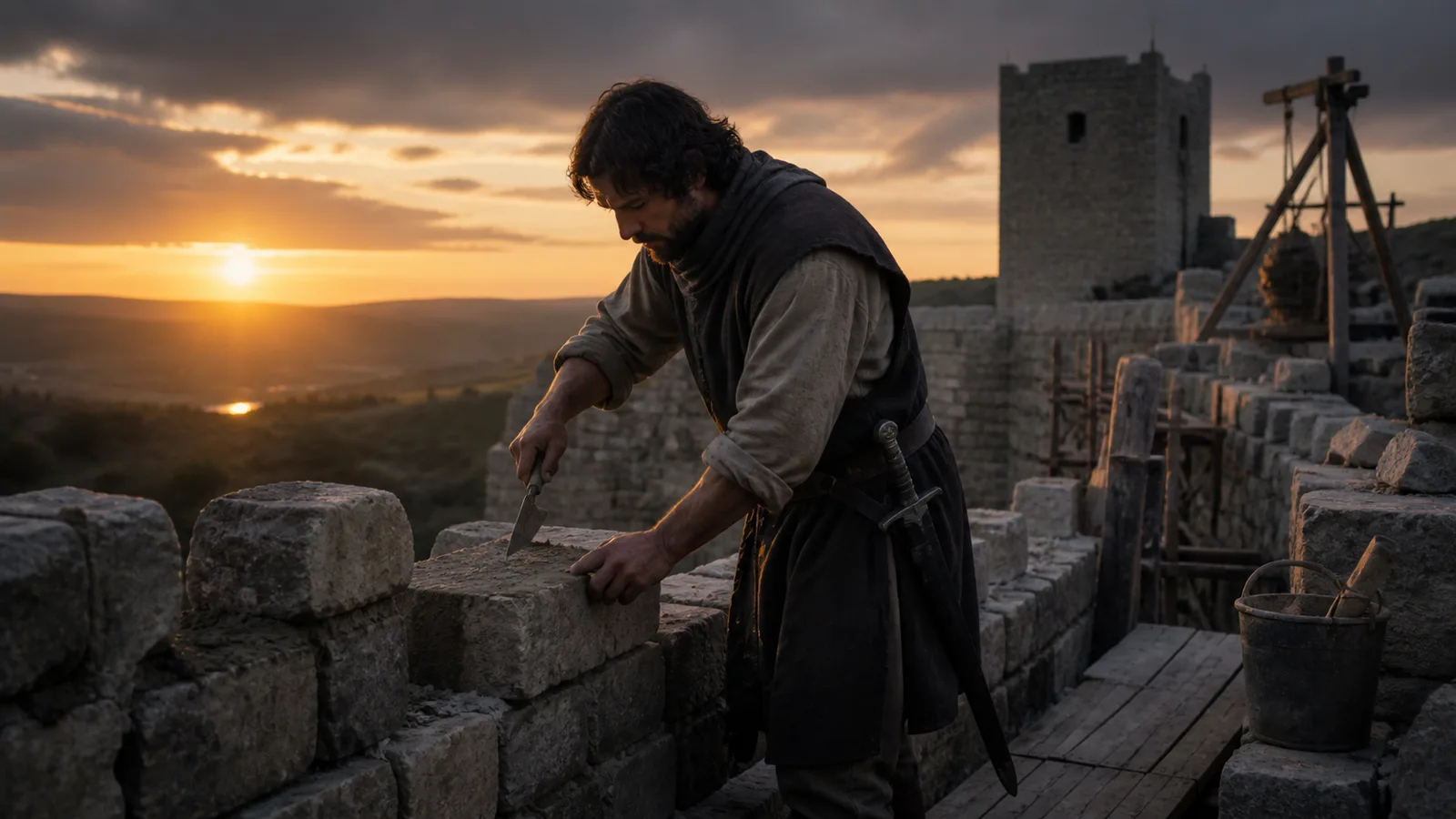
The book of Nehemiah is the field manual for this. Nehemiah himself is rebuilding Jerusalem’s wall with hostile neighbors openly planning to attack, and his response is not to stop building and turtle up, and not to ignore the threat and hope. He stations armed men at the low points, tells the people to fight for their brothers, their sons and daughters, their wives and their homes (Nehemiah 4:14), and then puts everyone back to work in a configuration worth memorizing: “Those who carried burdens were loaded in such a way that each labored on the work with one hand and held his weapon with the other. And each of the builders had his sword strapped at his side while he built. The man who sounded the trumpet was beside me” (Nehemiah 4:17–18).
One hand on the work. One hand on the weapon. Neither hand waiting for the other to finish.
That’s the posture, and notice what it rules out. It rules out the man who is all trowel, so absorbed in providing and building that the watch stands empty. And it rules out the man who is all sword, so obsessed with threats that he never builds anything, the guy whose garage is a bunker and whose kids are scared of the news. Scripture has a word for the sane middle: “The prudent sees danger and hides himself, but the simple go on and suffer for it” (Proverbs 22:3). Prudence. The verse’s prudent man “hides himself” because he saw the danger early, when getting out of its path was still cheap.
So let me say the thesis plainly. Preparedness isn’t paranoia; it’s stewardship. Paranoia stockpiles against fantasies. Stewardship maintains readiness against known casualties, the way you maintain a fire pump you hope never pumps a drop. The output of paranoia is a bunker. The output of stewardship is a drill calendar, and a family that finds the drills slightly boring because they’ve done them before.
The trumpet is your job#
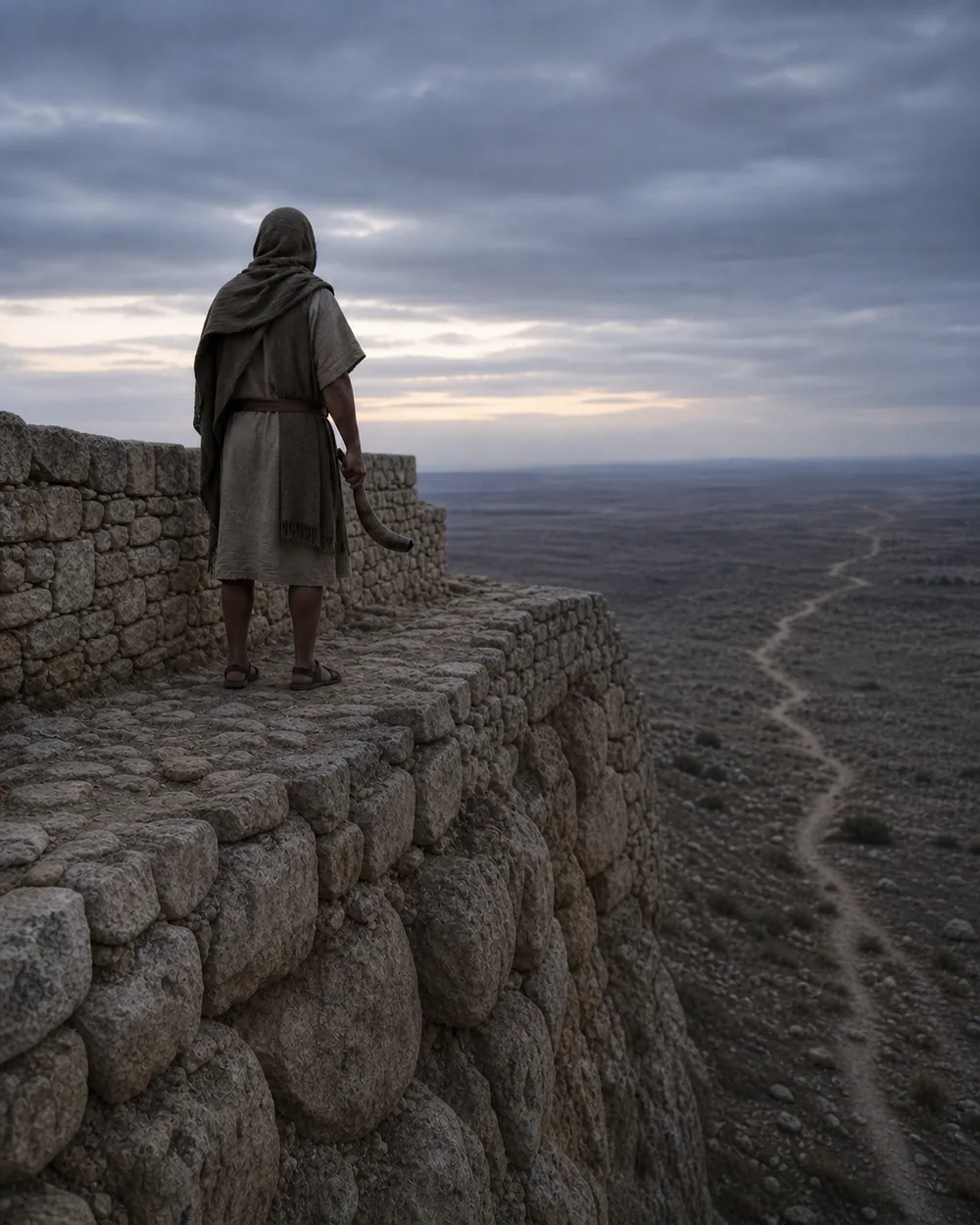
God defines the accountability in Ezekiel 33. Read it slowly. It’s aimed at watchmen, and if you’re a father, that’s your billet. “But if the watchman sees the sword coming and does not blow the trumpet, so that the people are not warned, and the sword comes and takes any one of them… his blood I will require at the watchman’s hand” (Ezekiel 33:6).
Read the mechanics of that carefully. The watchman is not held accountable for the sword coming. Swords come; that’s the world since Genesis 3. He’s not even held accountable for the outcome once the warning is given; Ezekiel says the man who hears the trumpet and ignores it owns his own blood. The watchman is accountable for exactly one failure: seeing and staying silent.
The commission in that chapter is Ezekiel’s, one prophet appointed over Israel, so take the transfer as an analogy rather than exegesis. But the analogy holds because the watch exists either way: you are the man stationed over your household, whether you ever accepted the station or not.
That standard is both more merciful and more demanding than the one most fathers carry around. More merciful, because you are not God, and you cannot guarantee outcomes for your family, and you were never asked to. More demanding, because “I didn’t want to make it weird” is not a defense available to a watchman. If you saw the pattern in your son’s eyes or the app on your daughter’s phone, and said nothing because the moment was awkward, Ezekiel 33 says the awkwardness was the job.
But you can only warn about what you’re watching for. Which raises the practical question: what, exactly, threatens your household?
Threat-model the household#
None of the facilities I help manage in my civilian work are protected by vigilance in general. Each one has a threat model written down as a risk register: someone sat down and enumerated what can go wrong, ranked it, and assigned mitigations with dates attached. Vague watchfulness protects nothing. So run the same exercise on your own household. Three domains, one page.
Physical#
Fire is the drill to start with, because the numbers are brutal and published. The Red Cross says you may have as little as two minutes to escape a burning home, and their fact sheet reports that only 26 percent of families have actually developed and practiced an escape plan. In two minutes you can’t figure anything out; you can only execute something you’ve already rehearsed.
So rehearse it. Twice a year, everyone in the house practices getting out: two exits from every bedroom, a meeting point at the mailbox or the neighbor’s driveway, and the specific skills your kids are missing, like whether your eight-year-old can physically unlock and open her own window. Add one severe-weather drill a year for whatever your region actually serves up (for us that means a known shelter spot, plus shoes and bike helmets staged for the kids). Add one medical walkthrough: everyone knows where the first-aid kit lives, one adult holds a current CPR cert, and every kid can recite the home address and call 911 from a locked phone.
Count the cost of all that. Four evolutions a year, maybe fifteen minutes each. An hour annually to convert your family’s worst night from improvisation to training. The time was never the hard part. Drills die when they live in your head instead of on the family calendar, which is why emergency-prep and training modules were among the first things I shipped in Shprd, the family app I build. Scheduled next to soccer practice, drills happen. Unscheduled, they’re a good intention.
In our house the live version isn’t fire, it’s tornadoes, because that’s what the Midwest actually serves up. The sirens don’t consult the family calendar; we’ve been pulled out of bed at every hour of the night. And every time, the kids make it downstairs to the shelter spot without being herded. I don’t time them, and I don’t need to — the reps already did their work. While they head down I run my own checklist: secure the house, watch the radar and the conditions, and when the weather has passed, the all-clear comes from me. That last part matters more than it sounds. It teaches them the watch has an owner, and that nobody leaves shelter because they got bored.
Digital#
Your household’s digital attack surface is larger than your physical one, and most of it walks around in your kid’s pocket. By age 11, 53 percent of American kids owned a smartphone as of Common Sense Media’s 2019 census, and “phone” undersells what that device is: a live location broadcast, a camera in the bedroom, an open DM channel to every stranger on earth, and a trail of accounts that stay live long after your kid stops using the apps.
So enumerate it like a system, because it is one. Sit down with each device in the house and answer three questions per app: can a stranger initiate contact with my kid here, what does this share by default (location, contacts, camera roll), and does this account have a recovery path that runs through me? Then do the boring infrastructure work: a family password manager and unique passwords. Document your own accounts well enough that your wife could take over the household’s digital life tomorrow if you were gone. That last one is protection too. A watchman who is a single point of failure hasn’t finished the job.
The deeper fight, what the feeds and algorithms are doing to your kids’ formation (who they’re becoming), gets its own article later in this arc. This one is about the perimeter. Walk it before you fight anything.
Spiritual#
The quietest domain, and the one with the highest stakes. The threat here doesn’t kick the door; it gets invited in and handed a schedule. So the watch question is simple to ask and uncomfortable to answer: who currently has access to your kids’ formation?
Make the actual list. Teachers, coaches, youth leaders, the friend group, the friend group’s older siblings, the music, the feeds, the shows, and you. Then put honest hours next to each name, because access is measured in hours. Titles don’t log any. Most fathers who do this discover that the people they vetted most carefully have the fewest hours, and the influences they never consciously admitted have the most. That’s a reason to know the list before you decide anything about purging it. A watchman has to find a gate before he can guard it, and Ezekiel’s standard applies here with full force. If the formation of your children is being done by whoever happened to show up, the trumpet is yours to blow, and blowing it starts as a conversation.
The casualty is coming#
I don’t know which domain your casualty arrives through. Something eventually will: a kitchen fire, a compromised account, a voice your daughter trusts that you never screened. The only variable is whether anyone in the house has trained for it, and that decision gets made now, on a calm Tuesday, by the man who has the watch.
Blow the trumpet while it costs you fifteen minutes and a little eye-rolling from the kids. It’s the cheapest it will ever be.
Prepare · Ask · Act#
Prepare: This week, take one page and make three columns: physical, digital, spiritual. List the top three realistic threats to your household in each. Thirty minutes, alone, honest. This is your risk register; date it.
Ask your kids at dinner, with no preamble: “If the smoke alarm went off right now, in the dark, what would you do?” Don’t coach the answer. The silence, or the wrong answer, is your training gap, written down for you by the people you’re protecting.
Act: Run your first fire drill within fourteen days, and before you run it, put the second one on the calendar six months out. One more thing: when you run it, don’t wink at it. On the ship, everyone knew the drill was a drill, and we executed it like the real thing anyway, because the crew takes the casualty as seriously as the senior man in the room does. In your house, that’s you.