Guard the Gate
The primary threats to your kids now arrive through screens you paid for. What the evidence actually shows, what's still contested, and a family tech covenant that binds the father first.
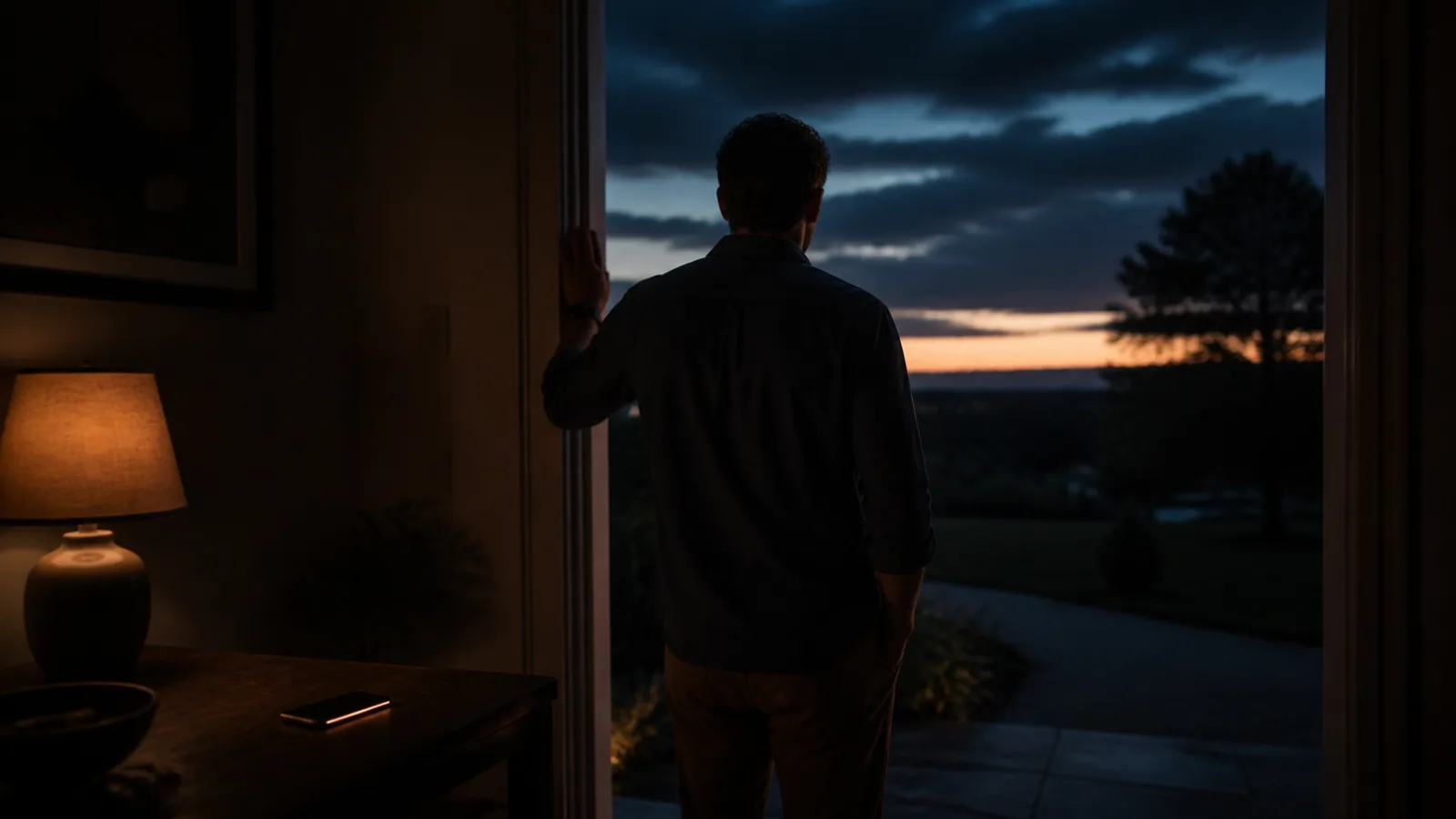
Count the gates in your house. Every phone, tablet, console, smart TV, and school-issued laptop is a gate, and traffic crosses all day. The average American teen spends 4.8 hours a day on social media, with girls averaging 5.3. That is a part-time job’s worth of daily traffic, most of it routed by a recommendation engine that answers to a growth team, not to you.
And the part that should bother you is that we paid for every one of those gates, and wrapped a few of them in birthday paper.
A Navy ship handles its gates differently. Every lawful way aboard is a brow, the ramp from the pier, and every brow lands on a quarterdeck that is never unmanned. In port, even at 0300 on Christmas morning, somebody stands there with a deck log, and everyone who crosses gets seen. Officer, contractor, admiral, the guy delivering pizza. Somebody stands that watch; I’ve been the somebody. The standing order fits on an index card: nobody boards this ship unobserved.

A house used to work the same way. One front door. Threats had to arrive physically, so a father who locked up at night and knew who his kids ran with had most of the protection job covered. Every gate you counted a minute ago is a brow where nobody stands the watch.
Read the numbers honestly#
I want to put numbers on this the way I’d write a casualty report, which means telling you what’s established and what’s still being argued.
Established: something happened to kids’ minds, and it happened on a schedule. In 2021, 57% of American teen girls reported persistent sadness or hopelessness, up from 36% in 2011, and 30% had seriously considered suicide. Those figures come from the CDC’s own youth risk surveillance, not from anyone selling a book. The rise begins in the early 2010s, the same window in which the smartphone, the front-facing camera, and the algorithmic feed reached teenagers. That timing is the spine of Jonathan Haidt’s The Anxious Generation.
Contested: how much of the rise the phone actually caused. Candice Odgers, a developmental psychologist, reviewed Haidt’s book in Nature and argued the causal evidence isn’t there — that Haidt has a correlation and a story, and that blaming social media may distract us from other drivers of the crisis. Haidt disputes her reading point by point. That fight is live among serious people, and I won’t pretend to you that it’s settled.
Here’s how an engineer reads it. You don’t wait for a finished root-cause analysis before putting a guard on a machine that keeps correlating with injuries. When the correlation is strong, the mechanism is plausible, and the stakes are asymmetric, you set the watch first and let the academics finish the causation fight on their own timeline. The cost of guarding isn’t zero. Odgers is right that a kid off the feed is off the group chat too. But a delayed feed is recoverable at sixteen, and the other mistake is not. No father has ever looked back at his kid’s childhood and wished an algorithm had gotten more hours of it.
The gate the church won’t name#
There is a second kind of traffic crossing those unmanned brows, and you will rarely hear the word from a pulpit, so I’ll say it here: pornography.
The numbers are worse than most fathers let themselves believe. In a national Common Sense Media survey, 73% of teens age 13 to 17 had watched pornography online, and the average age of first exposure was 12. Fifteen percent first saw it at ten or younger. Twelve is sixth grade. Twelve still has a bedtime.
The toll doesn’t stop at adolescence; it follows men into their marriages. One of the more careful studies we have, a nationally representative panel that re-interviewed the same adults over several years, found that beginning pornography use was followed by roughly a doubling of the probability of divorce, from 6% to 11% by the next survey wave, for men and women alike. I’m deliberately giving you boring, conservative numbers that are hard to dismiss. The dramatic statistics that circulate in men’s ministries often don’t survive a source check, and this series only trades in numbers that do.
We talk about pornography as a threat to our sons. Scripture talks about it as a threat to the man doing the talking. Job’s line is the oldest tech covenant on record: “I have made a covenant with my eyes; how then could I gaze at a virgin?” (Job 31:1). And when David sits down to write out how he intends to run his own house, the first policy about his household is about his own eyeballs: “I will walk with integrity of heart within my house; I will not set before my eyes anything that is worthless” (Psalm 101:2–3). A king, drafting house rules, starts with the gate in his own head.
That’s the order of operations. The father’s eyes are the main gate of the household. Guard that one first or don’t bother with the rest.
A covenant with names on it#
Go back to the quarterdeck. The watch doesn’t hide in the bilges with a camera. He stands at the brow in plain sight, and all hands know the rule and agreed to it the day they reported. Covert monitoring, the spyware-and-secretly-read-messages approach, teaches a kid exactly one skill: not getting caught. A visible, signed agreement teaches the thing you’re actually after, which is a conscience that mans its own gate long after they’ve moved out of your house.
By covenant I mean a written household agreement with names on it, not another filter app. A starting frame follows; argue with the details, but keep the parts that bite.
- Phones sleep in the kitchen. Every phone in the house goes on the charging rack at a set hour, and dad’s goes first. No screen of any kind spends the night in a bedroom. That includes the master bedroom.
- No algorithmic feeds before 16. That’s Haidt’s no-social-media-before-16 norm restated for the feed, and whatever the causation fight eventually decides, it’s a sane default. Pick your age in advance, write it down, and stop renegotiating it in checkout lines.
- Screens live in the open. Homework at the table, gaming in the living room. Bedrooms are for sleeping and reading.
- One standard of accountability. The same filtering and reporting on every device in the house, and the father’s browsing is as reviewable as the twelve-year-old’s: reviewable by his wife, and by at least one man outside the house.
- A standing review, not an ambush. A recurring date on the calendar to sit down together and look at how the covenant is holding, calm and expected, instead of a forensic raid after something goes wrong.
- Amendments at set ages. The version a nine-year-old signs shouldn’t be the one a sixteen-year-old lives under. Renegotiate it like a treaty, on schedule, with their voice in the room.
I’ll be honest about where the cost shows up for me: it’s rarely one dramatic scene. It’s the standing arithmetic of what gets ranked under what. The evening with buddies that becomes a bike ride with the kids instead. The movie you’d have picked traded for the one they picked. The hobby hours that quietly shrink because a hobby that outranks your children isn’t a hobby anymore, it’s a rival. None of those show up in a covenant document, but they’re the same clause: the gate gets guarded by a father whose own wants stand behind his kids in line, and the kids can see the line.
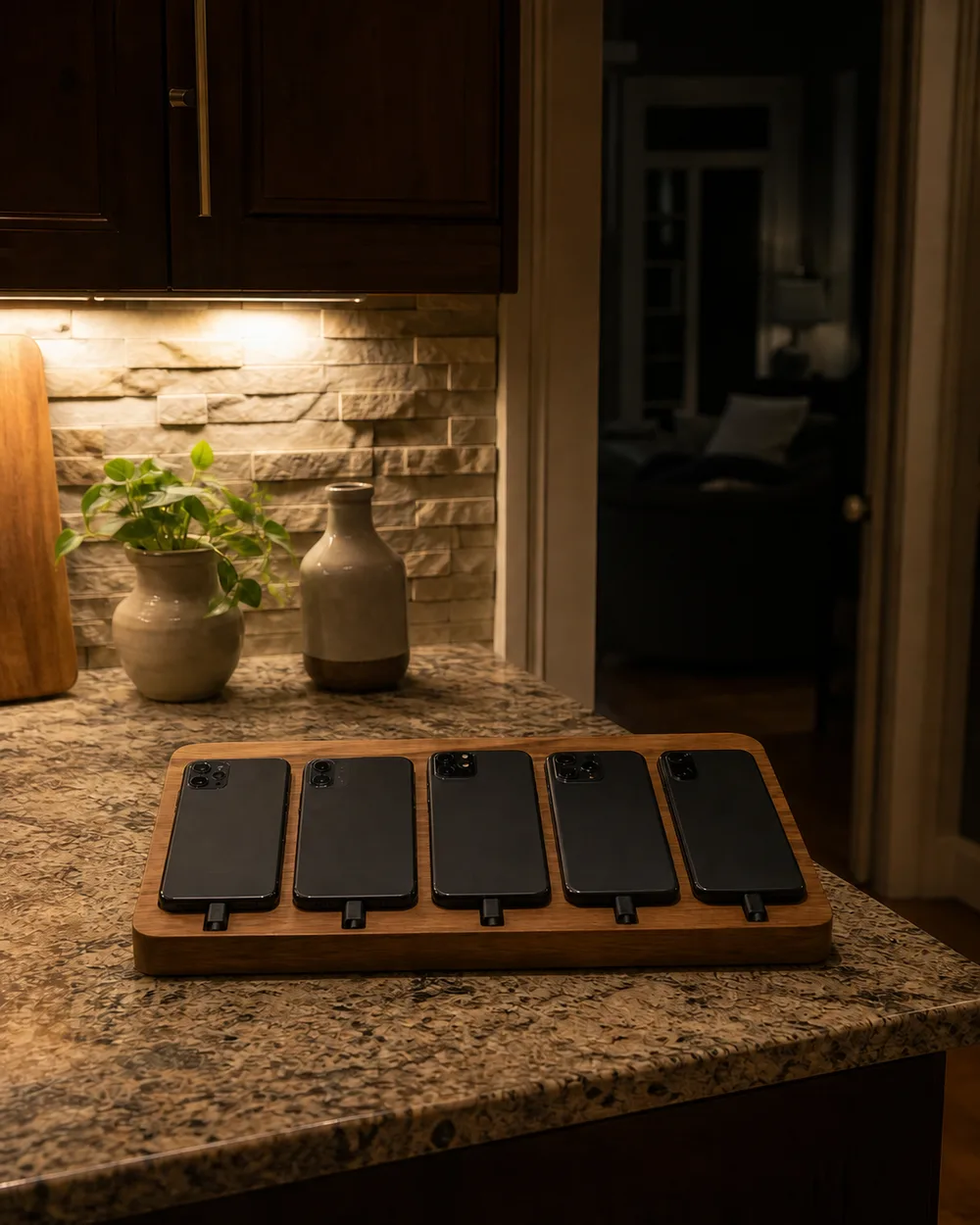
One more thing about the word gate. Gates open. The quarterdeck exists so the ship can sit in a foreign port and take on stores and liberty parties. Traffic is the point; observation is the discipline. If your tech rules amount to a bunker, you haven’t protected your kids, you’ve deferred their exposure to the first unsupervised dorm room. The goal is a child who walks out your front door at eighteen already knowing how to stand a watch over his own heart, because “from it flow the springs of life” (Proverbs 4:23), and nobody else is going to guard it for him.
Covenant or theater#
Everything above collapses on one failure mode, so let me name it plainly. If the covenant applies to everyone under five feet tall, your kids will run the arithmetic before you finish reading it aloud. A father scrolling a feed at the dinner table while enforcing a no-phones rule isn’t guarding a gate. He’s performing at one, and children can tell a watchstander from an actor at any age. Psalm 101 works as household policy precisely because the man writing it put himself under it first.
That will cost you, and it’s supposed to. Protection that risks nothing is hired-hand work. It cost Job something to make a covenant with his eyes, and this one will cost you a numbing ritual you’re more attached to than you think — the 11pm scroll, the feed you check at red lights, maybe worse. Get honest about the worse. If pornography has a hook in you, the covenant paper won’t pull it out; a brother will. Go find that brother this week. A shepherd who won’t deal with his own gate is hoping the wolf prefers a different door.
Prepare · Ask · Act#
Prepare: Walk your house this week and count the gates — every device that can reach a browser or a feed. Write the number down. Then note where each one physically sits at 11pm. That map is your current watch posture, and in most homes it shows no watch set anywhere.
Ask your kids, at whatever age they are, one question: “Have you ever seen something on a screen you wish you could unsee?” Go first. Answer it about yourself, at whatever level of detail fits the kid in front of you. The question only opens the door if you walk through it ahead of them.
Act: Draft the covenant this month. One page, six rules, every name in the house on it, yours at the top. And tonight, before any family meeting, before anyone else is asked to change anything, move your own charger to the kitchen. The gate gets manned in the order the psalm gives it: the father’s eyes first, then the house.