Strong Enough to Matter
Physical readiness is part of a father's charge, not a vanity project. What Navy damage control, Paul's honest ranking of bodily training, and the data on men's declining strength say about the minimal standard any dad can hold.
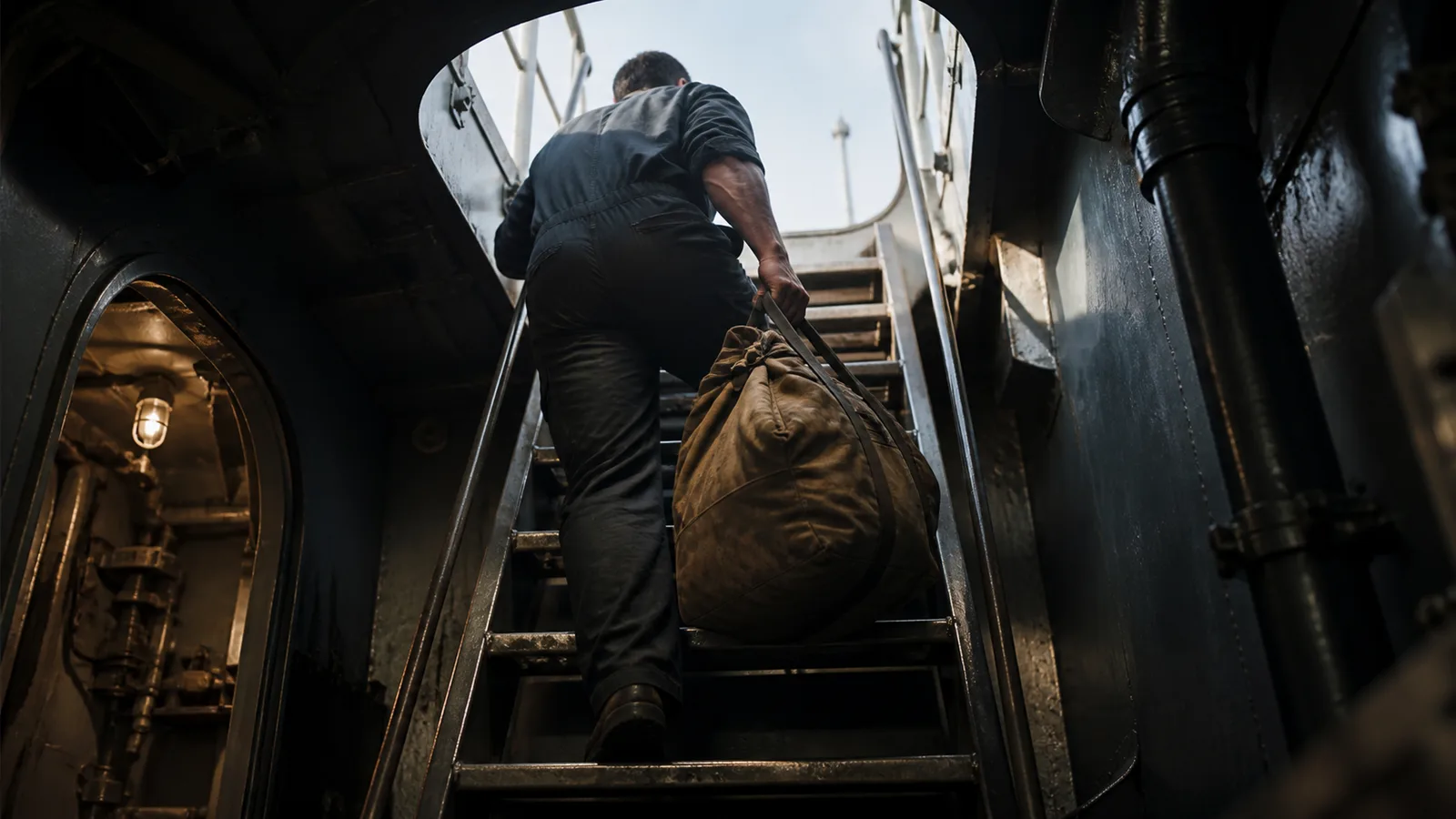
Every Sailor on a Navy ship is a firefighter. Not the ones who volunteered. All of them. Before you’re trusted with the job you actually came aboard to do, you qualify in basic damage control: fighting fires, stopping flooding, sealing a breathing apparatus to your own face while the space fills with smoke. The Navy learned this the hard way over a couple of centuries. At sea, there is nobody to call. The men aboard are the response.
What the recruiting posters skip is that most of damage control is cargo handling. A charged fire hose fights you like a live animal. Dewatering pumps, shoring timber, patching kits — heavy, all of it, and the ship’s designers put steep ladders between you and everywhere you need to take it. A repair locker’s equipment list quietly assumes that the Sailors who man it can move what it holds. Fast. Uphill. In gear. A pump that can’t get to the flooded compartment isn’t equipment. It’s ballast with a stencil on it.
Capability is the gear multiplied by the man, and if either factor is zero, the product is zero. Engine rooms teach you to read every system that way.
This series has been making the case that a father holds a real office, in the biblical sense of the word, with real duties. This article is about the part of that office almost nobody will name out loud in church: some of the duties have a physical spec. Protection is the pillar where the physical spec shows first, but it touches all three: leadership, protection, and provision. You cannot carry anyone if you can’t carry yourself.
Reading the gauges#
I have no patience for the panic industry around men’s health, the supplement ads dressed up as sociology. So what follows is only what I can source, stated at the strength the evidence deserves.
Start with grip, the most honest gauge we have. In 1985, American men aged 20 to 24 averaged a right-hand grip of 121 pounds. When researchers re-ran the measurement for a 2016 study in the Journal of Hand Therapy, men the same age averaged 101 (NPR’s write-up). Honest label on that number: it came from 237 volunteers in one region, and a sample that size can’t prove a nationwide generational slide by itself. But anyone who has watched men’s work migrate from engine rooms and shop floors to keyboards will not find the direction surprising.
Grip is worth caring about because it tracks whole-body strength, and whole-body strength predicts survival with uncomfortable accuracy. The PURE study followed nearly 140,000 adults in 17 countries and found that every 5-kilogram drop in grip strength was associated with a 16% higher risk of death from any cause (The Lancet). In that dataset, a man’s grip predicted his death better than his blood pressure did.
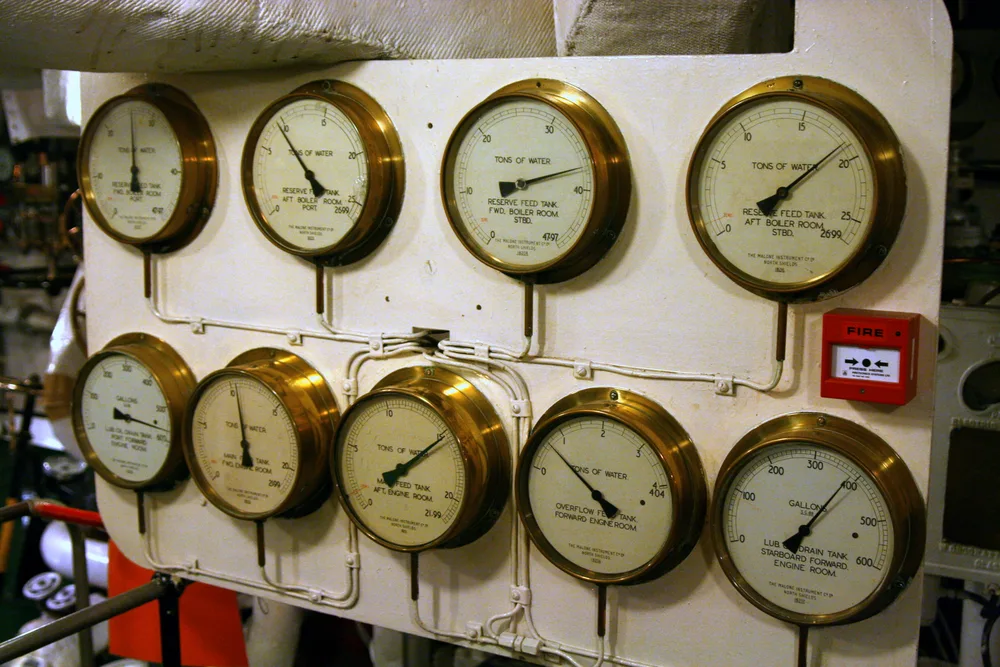
Photo: Rémi Kaupp, via Wikimedia Commons CC BY-SA 3.0
The readiness numbers in the formal, military sense are worse. The Pentagon’s 2020 qualification study found that 77% of Americans aged 17 to 24 could not qualify for military service without a waiver, with being overweight the most common single disqualifier (Military.com). More than three-quarters of the young Americans this country would need in a crisis couldn’t qualify to be handed a hose.
And their fathers aren’t exactly modeling the alternative. In 2022, 22.5% of American adults met the federal guidelines for both aerobic activity and strength training (CDC QuickStats), and one in three adults doesn’t get even seven hours of sleep (CDC).
All of this is gauge readings. And gauges exist so you can fix things before the casualty instead of during it.
Paul ranked the body, so I have to#
“But I discipline my body and keep it under control, lest after preaching to others I myself should be disqualified” (1 Corinthians 9:27). The two Greek verbs there are rough ones; the first is a boxing term that means, more or less, strike under the eye, and the second means to lead around as a slave. Paul did not think the physical was beneath his calling. He treated his own body as a thing that would take command of him if he didn’t take command of it first, and he took the stakes seriously enough to use the word disqualified about himself.
But if I’m going to quote Paul on the body, I have to quote all of him, including the verse the fitness influencers leave out. He told Timothy: “while bodily training is of some value, godliness is of value in every way, as it holds promise for the present life and also for the life to come” (1 Timothy 4:8). Of some value. Paul ranks bodily training below godliness, explicitly, and any man using 1 Corinthians 9 to baptize a gym obsession needs to sit with that ranking. If your bench press gets a devoted hour a day and your Bible gets a guilty five minutes, Paul is not on your side. Neither is this article.
So the claim here is deliberately modest. Godliness first, by Paul’s own math. Bodily discipline comes after, and downstream of it, because the body isn’t yours to neglect any more than it’s yours to worship: “You are not your own, for you were bought with a price. So glorify God in your body” (1 Corinthians 6:19–20). In Navy terms, the body is issued equipment. You didn’t buy it, and you will answer for its material condition.
What the office actually needs#
The fitness industry and the office of father want different things from your body. The industry wants a physique, because a physique photographs well and photographs sell programs. The office wants capacities, and almost none of them photograph: carry a sleeping kid from the car without waking her. Get your own body up off the floor without a plan. Keep up on the trail. Move the person you love most out of danger once, someday, on the worst afternoon of your life, without a warm-up. Finish a full workday and still have a self left at 8 p.m., because the evening watch is the one your family actually sees.

There’s a blunter connection, too, and it runs to the provision pillar. Go back to those PURE mortality numbers. A father’s early death is the provision failure no life-insurance policy fully papers over, and strength is one of the few mortality predictors you can at least act on with a pair of dumbbells and a sidewalk. Being alive and useful for the next thirty years is provision. Your own actuarial table belongs in your household’s threat model.
Here’s my own gauge history, since I’m about to ask for yours. As a young Sailor I could live on ladders — six decks straight down to check after steering and back up again — and I stood Repair Locker 5, the primary locker for the main spaces and the most drilled team on the ship. I’ve worked a live fuel-oil leak in an engine room on a breathing apparatus, and I can tell you exactly what fitness is for down there: air. Breathe heavy because you’re out of shape and you empty your bottle in half the time, in heat that bills you for every wasted movement, while you’re trying to make sure nothing sparks. That was the younger man. Near the end of my 21 years the gauges started arguing with me: my run times crept toward the line cycle after cycle, and at about nineteen years in, one PRT finally went probationary on me. At my heaviest I was close to 270 pounds. I’ve since taken it down to 202; my wife and I had our twentieth anniversary coming in Hawaii, and I wanted to be the man who could enjoy it. (I enjoyed it. The scale noticed. We move on.) The fight continues now through the season nobody puts on the fitness posters: a hernia last year, a torn labrum in my hip this year, weeks where sitting in a car hurt, and physical therapy twice a week doing small, boring exercises that are currently my heavy lifting. The standard doesn’t retire when the body starts billing you for the early years. It adapts, and it keeps reporting.
I’m not writing this from a summit. I’m writing it as a man who reads his own gauges and doesn’t always like them, which is exactly why I want a standard low enough that failing it means something.
The floor#
So here is the floor. No gym membership, no 5 a.m. cult. Four gauges any dad can read this week, and a standard he can hold from now on:
- Carry. Twice a week, pick up something heavy and walk with it until your grip gives out. Loaded suitcases, sandbags, a kid on your shoulders, every grocery bag in one trip as a matter of personal honor. Two days a week of muscle-strengthening work is the federal guideline, and loaded carries are the most father-shaped version of it there is — the whole job description, literalized.
- Walk. Thirty brisk minutes a day. That clears the 150-minute weekly aerobic guideline from the same CDC standard cited above, and if you take a kid along, it double-counts as the best conversation you’ll get all day.
- Sleep. Seven hours, defended like a maintenance window, because that’s what it is. On the ship we never let a critical system skip planned maintenance because the schedule got busy; the schedule being busy is why the maintenance exists.
- Waist. Keep your waist measurement under half your height (NICE’s guideline). One tape measure, one number, no interpretation needed, and it tracks the abdominal fat that drives the diabetes and heart-disease risk.
That’s the whole floor: a tape measure, a sidewalk, a bedtime, and something heavy. Shprd can hold the numbers if you want them visible to the household; a notebook works fine.
If you’re well above this floor already, good. Take more ground. But the office doesn’t require you to deadlift triple bodyweight, and it never did. It requires that when the day comes that someone has to be carried, the man who stands the watch in your home can do the carrying.
Prepare · Ask · Act#
Prepare: Take the four readings this week and write them down where you plan your week. Waist and height, Saturday morning, before breakfast. Count the nights out of the last seven with seven hours of sleep. Log the minutes walked. And the carry test: pick up the heaviest thing your household actually needs you to move (the salt bags, say, or your youngest) and carry it fifty yards. Now you have a baseline instead of a vague feeling.
Ask your wife or your oldest kid one question: “What do you wish I still had the energy to do with you?” Write down what they say next to your four numbers, because that answer is what the numbers are for.
Act: Take your single worst gauge and fix only that one for the next thirty days, attached to the family instead of carved out of it. If it’s the walk, it happens after dinner with a kid alongside. If it’s sleep, the alarm moves across the room and the screens go dark at 2200, starting tonight. One gauge for thirty days, witnessed by your household. Nobody will see the difference in a mirror, and the mirror was never the audience. The day the flooding starts, the pump gets where it’s needed.