The Shepherd's Test
We made silence a virtue and called it politeness, and it cost us the ability to know who stands with us. The capstone of the Shprd Pillars series: why the man who keeps the watch at home doesn't get to go silent outside it.
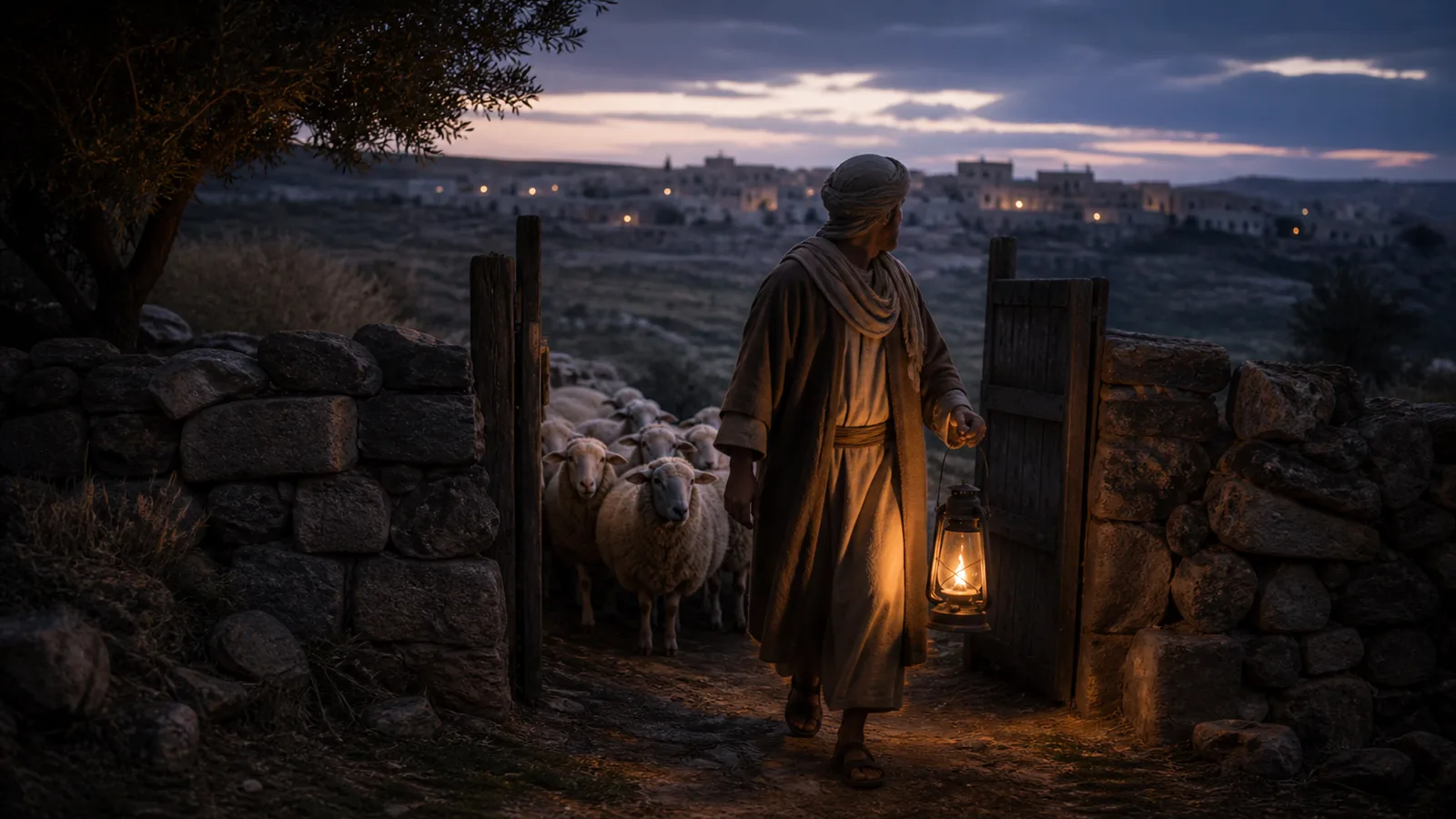
At work and at the cookout, the rule is simple: no politics, no religion. The two subjects that reveal what a man actually believes and predict how he’ll act are the two subjects a decent man is expected to keep in his pocket. I followed that rule for a long time. I was good at it. Shipboard professionalism will train a man to read a room and stow anything that might rock the boat.
It took me years to notice how strange that rule is, because a ship runs on the opposite one: if you see a casualty, you report it, whether or not it’s in your space. That standard is so basic nobody bothers writing it down. A fire two compartments aft is not somebody else’s problem. Steel conducts heat, smoke goes wherever nobody’s set a boundary, and the ship sinks as a unit. A watchstander who noticed flooding in the next space and kept quiet because it wasn’t his assigned station would not be called polite. He’d be called something I can’t print here, at a mast he would not enjoy.
I’ll pay the toll myself before asking you to. The relationship I lost over politics is family. I’ll spare you the genealogy; the short version is that there’s a branch of my extended family I no longer speak with, and politics and religion were the solvent. The rule handed to me was don’t talk politics or religion around us — while the same people posted their politics, and their critiques of my religion, openly and often, right up until they unfriended me. That’s the modern ending, by the way: not a blowup, a click. Nobody sends a notification when a friendship closes on Facebook; you find out later, doing the arithmetic. A few friendships from my Navy years ended the same silent way. And in my local dads group the rule is actually written down: no religion, no politics — a member who is your friend and a candidate for local office can’t even get a good-luck post. We built the silence ourselves, put it in the bylaws, and called it being neighborly.
This is the last article in the Shprd Pillars series, and it’s a test. Ten articles have laid out the charge of a shepherd at home: go first, keep watch, feed the household, carry the load at cost to yourself. If a man will do all of that inside his front door, on what grounds does he go silent one step outside it? A shepherd whose watch ends at the fence line has a flock with an unguarded boundary. The watch doesn’t shrink to fit the audience. It scales, household to community, or it was never a charge, just a hobby.
How quiet we’ve gotten#
Here are the numbers on American silence.
In 1954, at the height of the McCarthy hearings, with a Senate committee actively hunting people for their views, 13.4% of Americans said they felt less free to speak their mind than they used to. By 2019 that figure had roughly tripled, to about 40% (Gibson & Sutherland, Political Science Quarterly). We self-silence at three times the rate of the blacklist era, at least by what people will admit to a pollster, and a respondent in 1954 had better reasons to lie about it. The same research found the driver is social, not fear of the state.
The cross-check says the same thing. In 2020, 62% of Americans told Cato/YouGov the political climate stops them from saying things they believe. Pew found 45% of adults have stopped talking politics with a particular person because of something that person said. Even the professionals are refusing to answer: the share of Protestant pastors unwilling to state a presidential preference anonymously, to a pollster jumped from 3% in 2016 to 23% in 2024 (Lifeway Research). Men whose literal job title is shepherd have concluded the safest move is silence, even anonymously, even off the record.
Nobody ordered this. There’s no censor to appeal to, no commissar to outlast. We built the muzzle ourselves, strap by strap, and we did it for a reason that sounds honorable: we didn’t want to lose people.
What the silence actually protects#
The “no politics, no religion” rule is Victorian etiquette, not wisdom literature. It survives because its premise is half true: these topics really can wreck a table. On the most careful national survey, 11% of Americans have stopped talking to a family member over politics, and broader measures counting friends and skipped holidays run higher. The danger is real. I’m not going to pretend otherwise.
But the prescription doesn’t follow, because avoidance is not a preservative. Communication researchers have linked chronic topic avoidance to lower relationship quality, not higher; the finding is correlational and the arrow runs both ways, but the mechanism is easy to recognize. Silence reads as distance. The unresolved thing sits in the room at every dinner, and both parties learn to walk around the furniture. A truce at one Thanksgiving is a reasonable tactic. A relationship permanently rebuilt around a no-fly zone is a different structure, and a weaker one, and everyone inside it knows it.
Now put that norm on top of what men are already working with. I gave you two numbers in the first article of this series, and the capstone is where they land: men with six or more close friends fell from 55% in 1990 to 27% in 2021, and men with zero close friends went from 3% to 15% (Survey Center on American Life). Run the arithmetic. Fewer ties mean each remaining tie carries more load. Add a norm that walls off the two subjects where conviction lives, and you get the modern male friendship: years of shared grills and group chats between men who could not accurately state what any of the others believe about God, or about how this country ought to be run.
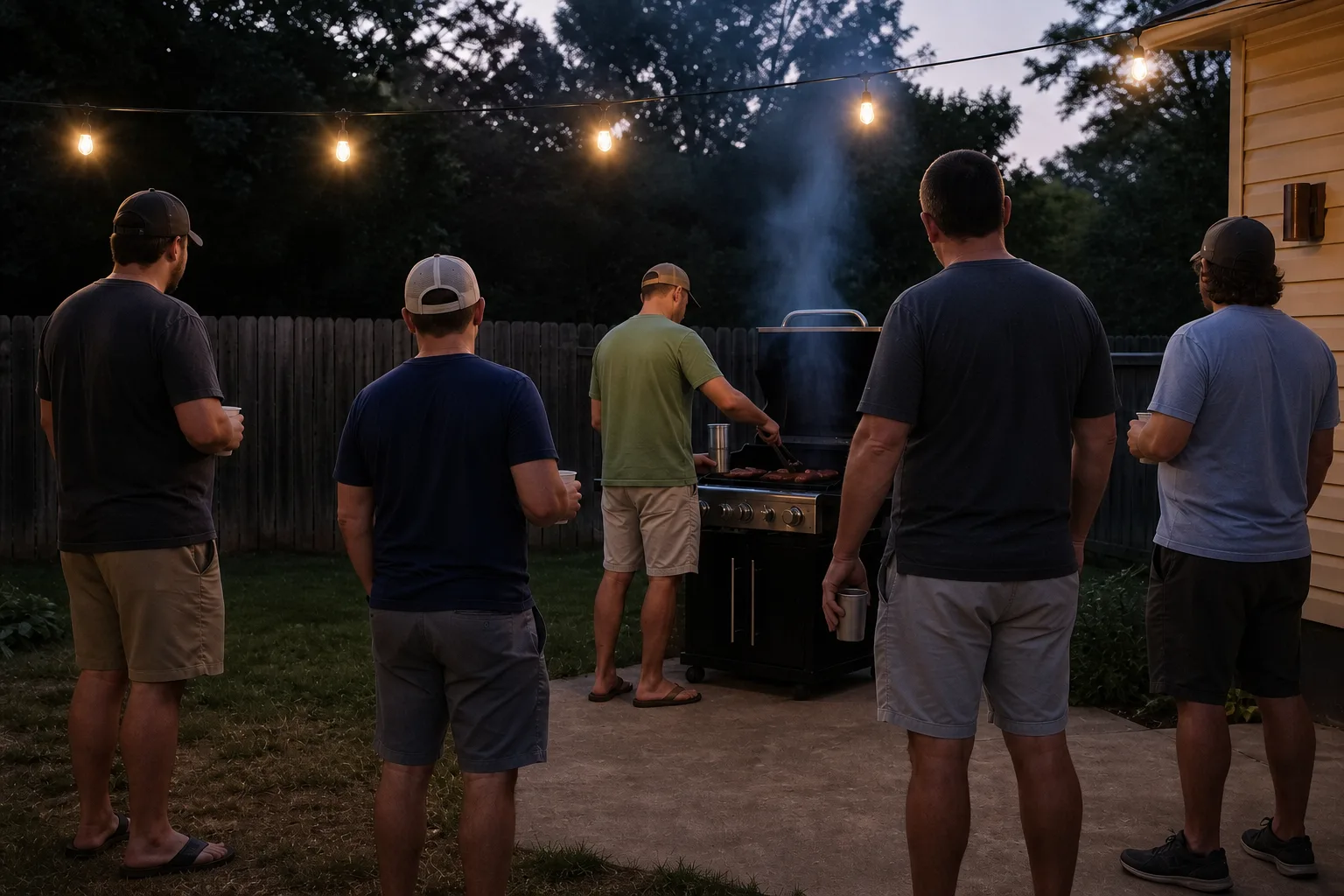
That’s the bill for making silence a virtue: years of proximity that never became knowledge. When the hard season comes, and it comes for every man, you find out that you don’t actually know who stands with you, because you were never willing to be located. You can’t be stood with if you can’t be found.
There’s a second cost, subtler. Partisans mostly hate a caricature, and political science can measure it: when researchers correct exaggerated perceptions of what the other side actually believes, animosity drops measurably (a 32,000-person Science megastudy found it among the most effective interventions tested). Silence is the caricature’s life-support system. Every real man who keeps his convictions in his pocket leaves his neighbors’ imaginations free to fill the vacancy with whatever cable news supplies. Your quiet reads as whatever they already feared.
A lamp has one job#
Jesus addressed this exact move, and he built the absurdity into the image.
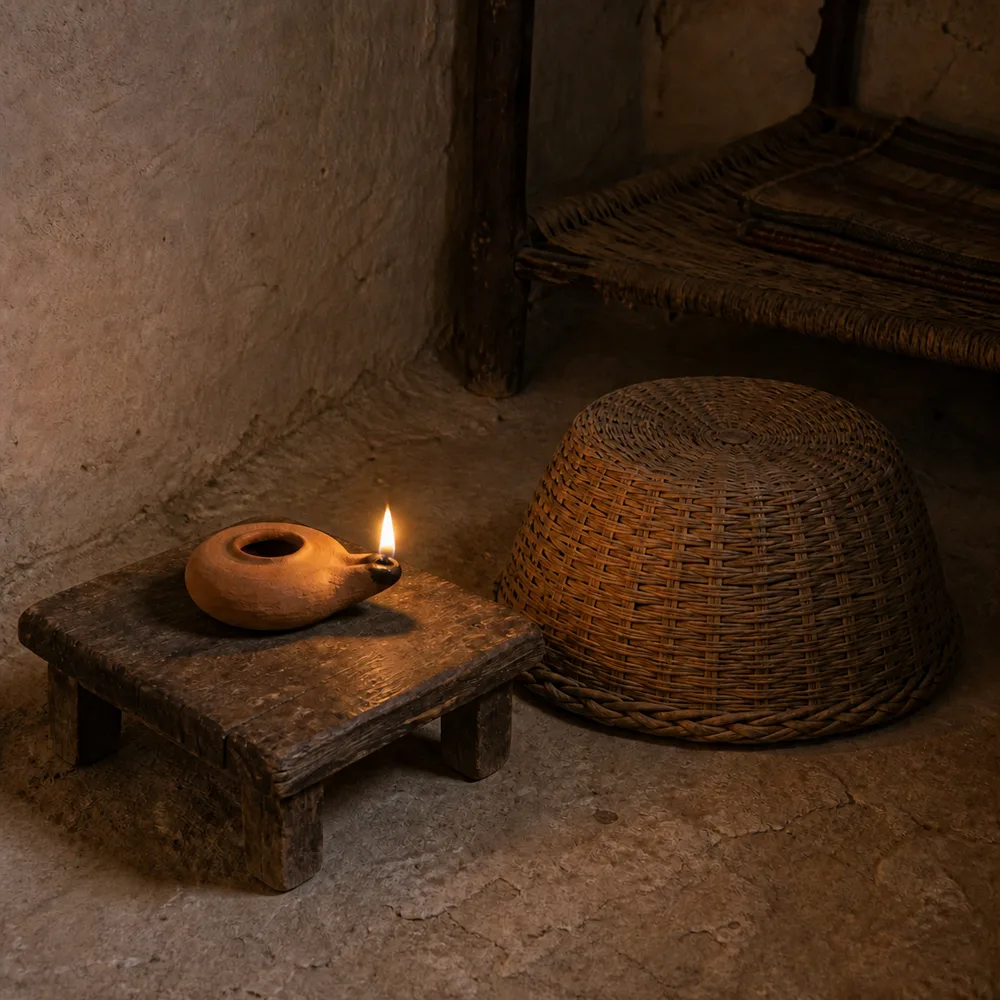
“You are the light of the world. A city set on a hill cannot be hidden. Nor do people light a lamp and put it under a basket, but on a stand, and it gives light to all in the house. In the same way, let your light shine before others, so that they may see your good works and give glory to your Father who is in heaven” (Matthew 5:14-16).
Notice what he’s pointing at. Nobody lights a lamp in order to hide it; the hiding defeats the purpose of the lighting. A hidden lamp isn’t a modest lamp. It’s a failed one. And the basket in our generation has a specific name. It’s politeness. It’s professionalism. It’s I don’t want any trouble at work. The basket is always woven from reasonable material.
But before any man takes that as a license to be loud, Scripture closes the other door too. Peter, writing to Christians under real social pressure, says in the same breath as “have no fear of them”: always being prepared to make a defense to anyone who asks you for a reason for the hope that is in you; yet do it with gentleness and respect (1 Peter 3:15). One sentence, and most of us fail half of it. The quiet man drops the defense and calls it humility. The loud man drops the gentleness and calls it boldness. Peter allows neither. Peter treats courage and winsomeness as one instruction, not as two personality types.
Before I lean on those verses any harder, I owe you a distinction. The lamp gives light so that people may see your good works; Peter’s defense is for the hope that is in you. Scripture commands a visible faith and a ready answer for the gospel. It nowhere commands you to announce a candidate at the cookout. The claim that a man should also be legible about how he thinks this country ought to be run is mine, not Matthew’s, and it stands on the friendship arithmetic above: a man nobody can locate is a man nobody can stand with. Read the pastor number in that light, too; a shepherd who won’t hand a pollster his ballot may be keeping this distinction rather than failing the test. The witness is commanded. The legibility is argued, from the evidence of what silence costs.
And here the evidence and the Scripture converge in a way I find almost funny. Cornell’s big estrangement study found that people who successfully reconciled with cut-off family members almost universally made the same move: they dropped the demand that the other side accept their version of the past and apologize first, and rebuilt from the present. That’s a research finding, and Romans 12:18 already assigned the burden exactly where a shepherd expects to find it: if possible, so far as it depends on you, live peaceably with all. The move is unilateral, and you own your side of the ledger. Done Peter’s way, the speaking is how the relationship gets load-tested and proven, instead of preserved in glass and lost anyway.
So here is the shepherd’s test, plainly. You’ve spent this series standing the watch at home. The man who goes first at his own table but goes generic in public is standing two different watches, and his kids are logging which one he keeps under pressure. If your convictions retreat every time the audience is mixed, the lesson your son records is that convictions are indoor equipment, like slippers. He’ll inherit the silence, and he’ll have fewer friends than you did to be silent with.
Where the next watch begins#
This article ends the Pillars, and it deliberately opens a door it doesn’t walk through. It doesn’t answer how: how to engage in public without becoming the loud man, how to have the hard conversation with a brother or a father and keep the bond across the disagreement, and what gentleness and respect look like in a break room or online, where every incentive runs against both. That’s the next series, and it needs its own field manual, because courage without craft just produces casualties with better intentions.
For now, the capstone claim stands on its own. Lead, protect, provide, and carry the cost, and then take the same watch out the front gate, because the flock was never only your household, and the lamp was never lit for the basket.
Prepare · Ask · Act#
Prepare: Write down the five men closest to you. Next to each name, answer honestly: could this man state, accurately and in your words, what you believe about God and about how this country ought to be governed? Every name without a check mark is a man who knows your schedule, not you.
Ask one of the unchecked men, this week, face to face if you can: “We’ve known each other for years and never once talked about anything that could cost us. What do you actually believe? I’m not looking for a fight. I want to know who I’m standing with.” Then keep Peter’s terms: gentleness, respect, no rebuttals on the first pass.
Act: If there’s a relationship politics has cost you, and it’s safe to reopen, send the message this month, and send it without the apology precondition. Present tense, future relationship, your side of the ledger owned. And the next time a mixed room offers you the basket, decline it once. Say the true thing, gently, with your name on it. That’s the whole test, and you already know how to stand a watch.